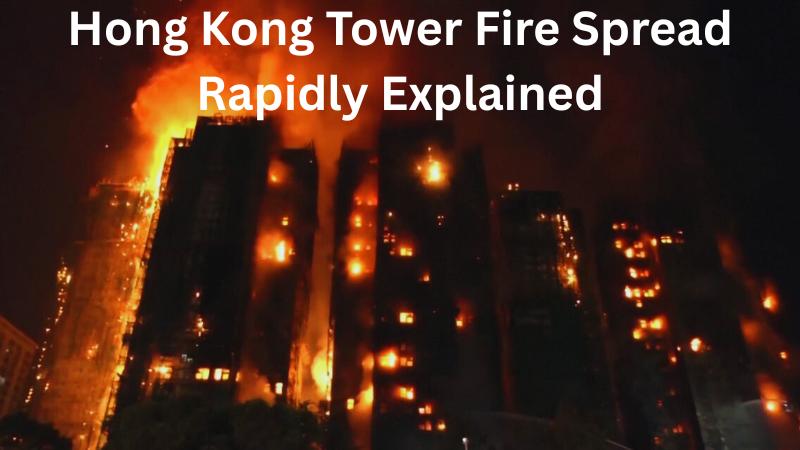
The massive fire that devastated several high-rise buildings in Hong Kong, claiming 55 lives and injuring more than 70 residents, has triggered a detailed investigation into the construction materials used during the renovation of the tower complex. Authorities believe these materials played a significant role in the unusually fast spread of the flames. Three senior officials from the engineering company handling the renovation have already been arrested on suspicion of manslaughter, after early findings suggested gross negligence. Reports indicate that highly flammable Styrofoam, a petroleum-based foam material, was found attached to windows on multiple floors of a nearby building, raising alarm about its use across the project.
Styrofoam is commonly used in construction and insulation but is banned in various regions for food packaging due to its environmental impact and potential health risks. A key concern with Styrofoam is its extremely low ignition point and rapid burn rate. When exposed to heat, it produces thick black smoke and toxic fumes while its air-filled structure helps flames travel swiftly. Investigators believe these very properties may have caused the fire to engulf several buildings within minutes, leaving residents with little time to escape. Authorities are now focusing on how much of this material was used, whether its placement met safety guidelines, and why it was applied near ventilation windows.
According to a notice shared last year by Prestige Construction and Engineering Company Limited, the contractor responsible for the renovation, materials such as foam board, canvas, and wood panels were planned for window protection during construction. All of these materials are known to be flammable. The Hong Kong outlet The Standard reported that firefighters observed that protective netting, canvas sheets, and plastic coverings burned more intensely than materials normally approved under fire safety regulations. Senior officials like Secretary for Security Chris Tang described two major irregularities involving exterior coverings and foam boards, prompting police and fire services to form a task force to investigate whether building and fire codes were violated.
Director of Fire Services Andy Yeung confirmed that firefighters found ventilation windows in another block sealed with foam boards, a discovery that could explain the uncontrollable speed of the fire once the material ignited. As the probe continues, the scale of the tragedy becomes clearer. The estate consists of eight residential towers built in the 1980s and houses nearly 4,800 people, many of them elderly. For residents like Lawrence Lee, whose wife went missing after failing to escape through smoke-filled corridors, the disaster has become a personal nightmare. With 55 deaths reported, this incident is one of Hong Kong’s deadliest fires in decades, recalling memories of the 1996 commercial building blaze that claimed 41 lives. Investigators now aim to determine accountability and prevent such catastrophic outcomes in the future.