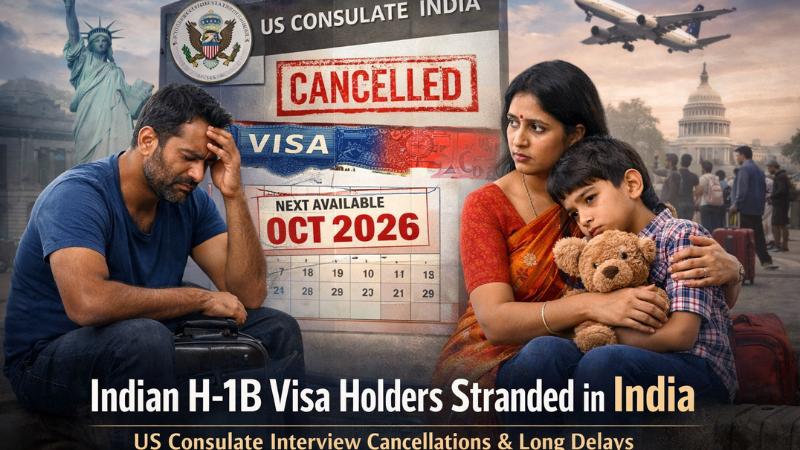
Immigration experts have described the situation as highly disorganized and unprecedented, stating that such large-scale cancellations without clear communication or structured rescheduling plans are rarely seen. Many applicants received brief automated messages informing them that their appointments had been canceled, often without any detailed explanation or guidance on how long the delays might last. In several cases, the rescheduled dates appeared arbitrary, offering little confidence that the backlog would be cleared anytime soon. This lack of transparency has intensified stress among workers who depend on timely visa renewals to maintain legal status and employment.
A majority of the affected visa holders work in the technology sector and other specialized industries that rely heavily on skilled professionals from India. December has traditionally been considered a relatively safe period for visa renewals, as employees align travel with company holidays and planned leave. Many individuals had carefully coordinated flights, housing arrangements, and work schedules, expecting a predictable turnaround. The sudden cancellations disrupted these plans entirely, forcing professionals to remain in India indefinitely while continuing to manage professional obligations and financial commitments in the United States.
The personal toll of the delays has been significant. Many H-1B visa holders live in the United States with spouses and children, some of whom are US citizens or enrolled in American schools. Prolonged separation has created emotional strain and financial pressure, especially for families dependent on two incomes. Parents have missed school terms, medical appointments, and important family milestones, while others face the real possibility of job loss due to extended absence from the workplace.
US authorities have indicated that expanded social media screening requirements are a major factor contributing to the delays. These enhanced vetting measures, introduced to strengthen national security and public safety, require more extensive background checks for visa applicants. While the intent behind the policy has been emphasized, critics argue that the sudden implementation and limited processing capacity have resulted in severe bottlenecks. Many applicants say they were not adequately informed about the scale of the changes or the potential for long delays when scheduling their appointments.
Employers in the United States are also struggling with the fallout. Companies that rely on highly skilled workers have been forced to adjust project timelines, redistribute workloads, or operate short-staffed. Some organizations have attempted to allow employees to work remotely from India, but this is not always feasible due to legal, tax, and data security restrictions. Smaller firms, in particular, face operational challenges when key personnel are unable to return as expected.
The situation has raised broader concerns about the efficiency and predictability of the visa processing system. Immigration advocates are calling for clearer communication, increased staffing at consulates, and temporary relief measures for those already affected. They argue that professionals who follow legal processes and contribute significantly to the US economy should not be subjected to prolonged uncertainty without realistic timelines or support.
For now, thousands of Indian H-1B visa holders remain in limbo, waiting for clarity on when they can return to their lives in the United States. What began as a routine visa renewal process has evolved into a widespread crisis, exposing systemic challenges in visa administration. As delays continue, workers, families, and employers alike are hoping for swift corrective action to restore confidence and stability to a system that plays a critical role in global talent mobility.