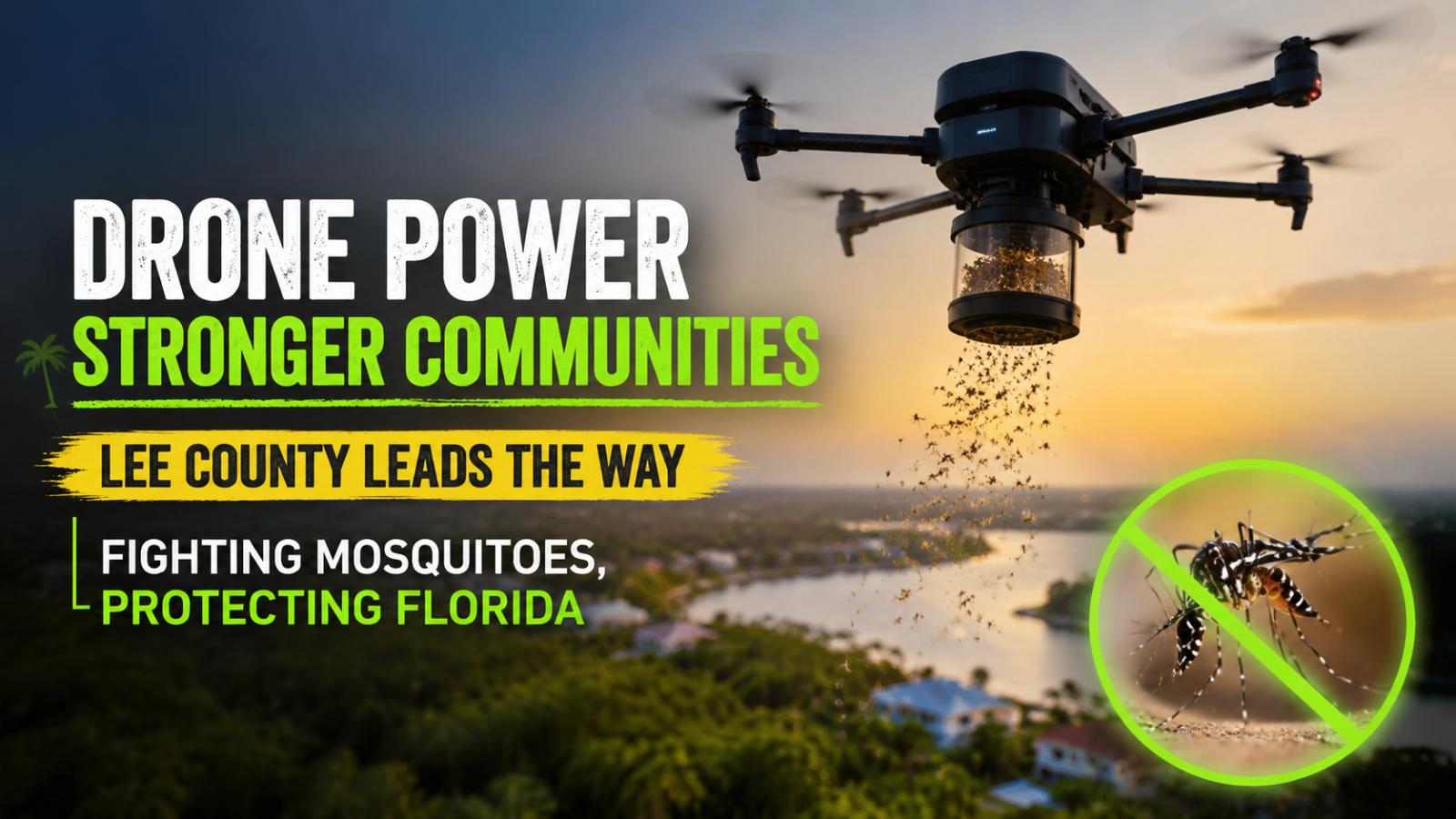
Lee County in Florida has introduced a cutting-edge approach to mosquito control using drones. The technology allows for the release of sterile male mosquitoes in areas that are challenging to reach by road, such as dense vegetation, coastal zones, and remote properties. This innovative solution enhances mosquito management efforts while maintaining public safety.
How the System Works ?
The program uses the Skydio X10 drone, equipped with a specialized release cassette capable of carrying up to 35,000 mosquitoes. Rather than releasing all insects in one spot, the drone disperses them gradually while flying over larger areas. This method ensures the sterile mosquitoes mix effectively with wild populations of Aedes aegypti, the invasive species responsible for spreading disease.
Reducing Mosquito Breeding Naturally
Sterile male mosquitoes are raised in laboratories and do not bite humans. When these males mate with wild female mosquitoes, the resulting eggs fail to hatch, gradually reducing mosquito populations over successive generations. The process relies on repeated releases to create a lasting impact rather than providing an immediate solution.
Tailored Local Approach
To maximize effectiveness, the mosquito strain used in Lee County is specifically adapted to Fort Myers and Captiva environments. Mosquitoes are matured to adulthood in roughly 10 days and sterilized using X-ray technology similar to medical sterilization methods. This targeted approach increases the chances of reducing the local mosquito population.
Tracking Mosquitoes After Release
Each sterile mosquito is marked with fluorescent powder, allowing researchers to track their survival, movement, and distribution. Monitoring ensures that the insects reach intended locations and helps the county evaluate the success of the program.
Advantages of Drone Deployment
The Skydio X10 drone can fly up to 45 mph and remain airborne for about 40 minutes. This capability allows teams to cover extensive areas efficiently, especially those inaccessible by traditional ground vehicles. Drone deployment complements existing mosquito control strategies and supports long-term public health objectives in Lee County.