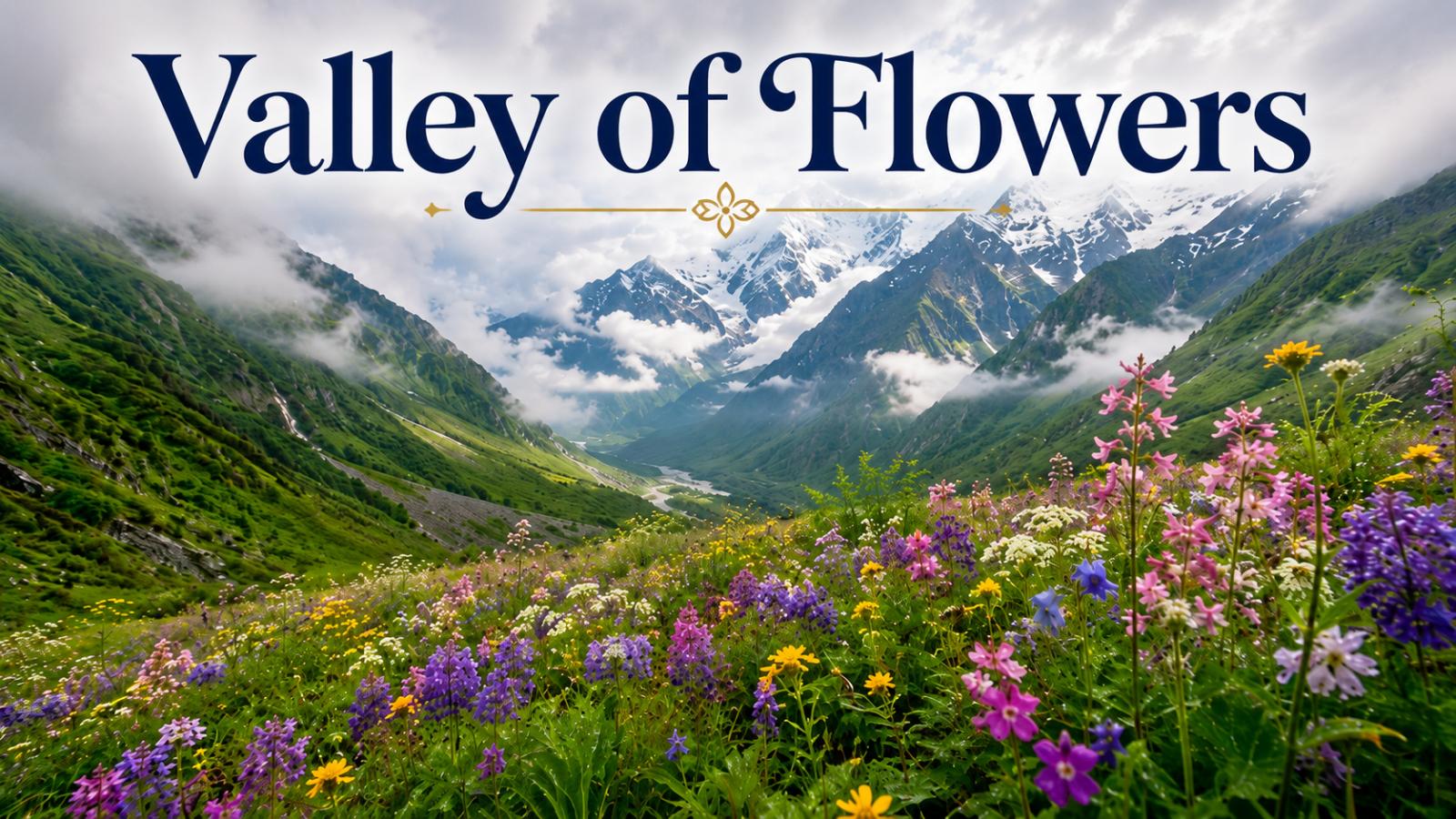
Valley of Flowers National Park in Uttarakhand is a protected Himalayan valley famous for its colorful flowers, rare wildlife and peaceful mountain views. Located in Chamoli district, it is part of the Nanda Devi Biosphere Reserve and is also a UNESCO World Heritage Site. The Valley of Flowers trek is popular because it combines nature, adventure, culture and conservation in one journey. For first-time visitors, it is important to know the best season, route, rules and ecological value before planning the trip.
Why this valley is important
The park covers about 87.5 square kilometers and lies at a high altitude, where snow, streams, rocky slopes and green meadows create a unique alpine meadow India is proud to protect. During the monsoon, especially in July and August, the Uttarakhand flower valley turns into a natural carpet of red, blue, yellow, purple and white blooms. This is why the monsoon trek India travelers often search for becomes special here.
Valley of Flowers National Park is not just a photo spot. It protects more than 600 species of plants, including rare Himalayan flowers and medicinal herbs. The Brahma Kamal flower is one of the most respected flowers in the region and is connected with Himalayan traditions. Scientists also study this valley to understand how climate change affects high mountain plants.
History and local culture
The valley became widely known in 1931 after mountaineer Frank S. Smythe reached the area and later wrote about its beauty. But local Himalayan communities, including Bhotia people, knew these meadows long before that. They understood the seasonal movement of animals, plants and people in the mountains.
The region also has spiritual value. Hemkund Sahib trek attracts pilgrims near the same route, while local stories connect the area with Hanuman and the search for Sanjeevani booti. These beliefs make the valley meaningful for both nature lovers and devotees.
Route, season and travel rules
Visitors usually reach Govindghat first and then follow the Govindghat route towards Ghangaria. From there, the Ghangaria trek leads into the national park. There is no direct road into the valley, so travelers must walk. The park usually opens from June to October, while winter snow keeps it closed for the rest of the year.
Camping inside the park is not allowed because the plants and soil are very fragile. Travelers should avoid littering, picking flowers or walking outside marked paths. The Valley of Flowers guide is simple: enjoy the beauty, but do not damage it. This eco trek India destination matters because it protects nature for future generations while giving visitors a clear lesson in why the Himalayas must be respected.