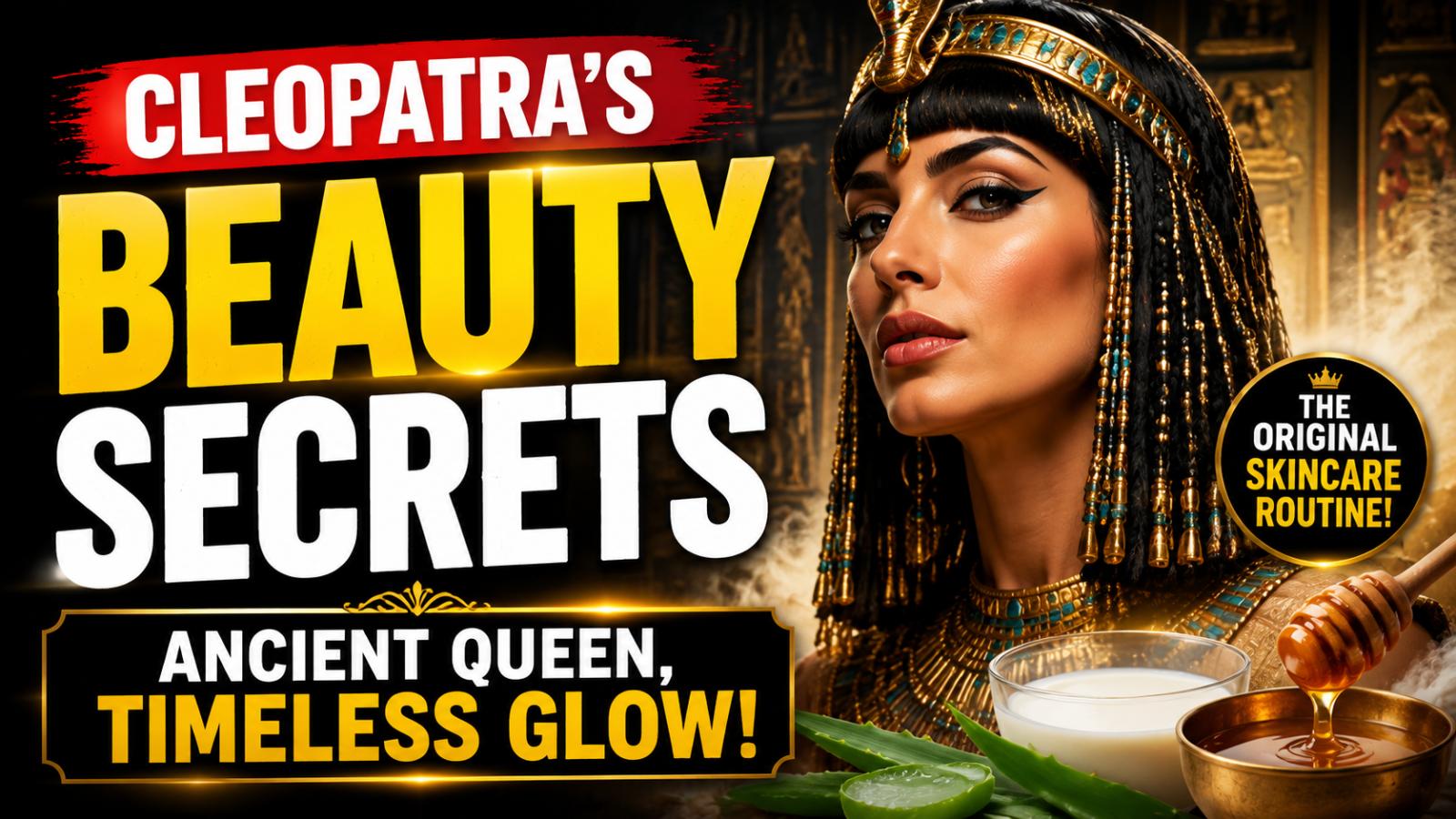
Cleopatra and the Legacy of Ancient Beauty Practices
Cleopatra, the last active ruler of ancient Egypt, is widely remembered not only for her political intelligence but also for her legendary beauty rituals. While much of her life has been shaped by historical interpretation and myth, historians agree that she maintained a carefully curated beauty and grooming routine influenced by Egyptian traditions, natural remedies, and royal luxury practices of her time.
Natural Ingredients in Royal Skincare
Ancient Egyptian culture placed strong emphasis on skincare, using natural ingredients derived from the Nile region. Cleopatra was believed to incorporate milk, honey, and plant-based oils into her daily regimen. Milk baths, often associated with softness and skin renewal, were considered a symbol of luxury and refinement among Egyptian elites. Honey, known for its antibacterial properties, was commonly used in skin treatments to preserve smoothness and hydration.
Aloe vera and olive oil were also widely used in ancient Egypt for skin protection against harsh desert conditions. These ingredients were valued not only for cosmetic purposes but also for their practical benefits in maintaining skin health in extreme climates.
Beauty as a Symbol of Power
For Cleopatra, beauty was not merely personal care but also a strategic expression of power and influence. In the political world of ancient Egypt and Rome, appearance played a significant role in diplomacy and leadership perception. Her grooming rituals reflected both cultural sophistication and an understanding of symbolic authority.
Historical accounts suggest that Cleopatra carefully presented herself using fragrances, mineral-based cosmetics, and elaborately styled appearance choices that aligned with royal Egyptian traditions. These practices helped reinforce her image as a divine and powerful ruler.
Influence of Egyptian Cosmetic Traditions
Egyptian civilization was one of the earliest cultures to develop advanced cosmetic practices. Kohl eyeliner, natural pigments, and aromatic oils were widely used across social classes, though refined versions were reserved for royalty. Cleopatra’s beauty routine was an extension of these established traditions, combining accessibility of natural resources with elite refinement.
The Nile region provided a rich supply of minerals and botanical ingredients, allowing ancient Egyptians to develop skincare methods that emphasized preservation, protection, and enhancement of natural features.
Lasting Cultural Fascination
Today, Cleopatra’s beauty rituals continue to attract global curiosity, often blending historical fact with cultural myth. While exact details of her personal routine remain uncertain, her association with natural skincare practices has influenced modern interpretations of ancient beauty wisdom.
Her legacy reflects a broader understanding of how beauty, power, and identity intersected in ancient civilizations. Cleopatra remains a symbol of elegance, strategy, and cultural sophistication, with her beauty routine continuing to inspire discussions in history, skincare, and popular culture.