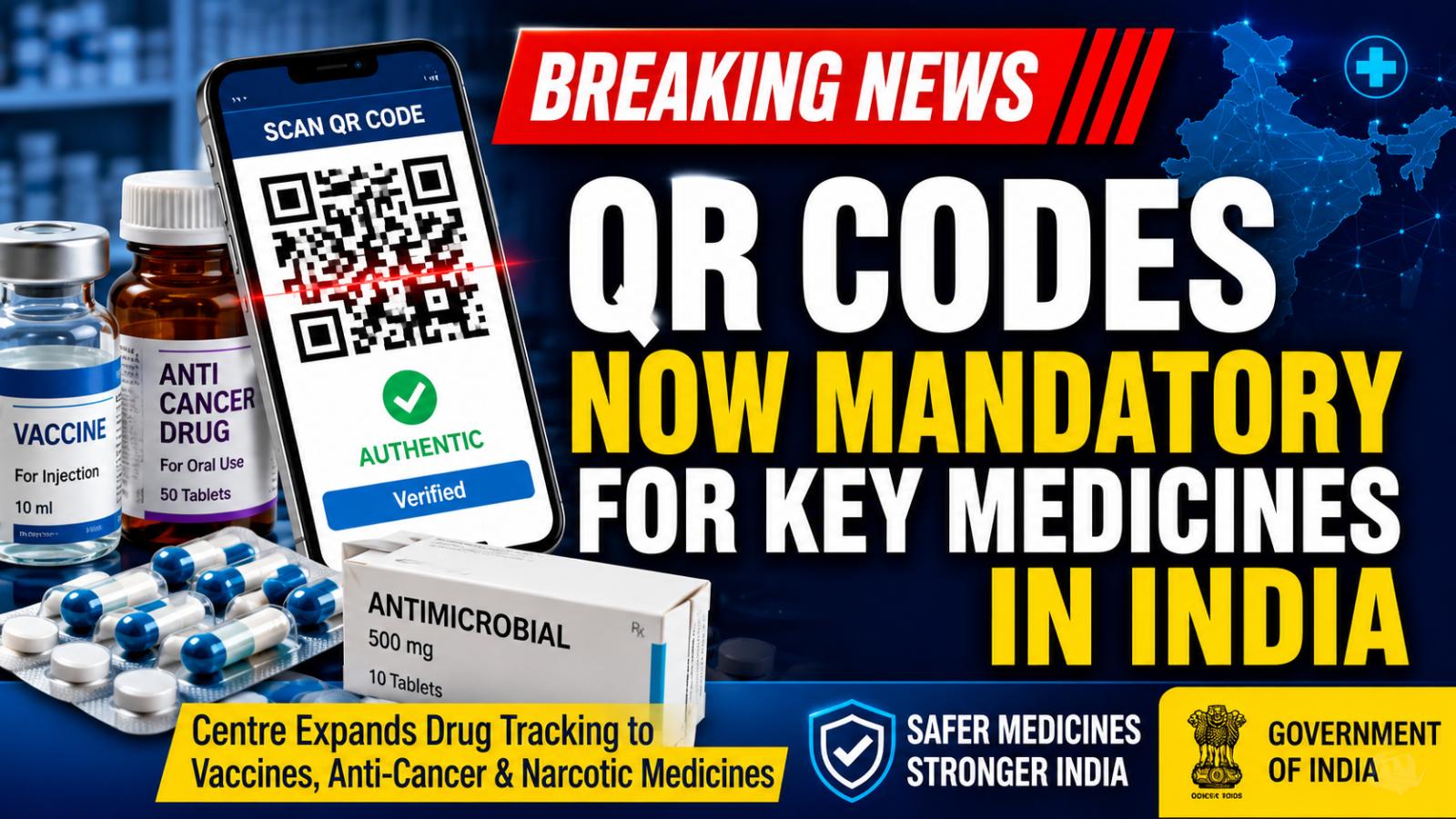
The Indian government has taken another major step to improve medicine safety by making QR codes mandatory on several categories of critical drugs, including vaccines, anti-cancer medicines, antimicrobials, and narcotic medications. The move is aimed at helping consumers and healthcare providers easily verify the authenticity of medicines and reducing the spread of counterfeit and substandard drugs in the country.
The Union Health Ministry has amended the Drugs Rules, 1945, and brought these medicines under Schedule H2, which now requires manufacturers to place barcodes or QR codes on medicine packaging. The decision significantly expands the existing track-and-trace system that previously covered only the top 300 pharmaceutical brands in India.
How The New QR Code System Will Work
Under the revised regulations, pharmaceutical companies must print or affix QR codes on the primary packaging of medicines. If there is insufficient space, the code can be placed on the secondary packaging.
Each QR code will contain important product details, including:
• Product identification code
• Generic and brand names
• Manufacturer information
• Batch number
• Manufacturing and expiry dates
• Licence details
• Excipient information, where applicable
By simply scanning the QR code, consumers and supply chain participants will be able to verify whether a medicine is genuine and obtain essential product information instantly.
Why India Is Expanding Drug Traceability
Counterfeit and substandard medicines remain a significant public health concern in many countries, including India. Fake medicines can lead to treatment failures, serious health complications, and even death in extreme cases.
The government's expanded QR code requirement is intended to improve drug traceability across the pharmaceutical supply chain and make it easier to identify and remove counterfeit products from the market.
Health experts also believe the new system could support India's efforts to combat antimicrobial resistance. Better tracking of antibiotics and antimicrobial medicines may help authorities identify poor-quality products that contribute to drug resistance and ineffective treatments.
Implementation Timeline
The government has announced a phased rollout for the new rules.
The QR code requirement for vaccines, anti-cancer medicines, and narcotic and psychotropic drugs will become effective from July 1, 2026. The implementation for antimicrobials has been scheduled for July 1, 2028, giving pharmaceutical manufacturers additional time to comply with the regulations.
Industry experts have welcomed the move, saying that stronger authentication measures can increase consumer confidence and improve transparency in India's pharmaceutical sector. As digital verification becomes more common, the QR code initiative could become a crucial tool in protecting patients and strengthening the country's medicine supply chain.
The latest amendment marks another important step in India's efforts to modernize pharmaceutical regulations and ensure that patients receive safe, authentic, and high-quality medicines.