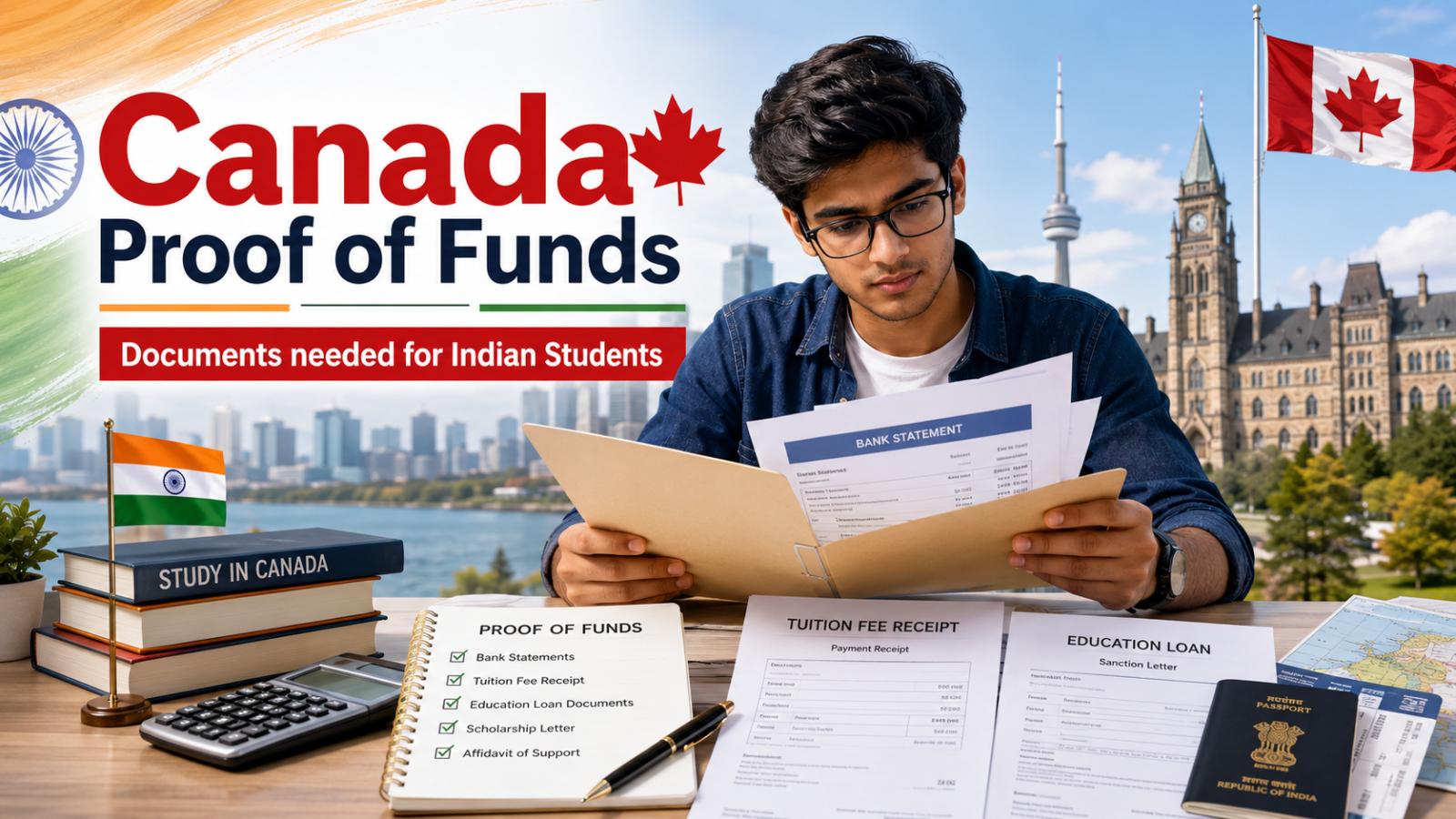
Canada study permit financial checks now place greater emphasis on where applicants’ money comes from and whether it is genuinely available. Indian students should document bank histories, loans, sponsor income, tuition payments and plans for the full program.
Canada expands source-of-funds review
Canada has tightened how officers assess financial support in study permits. Updated guidance dated Friday, July 24, 2026, directs officers to consider the amount, source and credibility of an applicant’s funds. The change applies to international applicants, including students from India.
Applicants must show they can pay tuition, living expenses and transportation without working in Canada. For programs longer than one year, they must prove funding for the first year and explain how they plan to pay for the remaining period.
Proof-of-funds amount remains unchanged
The update does not change the minimum living-expense requirement. A single applicant studying outside Quebec who applies on or after Monday, September 1, 2025, must show C$22,895 for one year, excluding tuition and transportation.
IRCC’s public guidance lists four months of bank statements as a common form of proof. It also accepts education-loan documents, payment records, guaranteed investment certificates, scholarships and letters from people or institutions providing funds. Officers may request more evidence based on the application.
Indian students need a clear money trail
Applicants using family savings, fixed deposits, loans or sponsor support should ensure that bank records, income documents and loan papers are consistent. Large or last-minute deposits should be supported by evidence showing where the money came from and that it remains available.
Saurabh Arora, founder and chief executive of University Living, said applicants should prepare early rather than rely only on a large balance. Unclear or inconsistent records may lead to verification, delays or refusal, although the full impact of the updated checks is not yet known.
Steps for the 2027 intake
Students planning for 2027 should calculate tuition, housing, living and travel costs before filing. They should retain transaction histories, sponsor income evidence, loan sanction letters, fixed-deposit records, scholarship papers and tuition receipts.
Applicants should check IRCC’s official requirements before filing because requests can vary. Clear, traceable funding can strengthen an application, but approval still depends on meeting all study permit requirements.