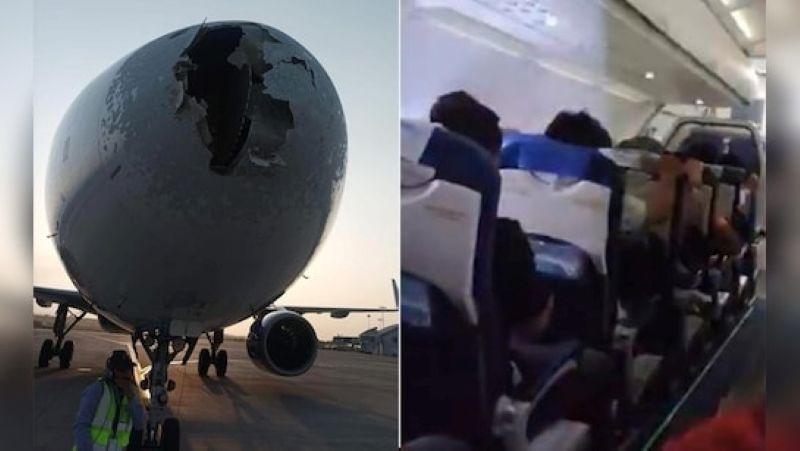
A routine flight from Delhi to Srinagar turned into a traumatic experience for over 200 passengers when IndiGo flight 6E2142 encountered severe midair turbulence caused by an unexpected hailstorm. The incident occurred on Wednesday evening as the aircraft flew into the path of the storm, which later battered the Delhi-NCR region with strong winds, heavy rain, and hail.
As the Airbus navigated through the weather system, passengers, including children, began to scream and cry in distress. A now-viral video taken inside the plane captured the terrifying moment when the aircraft shook violently, with flashes of lightning visible through the windows. The intensity of the storm and the sudden jolt led the flight crew to declare an emergency with Air Traffic Control in Srinagar.
According to official sources, flight 6E2142 was carrying 227 passengers. Despite the extreme weather, the flight crew followed standard operating procedures, and the aircraft safely landed in Srinagar at approximately 6:30 PM. IndiGo Airlines issued a statement acknowledging the hailstorm and confirmed that all passengers were safely assisted upon landing.
The airline's statement read, "IndiGo flight 6E 2142 operating from Delhi to Srinagar encountered sudden hailstorm en route. The flight and cabin crew followed established protocol and the aircraft landed safely in Srinagar. The airport team attended to the customers after arrival of aircraft, prioritizing their wellbeing and comfort. The aircraft will be released post necessary inspection and maintenance."
Although the airline did not elaborate on the extent of the damage, photos circulating on social media revealed a portion of the aircraft’s nose was visibly cracked. NDTV later confirmed the damage. The hailstorm was reportedly powerful enough to break through the aircraft's composite materials, which are engineered to withstand adverse weather.
Severe Storm Disrupts Delhi-NCR Region
The incident unfolded on a day when the Delhi region was already grappling with intense heat and humidity. Just hours before the storm hit, the heat index had soared to a staggering 50.2 degrees Celsius. The India Meteorological Department (IMD) reported that the maximum temperature reached 40.7°C, slightly above normal, with humidity levels fluctuating between 64 and 34 percent.
Between 5:30 PM and 8:30 PM, Safdarjung station recorded 12.2 mm of rainfall, accompanied by gusts of wind reaching speeds of up to 79 km/h. The sudden weather change led to chaos across the city. The Nehru Vihar Bridge sustained structural damage, and several areas faced severe waterlogging, traffic jams, and fallen trees.
Flight operations at Delhi’s Indira Gandhi International Airport were disrupted, with many departures and arrivals delayed. The Delhi Metro’s Yellow Line also faced temporary service interruptions, leaving passengers stranded during rush hour.
The IMD attributed the extreme weather to a cyclonic circulation over Haryana and nearby areas, embedded in a larger east-west trough extending from Punjab to Bangladesh. The system was fed by moisture from both the Arabian Sea and the Bay of Bengal, intensifying the storm’s effects.
Among the passengers were members of the Trinamool Congress, who later described the experience as “near death.” In interviews after landing, several passengers recounted their panic and fear during the ordeal. Screams echoed throughout the cabin, and many feared the aircraft might not make it safely to Srinagar. Aviation experts note that while turbulence and hailstorms are not uncommon, the psychological impact on passengers can be profound. Though modern aircraft are built to endure such stresses, events like these highlight the need for improved forecasting and better communication during flights.
The IndiGo flight incident has reignited discussions about flight safety and emergency preparedness, especially as climate change contributes to more unpredictable weather patterns. For now, the airline is conducting a thorough inspection of the aircraft before clearing it for service. While no injuries were reported, the emotional toll on those aboard flight 6E2142 remains significant. Many have taken to social media to share their stories, turning the harrowing flight into a national conversation about air travel safety in India.