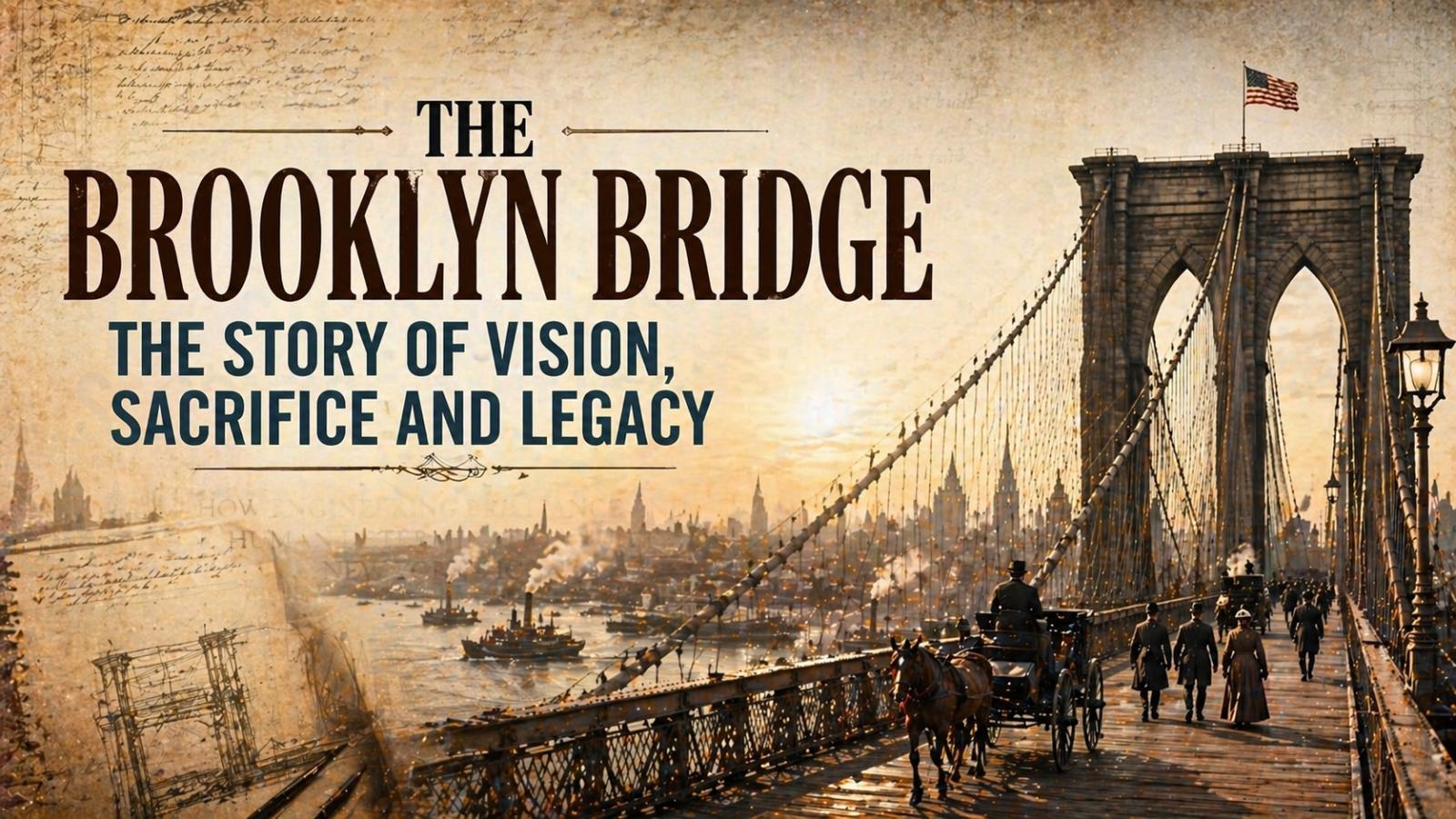
The Brooklyn Bridge history reflects a powerful story of vision, sacrifice, and engineering brilliance that transformed New York City forever. Built to connect Manhattan and Brooklyn across the East River, the bridge replaced unreliable ferries and became a permanent solution for a growing city. Even today, it stands as one of the most recognized landmarks in the world, symbolizing innovation and resilience.
In the late 19th century, the East River served both as a crucial route and a major obstacle. Ferries were the only option for crossing, but they were slow and often disrupted by weather. The need for a stable and reliable connection pushed engineers to imagine something bold and permanent. This vision was led by John Augustus Roebling, a skilled engineer who designed a suspension bridge unlike anything seen before.
However, tragedy struck early in the project. Roebling suffered a fatal injury in 1869, and the responsibility passed to his son, Washington Roebling. Determined to complete the project, he introduced innovative construction methods, including the use of pressurized caissons to build the bridge’s foundation. These methods allowed workers to dig deep into the riverbed, but they also exposed them to dangerous conditions.
Many workers developed decompression sickness, also known as “the bends,” due to rapid pressure changes. Some lost their lives, and even Washington Roebling became severely ill, leaving him partially paralyzed. Despite this, he continued to lead the project remotely, relying on detailed observations and instructions.
At this critical stage, Emily Warren Roebling emerged as a key figure. She learned engineering principles and acted as the communication link between her husband and the construction team. Her role ensured the project moved forward, making her contribution essential to the bridge’s completion.
After years of effort and challenges, the Brooklyn Bridge opened on May 24, 1883. Crowds gathered to witness the historic moment, marking a new era of connectivity for the city. The bridge quickly became more than just infrastructure; it represented progress and human determination.
Over time, it adapted to changing transportation needs, carrying carriages, trains, vehicles, and countless pedestrians. Its presence influenced art, culture, and daily life in New York City. Today, the Brooklyn Bridge remains a lasting symbol of innovation, resilience, and the power of human ambition.