Edit
JD Vance Begins India Visit to Boost Trade, Defense and Energy Ties Amid Global Tariff Tensions
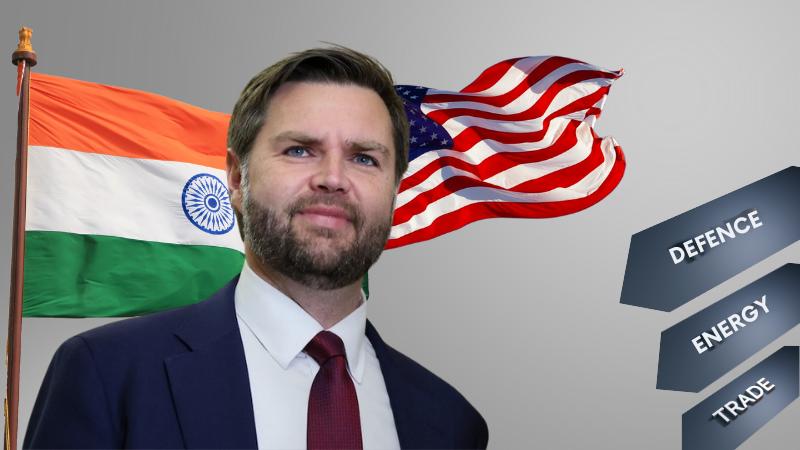
US Vice President JD Vance began his four-day visit to India on Monday, launching a strategic mission to deepen trade, defense, and energy partnerships with the South Asian nation. Arriving in New Delhi with his wife Usha and their children, Vance is engaging in high-level meetings and cultural visits, underscoring the personal and diplomatic importance of the trip. At the center of this visit is a scheduled meeting between Vance and Prime Minister Narendra Modi. The two leaders are expected to discuss bilateral economic cooperation, trade negotiations, and broader geopolitical dynamics. The visit comes at a crucial time when the United States is seeking to recalibrate its global trade strategy, especially in the face of a lingering tariff war with China and unresolved trade tensions with several other nations.
India and the United States share a strong trade relationship, with recent bilateral trade figures reaching approximately $190 billion. Both sides are looking to significantly scale this partnership, with long-term goals aimed at surpassing the $500 billion mark. Discussions during this visit will explore tariff adjustments, improved market access, and potential joint ventures that can accelerate growth for both economies. Vance’s arrival in India also holds symbolic significance. His wife Usha Vance, who has Indian roots, is joining him on visits to key cultural sites in Jaipur and Agra, reflecting a personal connection that adds depth to the diplomatic mission. These visits are seen as gestures of goodwill that strengthen the cultural bridge between the two democracies.
The economic dialogue is especially important for India as it continues to manage the implications of past U.S. tariffs and negotiates for greater access to American markets. Although previous talks had softened the tariff barriers, the two countries are yet to finalize a comprehensive trade agreement. India has expressed willingness to reduce tariffs on several U.S. goods, while the U.S. continues to push for reforms that would favor American agricultural and manufacturing exports. Beyond trade, defense collaboration is expected to be a key topic of discussion. The United States and India have steadily enhanced their strategic partnership, especially in the Indo-Pacific region, to counterbalance growing military influence from rival powers. Talks during Vance’s visit may include new defense technology transfers, joint military exercises, and the procurement of advanced defense equipment to modernize India’s armed forces.
Energy security and cooperation will also feature prominently on the agenda. The two countries are exploring opportunities for collaboration on clean energy projects, particularly through investments in U.S. nuclear technology. This aligns with India's broader goals to diversify its energy portfolio, reduce carbon emissions, and build a more sustainable future. Enhanced U.S. involvement in India’s energy sector could significantly aid this transition, while also offering American companies a growing market for innovative energy solutions.
Vance’s trip follows a series of recent high-level interactions between Indian and American leaders, all of which have emphasized the growing momentum in the partnership. These exchanges have helped lay the groundwork for concrete deals in technology, defense, energy, and trade. Vance’s visit is widely viewed as a continuation of these efforts, aimed at delivering tangible outcomes and policy alignment on critical issues. The timing of the visit is particularly strategic, as both countries prepare for potential changes in the global economic landscape. With supply chain realignments underway and countries reevaluating their trade dependencies, India and the United States see mutual benefit in working more closely together. A stronger bilateral partnership could help mitigate global uncertainties, ensure economic stability, and promote a shared vision for a free and open Indo-Pacific.
Vice President JD Vance’s visit to India is more than a diplomatic formality—it is a pivotal moment in a rapidly evolving relationship. With discussions covering everything from tariffs and trade to defense and clean energy, the visit reflects the multifaceted cooperation between two of the world’s largest democracies. As global economic and political currents shift, the outcomes of this visit could shape the future of U.S.-India ties and influence broader regional dynamics for years to come.
India and the United States share a strong trade relationship, with recent bilateral trade figures reaching approximately $190 billion. Both sides are looking to significantly scale this partnership, with long-term goals aimed at surpassing the $500 billion mark. Discussions during this visit will explore tariff adjustments, improved market access, and potential joint ventures that can accelerate growth for both economies. Vance’s arrival in India also holds symbolic significance. His wife Usha Vance, who has Indian roots, is joining him on visits to key cultural sites in Jaipur and Agra, reflecting a personal connection that adds depth to the diplomatic mission. These visits are seen as gestures of goodwill that strengthen the cultural bridge between the two democracies.
The economic dialogue is especially important for India as it continues to manage the implications of past U.S. tariffs and negotiates for greater access to American markets. Although previous talks had softened the tariff barriers, the two countries are yet to finalize a comprehensive trade agreement. India has expressed willingness to reduce tariffs on several U.S. goods, while the U.S. continues to push for reforms that would favor American agricultural and manufacturing exports. Beyond trade, defense collaboration is expected to be a key topic of discussion. The United States and India have steadily enhanced their strategic partnership, especially in the Indo-Pacific region, to counterbalance growing military influence from rival powers. Talks during Vance’s visit may include new defense technology transfers, joint military exercises, and the procurement of advanced defense equipment to modernize India’s armed forces.
Energy security and cooperation will also feature prominently on the agenda. The two countries are exploring opportunities for collaboration on clean energy projects, particularly through investments in U.S. nuclear technology. This aligns with India's broader goals to diversify its energy portfolio, reduce carbon emissions, and build a more sustainable future. Enhanced U.S. involvement in India’s energy sector could significantly aid this transition, while also offering American companies a growing market for innovative energy solutions.
Vance’s trip follows a series of recent high-level interactions between Indian and American leaders, all of which have emphasized the growing momentum in the partnership. These exchanges have helped lay the groundwork for concrete deals in technology, defense, energy, and trade. Vance’s visit is widely viewed as a continuation of these efforts, aimed at delivering tangible outcomes and policy alignment on critical issues. The timing of the visit is particularly strategic, as both countries prepare for potential changes in the global economic landscape. With supply chain realignments underway and countries reevaluating their trade dependencies, India and the United States see mutual benefit in working more closely together. A stronger bilateral partnership could help mitigate global uncertainties, ensure economic stability, and promote a shared vision for a free and open Indo-Pacific.
Vice President JD Vance’s visit to India is more than a diplomatic formality—it is a pivotal moment in a rapidly evolving relationship. With discussions covering everything from tariffs and trade to defense and clean energy, the visit reflects the multifaceted cooperation between two of the world’s largest democracies. As global economic and political currents shift, the outcomes of this visit could shape the future of U.S.-India ties and influence broader regional dynamics for years to come.