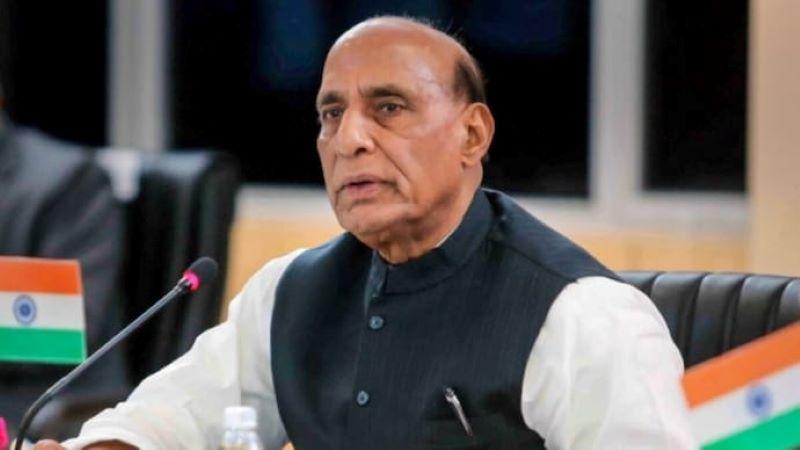
Defence Minister Rajnath Singh confirmed on Thursday that over 100 terrorists were killed during Operation Sindoor, India's coordinated military strike on terror camps across Pakistan and Pakistan-occupied Kashmir (PoK). Speaking at a high-level all-party briefing, Singh updated the figure from the previously reported 70 to over 100, citing the latest intelligence and operational feedback. Additionally, at least 60 more terrorists were injured in the precision strike, which lasted just 25 minutes but carried deep strategic impact.
Operation Sindoor was launched in response to the April 22 terror attack in Jammu and Kashmir’s Pahalgam, where 26 civilians, including a 70-year-old man, were killed in a brutal assault at Baisaran Valley. The attack was linked to Lashkar-e-Taiba, operating under a proxy name, and revived bitter memories of the 2019 Pulwama attack executed by Jaish-e-Mohammed.
The Indian strike targeted nine locations identified as training headquarters and operational camps for both Lashkar-e-Taiba and Jaish-e-Mohammed. According to Colonel Sofiya Qureshi, who addressed the media Wednesday, targets were selected based on "credible intelligence and proven involvement in cross-border terrorism."
Wing Commander Vyomika Singh of the Indian Air Force emphasized that the attack was carried out using advanced precision-guided munitions, including the SCALP missile and HAMMER bomb. The operation was timed to avoid civilian casualties and deliberately avoided striking Pakistani military installations, signaling India's focused response on terror infrastructure rather than escalating broader military conflict.
The offensive marked a bold and calculated move by India amid rising cross-border tensions. Since the Pahalgam attack, Pakistani forces have resorted to daily ceasefire violations along the Line of Control (LoC), targeting areas in Uri, Kupwara, Baramulla, and Akhnoor. Thirteen people, including one soldier, have been killed as a result of this shelling.
India has promised and delivered a proportionate military response to each incident, while also pursuing a set of non-military retaliatory measures. These include suspending certain categories of visas issued to Pakistani nationals and placing the 1960 Indus Waters Treaty (IWT) in abeyance. The treaty, which regulates water sharing from the Indus River and its tributaries, is crucial for Pakistan's agricultural economy, feeding nearly 80 percent of its farms.
Pakistan has responded sharply, calling India’s suspension of the IWT “an act of war,” and in turn, has announced a pause on the 1972 Simla Agreement, which formalized the Line of Control and governs bilateral conflict resolution between the two nations. At the United Nations Security Council, Pakistan’s record on harboring terrorist groups like Lashkar-e-Taiba and Jaish-e-Mohammed has come under renewed scrutiny. Member states reportedly questioned Islamabad’s continued failure to dismantle these networks despite repeated international obligations.
The Indian government has said that Operation Sindoor was executed as a “measured, non-escalatory, and proportionate” strike, focused exclusively on counter-terrorism objectives. The message, according to senior officials, is clear: India will not tolerate cross-border terrorism, and those responsible for acts like the Pahalgam massacre will be met with decisive force. The coordinated nature of the strike, along with India’s restraint in avoiding civilian or military infrastructure, has been highlighted by military analysts as an example of strategic precision and diplomatic discipline. However, the situation remains tense as both sides brace for further developments.
Rajnath Singh’s briefing served not only to inform political parties but also to solidify domestic unity across party lines. The all-party meeting was reportedly attended by senior leaders from Congress, Trinamool Congress, DMK, Left parties, and others, who expressed support for the armed forces and India’s stance on countering terrorism. As national security agencies remain on high alert, and border areas see tightened surveillance and defensive measures, the aftershocks of Operation Sindoor continue to reverberate through the region.
Operation Sindoor was launched in response to the April 22 terror attack in Jammu and Kashmir’s Pahalgam, where 26 civilians, including a 70-year-old man, were killed in a brutal assault at Baisaran Valley. The attack was linked to Lashkar-e-Taiba, operating under a proxy name, and revived bitter memories of the 2019 Pulwama attack executed by Jaish-e-Mohammed.
The Indian strike targeted nine locations identified as training headquarters and operational camps for both Lashkar-e-Taiba and Jaish-e-Mohammed. According to Colonel Sofiya Qureshi, who addressed the media Wednesday, targets were selected based on "credible intelligence and proven involvement in cross-border terrorism."
Wing Commander Vyomika Singh of the Indian Air Force emphasized that the attack was carried out using advanced precision-guided munitions, including the SCALP missile and HAMMER bomb. The operation was timed to avoid civilian casualties and deliberately avoided striking Pakistani military installations, signaling India's focused response on terror infrastructure rather than escalating broader military conflict.
The offensive marked a bold and calculated move by India amid rising cross-border tensions. Since the Pahalgam attack, Pakistani forces have resorted to daily ceasefire violations along the Line of Control (LoC), targeting areas in Uri, Kupwara, Baramulla, and Akhnoor. Thirteen people, including one soldier, have been killed as a result of this shelling.
India has promised and delivered a proportionate military response to each incident, while also pursuing a set of non-military retaliatory measures. These include suspending certain categories of visas issued to Pakistani nationals and placing the 1960 Indus Waters Treaty (IWT) in abeyance. The treaty, which regulates water sharing from the Indus River and its tributaries, is crucial for Pakistan's agricultural economy, feeding nearly 80 percent of its farms.
Pakistan has responded sharply, calling India’s suspension of the IWT “an act of war,” and in turn, has announced a pause on the 1972 Simla Agreement, which formalized the Line of Control and governs bilateral conflict resolution between the two nations. At the United Nations Security Council, Pakistan’s record on harboring terrorist groups like Lashkar-e-Taiba and Jaish-e-Mohammed has come under renewed scrutiny. Member states reportedly questioned Islamabad’s continued failure to dismantle these networks despite repeated international obligations.
The Indian government has said that Operation Sindoor was executed as a “measured, non-escalatory, and proportionate” strike, focused exclusively on counter-terrorism objectives. The message, according to senior officials, is clear: India will not tolerate cross-border terrorism, and those responsible for acts like the Pahalgam massacre will be met with decisive force. The coordinated nature of the strike, along with India’s restraint in avoiding civilian or military infrastructure, has been highlighted by military analysts as an example of strategic precision and diplomatic discipline. However, the situation remains tense as both sides brace for further developments.
Rajnath Singh’s briefing served not only to inform political parties but also to solidify domestic unity across party lines. The all-party meeting was reportedly attended by senior leaders from Congress, Trinamool Congress, DMK, Left parties, and others, who expressed support for the armed forces and India’s stance on countering terrorism. As national security agencies remain on high alert, and border areas see tightened surveillance and defensive measures, the aftershocks of Operation Sindoor continue to reverberate through the region.