- devara
- 12 Aug 2025
- #Food & Beverages #navratrifastingfoods #fastingrecipes #navratrifoodguide #vratfoods #indianfestivalfoods #fastingmealideas #fastingdishes #healthyfastingfoods #navratri #foodforfasting #traditionalnavratrifoods #fastingfoodrecipes #vegetarianfastingfoods #indianfastingcustoms #navratri2025
Navratri is one of the most widely celebrated festivals in India, known for its religious significance and vibrant cultural festivities. It is a time of devotion, fasting, and prayer to honor the nine forms of Goddess Durga. During this time, many devotees fast, observing specific dietary restrictions to purify the body and mind. However, fasting doesn’t mean sacrificing flavor or nutrition. In fact, Navratri fasting foods can be as delicious and healthy as they are spiritually beneficial.
We will explore the traditional fasting foods during Navratri, providing you with a comprehensive guide to the types of foods that are typically consumed during this festival, the ingredients used, and some recipes to try at home.
1. The Significance of Fasting During Navratri
Fasting during Navratri holds a spiritual and cultural importance. It is believed that fasting purifies the body, mind, and soul. Traditionally, devotees observe a form of fasting that restricts certain foods, while still allowing others that are considered sattvic (pure), promoting spiritual health and devotion. The fast is also seen as a way to connect with the divine, cleanse the body, and detoxify from the excesses of the previous months.
2. What Can You Eat During Navratri Fasting?
While fasting during Navratri, there are several foods that are allowed, and these are typically prepared with fresh, wholesome ingredients. The primary focus is on vegetarian food, free from meat, onions, and garlic. Most importantly, the foods are simple, easy to digest, and balanced to sustain you during the fast.
The foods allowed during Navratri fasting include:
-
Fruits and Vegetables: Fresh fruits and vegetables, especially seasonal ones like apples, bananas, pomegranates, and papayas, are commonly consumed. Root vegetables like potatoes, sweet potatoes, and carrots are also allowed.
-
Millets and Pseudo-Cereals: Instead of regular wheat or rice, fasting meals often include gluten-free grains such as buckwheat (kuttu), water chestnut flour (singhara), amaranth (rajgira), and millet. These grains are easy to digest and provide ample energy.
-
Dairy Products: Milk, curd, and paneer (Indian cottage cheese) are widely used during Navratri, as they provide protein and help maintain energy levels.
-
Nuts and Seeds: Nuts like almonds, cashews, and walnuts, as well as seeds like pumpkin and sunflower seeds, are nutritious and help sustain energy throughout the day.
-
Coconut: Both fresh coconut and coconut milk are used in many fasting recipes. Coconut helps balance electrolytes and provides healthy fats.
3. Common Foods and Recipes During Navratri Fasting
During Navratri, specific dishes are enjoyed for their spiritual significance and nutritional value. Here are some popular fasting foods and recipes you can try at home:
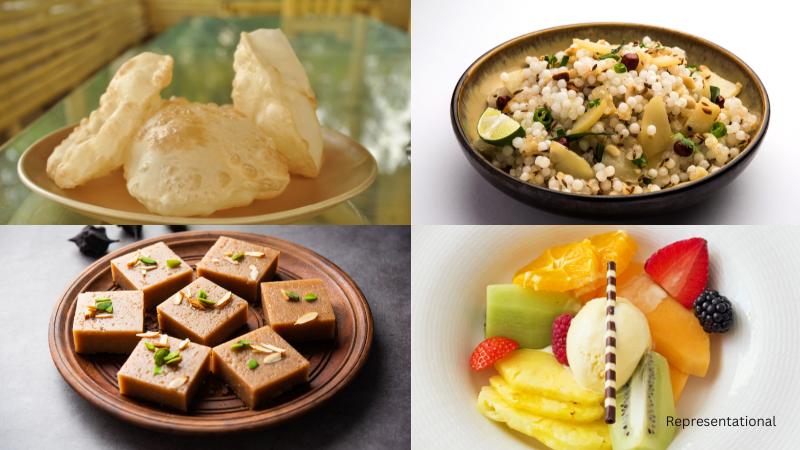
Kuttu Ki Puris (Buckwheat Flour Puris)
Kuttu flour is a popular ingredient during Navratri fasting. It is made from buckwheat, which is gluten-free and high in fiber. Kuttu ki puris are crispy deep-fried flatbreads, typically eaten with a potato curry or raita.
Ingredients:
- 1 cup kuttu flour (buckwheat flour)
- Water as needed
- 1/4 teaspoon rock salt (sendha namak)
- Ghee or oil for frying
Instructions:
- Mix kuttu flour, rock salt, and water to make a smooth dough.
- Divide the dough into small portions and roll them into small puris.
- Heat ghee or oil in a pan and fry the puris until they turn golden and crispy.
- Serve with a simple potato curry or yogurt.
Sabudana Khichdi (Tapioca Pearls Khichdi)
Sabudana (tapioca pearls) is a staple in many Navratri fasting meals. It’s light, filling, and packed with carbohydrates, which help provide energy during the fast.
Ingredients:
- 1 cup sabudana (tapioca pearls)
- 1 tablespoon ghee
- 1/2 teaspoon cumin seeds
- 1/4 teaspoon rock salt (sendha namak)
- 1/2 cup boiled and mashed potatoes
- 1 tablespoon chopped coriander leaves
- Lemon juice (optional)
Instructions:
- Soak sabudana in water for 4-5 hours or overnight. Drain excess water before cooking.
- Heat ghee in a pan and add cumin seeds.
- Add mashed potatoes and sauté them for a few minutes.
- Add the soaked sabudana, rock salt, and mix well.
- Cook for a few minutes until the sabudana pearls turn translucent and the khichdi becomes slightly crispy.
- Garnish with chopped coriander leaves and serve with a squeeze of lemon.
Singhara (Water Chestnut) Flour Pancakes
Singhara flour is another common ingredient used during fasting. These pancakes are light, easy to make, and a delicious alternative to regular pancakes.
Ingredients:
- 1 cup singhara flour (water chestnut flour)
- 1/2 teaspoon cardamom powder
- 1/4 teaspoon rock salt
- 1 tablespoon ghee
- Water (as needed)
- Ghee for frying
Instructions:
- Mix the singhara flour, cardamom powder, and rock salt in a bowl.
- Add water little by little to form a batter of pancake consistency.
- Heat ghee in a pan and pour a small amount of batter to form pancakes.
- Cook both sides until golden brown and crispy.
- Serve with a dollop of yogurt or a sweet chutney.
Fruit Salad with Fresh Cream
During Navratri, fruits are a healthy option and can be paired with fresh cream to make a light and refreshing dessert. This dish is simple, nutritious, and a perfect way to end a meal.
Ingredients:
- 1 cup chopped apples, bananas, and pomegranate seeds
- 1/4 cup fresh cream
- 1 teaspoon honey or sugar (optional)
- A pinch of cardamom powder
Instructions:
- Combine the chopped fruits in a bowl.
- Add fresh cream and mix well.
- Add honey or sugar to taste, if desired.
- Sprinkle a pinch of cardamom powder for extra flavor.
- Serve chilled for a refreshing treat.
4. What to Avoid During Navratri Fasting
While fasting, it’s important to avoid certain foods that do not comply with Navratri fasting customs:
- Onions and Garlic: These are considered tamasic (impure) foods and should be avoided during fasting.
- Meat, Fish, and Eggs: These are non-vegetarian foods and are not allowed during Navratri fasting.
- Refined Grains: Avoid regular wheat and rice; opt for gluten-free grains like buckwheat, amaranth, and water chestnut flour.
- Caffeinated Beverages: Coffee and tea containing caffeine are typically avoided. Herbal teas and water are better alternatives.
5. Hydration During the Fast
Staying hydrated is essential during the fast. Drink plenty of water throughout the day, and consider sipping on coconut water or herbal teas to maintain hydration and electrolytes.
Navratri fasting foods are not only meant to detoxify the body but also provide a spiritual connection through traditional, wholesome meals. Whether you’re preparing kuttu ki puris, sabudana khichdi, or fresh fruit salads, these dishes are rich in flavor and nutrients. With the right ingredients and simple preparations, you can enjoy a fulfilling and healthy fasting experience during Navratri.
🔖 Explore More
Traditional Indian Drinks That Boost Immunity: Natural Ways to Strengthen Your Body
How to Plan Food for a Diwali Party: Tips and Ideas for a Delicious Celebration
Popular Indian Dishes for Baby Showers and Pujas: Delicious and Traditional Recipes
Discover Best Food Deals for NRIs in the USA - Food & Restaurant