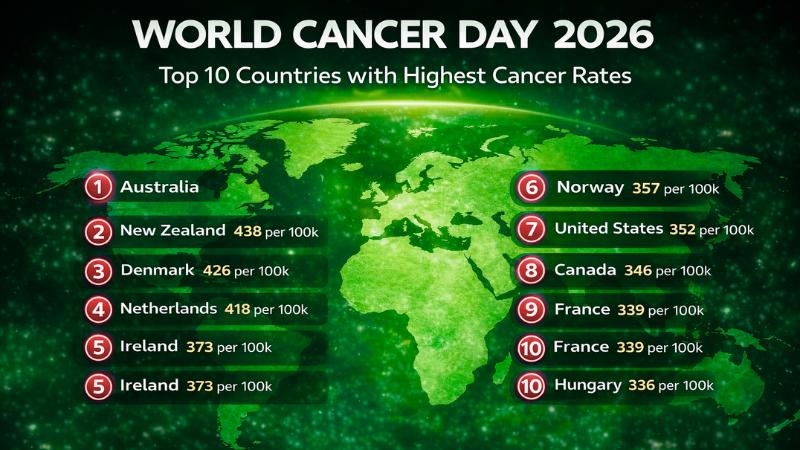
Cancer remains one of the most significant global health challenges, with incidence rates varying dramatically across countries. The Age-Standardised Incidence Rate (ASIR) of cancer is influenced by various factors, including lifestyle habits, healthcare infrastructure, population age, and access to screening and prevention programs. On World Cancer Day 2026, experts highlight the top 10 countries with the highest cancer rates, shedding light on the impact of these factors on global cancer prevalence.
1. Australia
Australia leads the world in cancer rates, with an age-standardised cancer incidence rate projected at 468-618 cases per 100,000 individuals. By 2025, Australia is expected to report 169,759 new cancer cases, with a staggering 43% of the population likely to be diagnosed with cancer by age 85. Skin cancer, driven by Australia’s high levels of sun exposure, contributes significantly to this figure.
2. New Zealand
New Zealand has one of the highest cancer rates globally, with an age-standardised incidence of 438.0 per 100,000 people. The country is particularly affected by skin cancer, attributed to the high UV radiation levels. In 2025, it is projected that 30,000 new cancer cases will be diagnosed.
3. Denmark
Denmark ranks third with 426.0 cases per 100,000 people. The country has a notably high incidence of cancer among people under 75 years old, with many deaths being potentially avoidable. Cancer cases in Denmark are expected to rise by 18% in the coming years, driven by lifestyle factors and aging demographics.
4. Netherlands
With a rate of 418 per 100,000 people, the Netherlands sees around 132,000 new cancer cases annually. The country has one of the highest cancer mortality rates in Europe, with 46,000 deaths reported each year. Factors such as high tobacco use and environmental pollution contribute to this elevated rate.
5. Ireland
In Ireland, cancer diagnoses are also on the rise, with approximately 41,654 new cases diagnosed annually. The country’s age-standardised cancer incidence rate stands at 373 per 100,000 people. Ireland’s high cancer rate is influenced by lifestyle choices, including smoking and alcohol consumption.
6. Norway
Norway reports about 38,811 new cancer cases yearly, with an age-standardised incidence rate of 357 per 100,000 people. The country has experienced a decline in cancer rates in recent years, though skin cancer remains a significant concern, contributing to the overall cancer burden.
7. United States
In the United States, the cancer incidence rate is 352.2 per 100,000 people, with over 2 million new cancer cases expected in 2025. The country faces a high cancer burden, partly due to lifestyle factors such as high tobacco use, obesity, and alcohol consumption. Early screening and awareness campaigns are helping mitigate some of the adverse effects.
8. Canada
Canada’s cancer rate stands at 345.9 cases per 100,000 people. Prostate and breast cancers are particularly common in the country, with one-fifth of all new cancer cases in men being prostate cancer and one-quarter in women being breast cancer. Canada is expected to report approximately 254,800 new cases by 2025.
9. France
France has an age-standardised incidence rate of 339 per 100,000 people, with an estimated 433,000 new cancer cases annually. The country’s data includes non-melanoma skin cancer, which is rarely fatal but still contributes to the overall cancer burden. Smoking and unhealthy eating habits are leading risk factors.
10. Hungary
Hungary rounds out the top 10 with a cancer death rate of 336 per 100,000 people, with 70,816 new cancer cases recorded annually. The country faces a high cancer burden due to widespread smoking, alcohol use, and obesity. Hungary’s healthcare system struggles with providing early screening and treatment, leading to higher cancer mortality rates.
This list underscores the importance of early detection, lifestyle changes, and improved access to healthcare as critical factors in addressing the global cancer crisis. On World Cancer Day 2026, it is crucial to promote awareness, advocate for preventative measures, and emphasize the importance of early screenings to reduce cancer mortality worldwide.