Isro and Andhra University work on AI beach safety system
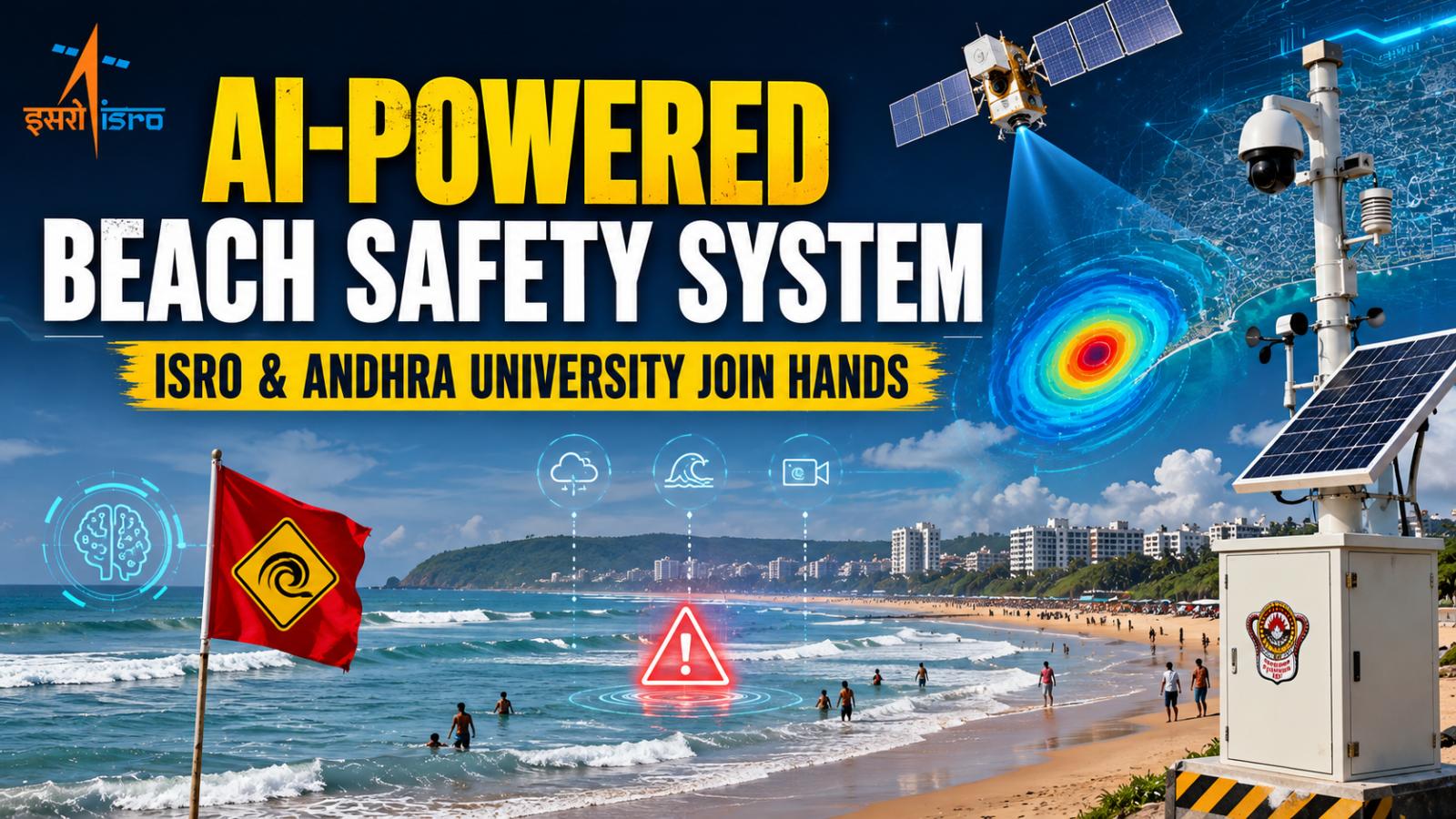
India’s beach safety network may soon get a major technology upgrade as the Space Applications Centre of Isro and Andhra University work together on an AI-based system to detect rip currents and warn visitors in real time. The project, named Project Bharati, is aimed at reducing drowning risks along Indian beaches by combining satellite data, weather inputs, oceanographic information and live video feeds.
The two-year project is being led by Dr S.V.V. Arun Kumar of SAC-Isro and Prof. C.V. Naidu of Andhra University’s Department of Meteorology and Oceanography. The initiative has a budget of ₹22 lakh and builds on previous research into rip currents along the Visakhapatnam coast. Officials said nearly 60 per cent of the software development work has already been completed.
AI lifeguard system to detect danger zones
The proposed system will use artificial intelligence to identify beach conditions and classify areas as safe, caution or danger zones. A key part of the plan is the Next-Generation AI Lifeguard Alert System, a mobile safety unit fitted with 360-degree AI cameras, thermal imaging for night monitoring and weather stations to record wind speed, temperature, humidity and atmospheric pressure.
The software will analyse these inputs continuously to detect the possibility of rip currents. Once a dangerous current is identified, the system will trigger sirens, flashing lights and public announcements. Alerts will also be sent through 4G and 5G networks to lifeguards, coastal security police, control rooms and beach management teams.
Rip currents remain major beach risk
Rip currents are narrow but powerful channels of water that move away from the shore and can pull swimmers into deeper sea within seconds. Officials said these currents can move at speeds of up to five metres per second and may extend between 50 and 150 metres into the sea. Since they are difficult for ordinary beachgoers to spot, timely warnings can make a major difference in preventing accidents.
In Visakhapatnam, rip currents are often observed near drainage outlets and stream mouths. This makes the coast an important testing ground for a system that could later be expanded to other beaches. Real-time warning boards are also expected to display safety information for visitors, helping them understand which beach zones should be avoided.
Pilot project may support coastal agencies
Each solar-powered mobile unit is expected to cost around ₹2 lakh and can be mounted on a movable platform. This design would allow authorities to shift the equipment between beaches depending on seasonal risks, crowd movement and local sea conditions. The pilot project is expected to help coastal security police, Greater Visakhapatnam Municipal Corporation, tourism officials and beach management authorities.
If the Isro-Andhra University system proves successful, it could become an important model for beach safety across India. The real test, however, will be field accuracy, maintenance and quick response by local agencies. Technology can issue alerts, but public safety will still depend on trained lifeguards, visible warnings and strict beach management.