- devara
- 09 Dec 2025
- #Nature #DelhiPollution #AirQuality #EveningCommute #LungDamage #PM2.5 #PM10
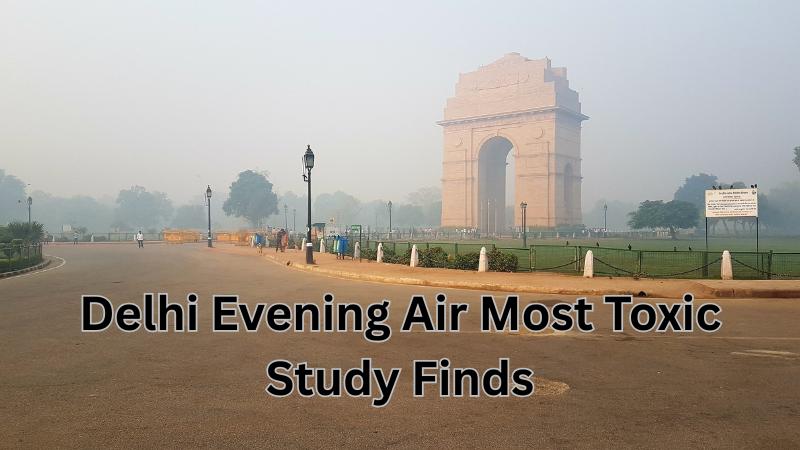
A five-year pollution analysis has revealed alarming findings for Delhi residents, showing that the city’s evening commute is the most harmful time of day for lung exposure. The study reports that people traveling home from work inhale nearly 40 percent more PM2.5 particles and 23 percent higher levels of PM10 compared to morning travelers. Conducted by researchers from Netaji Subhas University of Technology and AARC Engineers and Consultants India, the data highlights how real-time pollution fluctuates across seasons and city zones, making evening travel a high-risk respiratory period.
Delhi remains the world's most polluted capital, frequently recording hazardous AQI levels. According to the IQAir World Air Quality Report 2023, nine out of the world's ten most polluted cities are in India. Fine particulate matter—especially PM2.5—can penetrate deep into the lungs and even reach the bloodstream, increasing risks of asthma, cardiovascular disease, stroke, and certain cancers. Dr Anurag Agarwal from Ashoka University noted that this study gains strength by combining particulate concentration data with respiratory deposition modeling, showing exactly how much pollution actually settles inside the lungs.
Researchers examined PM2.5 and PM10 readings from all 39 Continuous Ambient Air Quality Monitoring Stations in Delhi between January 2019 and December 2023. Using the International Commission on Radiological Protection model, exposure was analysed for adults during light activity and sitting conditions. Industrial and commercial hubs showed the highest respiratory deposition doses, while central Delhi reported relatively lower exposure due to thicker green cover and building layout. During the COVID-19 lockdown, pollution levels dropped significantly, proving that large-scale emission control can drastically improve air quality.
The findings also show that daily traffic plays a major role. As vehicles peak in the evening, particulate load increases sharply, making rush-hour travel the most dangerous for lung health. Air stagnant conditions during winter, crop residue burning from neighbouring states, and construction dust further deteriorate air quality.
Particles above 10 microns tend to irritate the upper respiratory system, but PM2.5 particles can reach the alveoli, and ultrafine particles can even enter the bloodstream. These can stay in the body for years, increasing long-term health risk. Experts suggest that people can significantly reduce exposure by wearing high filtration masks during travel, using indoor air purifiers, and limiting time outdoors during high pollution hours. Pollution expert Devibhaktuni Srikrishna explained that reducing inhaled particles by 75–80 percent through masks and purifiers can lower personal health risk even on severe pollution days.
However, specialists emphasise that protective measures must be supported by systemic action. Solutions such as cleaner public transport, industrial emissions control, dust management, and agricultural reforms are essential for sustainable improvement. Without strong intervention, Delhi’s evening commute will continue to remain one of the most harmful daily exposures for millions of residents.