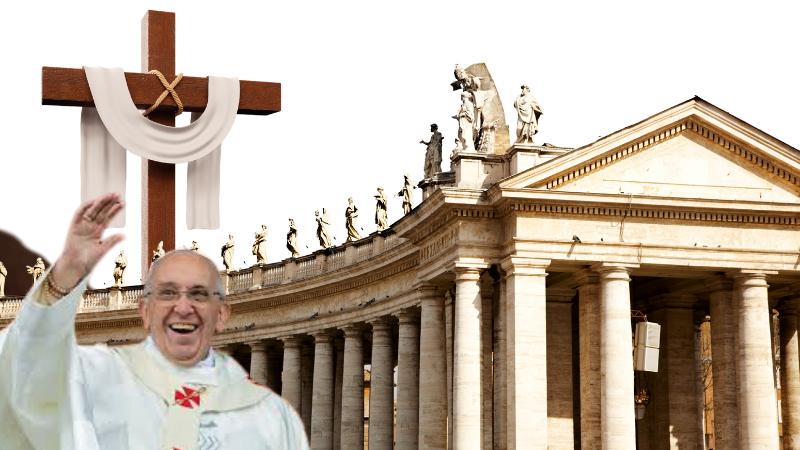
Pope Francis, born Jorge Mario Bergoglio in Buenos Aires, Argentina, on December 17, 1936, passed away on Easter Monday, April 21, 2025, at the age of 88. The Vatican confirmed his death in a statement read by Cardinal Kevin Farrell, the Vatican camerlengo, at 7:35 a.m. local time. The announcement was made from the Casa Santa Marta, the residence where Pope Francis had lived since the beginning of his papacy. Cardinal Farrell described the pope as having "dedicated his entire life to the service of the Lord and of his Church."
Pope Francis had been battling health issues for several years. He had part of one lung removed as a young man and had chronic lung disease, which made him susceptible to respiratory infections. In February 2025, he was hospitalized at Rome's Gemelli Hospital due to a severe respiratory infection that developed into double pneumonia. Despite his declining health, he made a public appearance on Easter Sunday, blessing thousands of people in St. Peter’s Square and taking a brief ride in the popemobile, which was met with enthusiastic applause.
His death has prompted an outpouring of tributes from world leaders and religious figures. Italian Premier Giorgia Meloni expressed deep sorrow, stating that the world was bidding farewell to "a great man and a great shepherd." U.S. Vice President JD Vance, who met with Pope Francis just a day earlier, shared his condolences, recalling the pope's impactful homily during the early days of the COVID-19 pandemic.
Pope Francis's papacy was marked by efforts to modernize the Catholic Church and make it more inclusive. He advocated for the inclusion of women in decision-making roles within the Vatican and worked towards making the Church a more welcoming place for LGBTQ+ individuals. He also addressed the issue of child sexual abuse within the Church, implementing reforms aimed at increasing transparency and accountability.
Born into a family of Italian immigrants, Pope Francis entered the Society of Jesus in 1958 and was ordained a priest in 1969. He served in various roles within the Church, including as Archbishop of Buenos Aires and as a cardinal. In 2013, following the resignation of Pope Benedict XVI, Cardinal Bergoglio was elected as the 266th pope, taking the name Francis in honor of Saint Francis of Assisi. His election was historic, as he became the first pope from the Americas and the first Jesuit pope.
In December 2024, Pope Francis appointed 21 new cardinals, many of whom were key figures in his reform agenda. This move further solidified his influence within the College of Cardinals, the body responsible for electing his successor. With the death of Pope Francis, the Vatican will soon initiate the process of selecting a new pope. This process, known as the papal conclave, involves the College of Cardinals gathering in the Sistine Chapel to elect a new pontiff. The conclave begins with the phrase "extra omnes," signaling that no one outside the College of Cardinals is allowed to remain. The cardinals are then isolated from the outside world, and voting takes place twice daily until a new pope is elected by a two-thirds majority. If no candidate achieves this majority after 30 ballots, a simple majority suffices. The election's conclusion is signaled by white smoke from the Sistine Chapel chimney, and the new pope is introduced to the public with the announcement "Habemus papam" from the balcony of St. Peter’s Basilica.
The conclave is expected to begin within 15 to 20 days after the pope's death, following the traditional period of mourning and funeral arrangements. The next pope will face the challenge of continuing the work of Pope Francis, addressing the issues facing the Church, and leading the faithful in a rapidly changing world.
As the world mourns the loss of Pope Francis, his legacy as a compassionate leader who sought to bring the Church closer to the people will continue to inspire future generations. His commitment to social justice, interfaith dialogue, and Church reform has left an indelible mark on the Catholic Church and the world at large.