The Indus Waters Treaty, signed in 1960 by then Indian Prime Minister Jawaharlal Nehru and Pakistani President Mohammad Ayub Khan, had been a symbol of rare cooperation between the two countries despite several wars and periods of hostility. The treaty, brokered with the aid of the World Bank, governs the distribution of the Indus River and its tributaries between the two nations. As one of the treaty's signatories and facilitators, the World Bank has historically played a central role in mediating disagreements regarding water sharing.
India’s decision to suspend the treaty came in the wake of the Pahalgam terror attack, which resulted in casualties among Indian security personnel. In retaliation, India carried out targeted airstrikes on terrorist camps located in Pakistan and Pakistan-Occupied Kashmir. The response from Pakistan came swiftly, with attempted strikes on Indian military installations in 15 cities. However, those efforts were successfully neutralized. In a strong countermeasure, Indian forces carried out further airstrikes, including strikes on Pakistani air defence systems, escalating the situation further.
A critical component of India’s response involved halting the flow of water from the Baglihar dam, a key hydroelectric facility on the Chenab River located in the Ramban district of Jammu and Kashmir. The Baglihar dam, a run-of-the-river project, was constructed within the framework of the Indus Waters Treaty and is designed to generate 900 MW of power. The dam is allowed to store water only up to a certain limit. To extend the duration for which water can be withheld, structural changes like increasing the dam’s height would be necessary an action that is not feasible in the short term. Therefore, the temporary suspension of water flow served as a clear geopolitical signal to Pakistan.
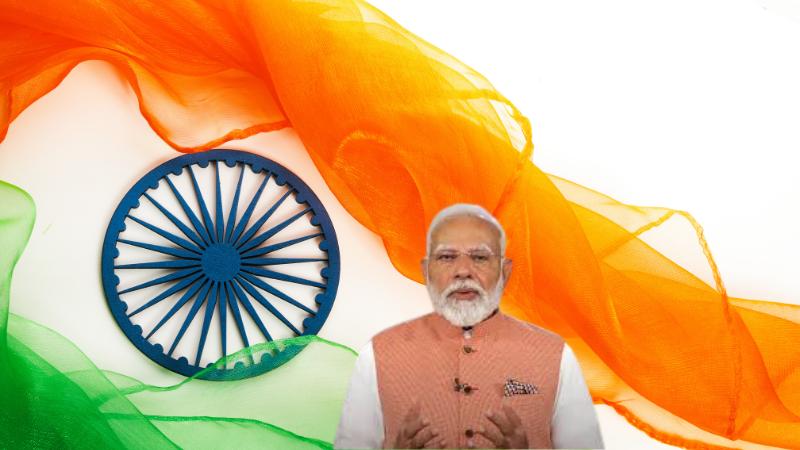
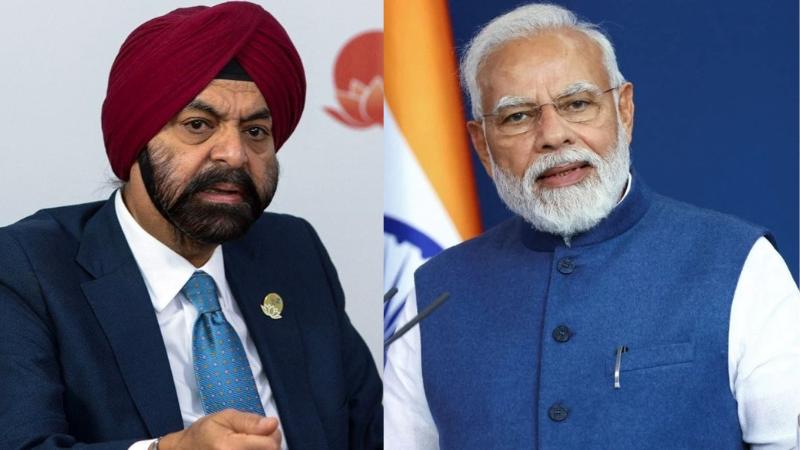
The World Bank’s involvement adds another layer of diplomatic sensitivity to the unfolding events. Given that the Bank facilitated the original agreement, President Banga's meeting with Prime Minister Modi is seen not only as a diplomatic engagement but also as a potential platform for informal dialogue regarding future developments on water-sharing arrangements in South Asia.
Beyond the core geopolitical issues, President Banga's visit to India includes additional engagements. He is scheduled to travel to Uttar Pradesh on Friday, where he will participate in several developmental meetings and events. According to a statement released by the Uttar Pradesh government, the visit underscores growing international interest in the state’s economic progress under the leadership of Chief Minister Yogi Adityanath. The government highlighted that Uttar Pradesh is on an ambitious path to become a USD 1 trillion economy, and Banga’s presence reflects the global community’s acknowledgment of these efforts.
This visit is significant in terms of economic and strategic importance. The timing of Ajay Banga’s India tour, particularly his meeting with Prime Minister Modi, suggests that discussions may have extended beyond just development goals, possibly touching on financial cooperation, infrastructure projects, and the implications of India's current standoff with Pakistan. While no official statement detailing the conversation has been released, the context of the meeting hints at multi-layered discussions, including both economic development and regional stability.
As tensions remain high between the two nuclear-armed neighbors, the suspension of the Indus Waters Treaty and the military engagements underscore the fragile peace in South Asia. The World Bank’s historical role in mediating the treaty and its ongoing relationship with both countries places it in a complex but crucial position. Whether President Banga’s visit contributes to diplomatic de-escalation or is merely a scheduled development engagement remains to be seen. However, it is clear that his presence at this pivotal time sends a strong message of international observation and potential involvement. As India navigates both its security concerns and developmental aspirations, interactions such as this meeting between global economic leaders and Indian policymakers underscore the country’s central role on the international stage. It also emphasizes how interconnected global development, security, and diplomacy have become in an era of rapid geopolitical shifts.