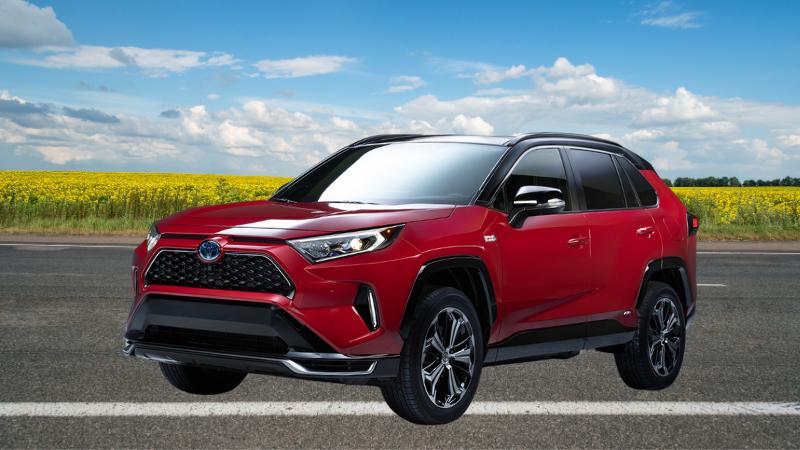
Toyota Motor has announced that its top-selling vehicle in the United States, the RAV4, will transition to a hybrid-only lineup starting with the 2026 model year. The significant update marks a shift in strategy for the automaker, as the next-generation RAV4 will no longer be available with a traditional internal combustion engine. Instead, it will feature hybrid and plug-in hybrid powertrains, continuing to use a 2.5-liter four-cylinder engine supported by electric motors and battery technologies.
The move comes at a time when electric vehicle adoption in the U.S. has been slower than anticipated, prompting many automakers to emphasize hybrid technologies as a middle ground that combines fuel efficiency with conventional engine performance. Toyota, a pioneer in hybrid technology since introducing the Prius in the late 1990s, has consistently expanded its hybrid offerings despite industry pressure to accelerate fully electric vehicle development. The company’s strategy appears to be resonating with consumers, as Toyota’s electrified vehicle sales, including hybrids, plug-in hybrids, and all-electric models, accounted for over 43 percent of its 2.3 million units sold in the U.S. last year.
RAV4 sales have remained strong, increasing 9.3 percent in 2024 to nearly 475,200 units. Hybrid versions of the SUV saw a notable 29.3 percent rise, while plug-in hybrid models grew by 19.3 percent. Collectively, these hybrid-powered variants made up around half of all RAV4 sales for the year. This growing demand played a major role in Toyota’s decision to move exclusively to hybrid powertrains for the next generation of its flagship SUV.
David Christ, who oversees the Toyota brand in North America, emphasized that the hybrid RAV4 models have become the faster-turning inventory and are heavily favored by both consumers and dealers. He explained that the feedback from the market clearly indicated a strong preference for hybrid power, making the transition an obvious choice for the company. Christ also confirmed that Toyota intends to further expand its plug-in hybrid offerings across the lineup.
With the RAV4's inclusion, Toyota now has eight models in its U.S. portfolio offered solely as hybrids, joining vehicles such as the Camry, Prius, Sienna, and Sequoia. In 2024, hybrid RAV4 models represented 44 percent of all RAV4 sales, while plug-in versions accounted for approximately 6.5 percent. The redesigned RAV4, which includes updates to its interior, exterior, and overall performance, is expected to arrive in U.S. dealerships later this year. Pricing for the new model has not yet been released, but the current RAV4 begins at $30,645, with hybrid variants starting around $33,700, both including delivery fees.
Since its U.S. debut in 1996, the RAV4 has steadily climbed the sales charts, becoming the best-selling non-pickup vehicle in the country. According to last year’s figures, it finished just behind the Ford F-Series and Chevrolet Silverado, although some data firms indicate that the RAV4 actually topped all individual vehicle models, including pickups, when sales were broken out by variant.
However, Toyota faces several challenges going forward, particularly regarding tariffs and production logistics. President Donald Trump's ongoing 25 percent tariffs on imported vehicles and auto parts are impacting cost structures for manufacturers like Toyota, which produces the majority of RAV4 models sold in the U.S. at its plant in Ontario, Canada. While some RAV4s are built at Toyota’s Kentucky plant, and plug-in hybrid versions are imported from Japan, the automaker has yet to outline detailed plans to mitigate tariff-related expenses. Toyota’s Chief Operating Officer Mark Templin suggested that ramping up production at the Kentucky facility could be part of the solution, given the RAV4’s high volume, but acknowledged that meeting demand would likely require multiple production sites.
The RAV4's popularity also means that Toyota continues to experience low inventory levels. Data from Cox Automotive showed that Toyota’s days’ supply — a measure of how long inventory lasts based on sales pace — stood at just 29 days, less than half the industry average of 66 days. The RAV4 in particular remains one of the fastest-selling vehicles in the automotive market, underscoring the urgency for the company to address supply and production capacity, especially as it transitions to an all-hybrid offering.
Amid these operational challenges, Toyota continues to conduct scenario planning to adapt to evolving trade policies and global production shifts. Templin noted that uncertainty around tariffs remains a concern, stating that consistent policy would benefit the entire automotive industry. Nevertheless, Toyota remains optimistic about the RAV4's future. The upcoming hybrid-only model is expected to build on the vehicle’s legacy and expand its reach as more customers prioritize fuel efficiency and lower emissions without fully committing to all-electric vehicles.
As the automotive industry balances consumer hesitancy around electric vehicles and growing regulatory pressure for greener transportation, Toyota’s bet on hybrids appears well-timed. The RAV4’s upcoming redesign and shift to hybrid power reflect a broader industry trend that leans into hybridization as a practical and scalable step toward electrification. With strong customer support, increasing sales, and expanding hybrid infrastructure, Toyota’s decision to make the RAV4 an all-hybrid model may set the tone for other automakers reconsidering their own EV roadmaps.