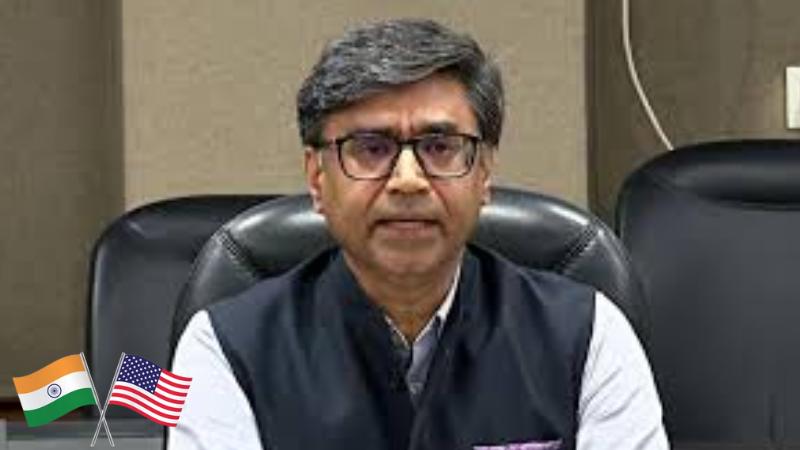
India’s foreign secretary Vikram Misri concluded a three-day visit to the United States on Thursday, where he led discussions on a broad range of strategic issues including trade, defence, and critical technologies. The visit marked a continued deepening of bilateral ties, with both nations reaffirming their shared commitment to shaping a forward-looking partnership suited for the evolving global landscape.
During his visit, the foreign secretary engaged in high-level meetings with key US officials. Among the main areas of focus were advancing the bilateral trade agenda, strengthening defence cooperation, and furthering joint efforts in critical and emerging technologies. Misri also led the Indian delegation in a high-level inter-agency dialogue under the India-US Compact for the 21st Century, held in Washington. This dialogue included participation from India’s deputy National Security Adviser and focused on implementing the TRUST initiative — Transforming Relations Utilizing Strategic Technologies.
The TRUST framework, now guiding technology cooperation between the two countries, aims to replace earlier models and reflects a sharper focus on semiconductors, artificial intelligence, clean energy, quantum computing, and cybersecurity. As part of this initiative, India and the US are looking to streamline regulatory collaboration, expand innovation partnerships, and facilitate more seamless technology transfers and joint development efforts.
Both countries also reviewed regional and global security dynamics. Discussions highlighted the importance of maintaining peace and stability in the Indo-Pacific and South Asia, particularly in the context of ongoing geopolitical tensions. The importance of forums like the Quad, the India-Middle East-Europe Economic Corridor (IMEC), and the I2U2 partnership were emphasized as platforms for deeper multilateral engagement and infrastructure development.
Trade access into the Indian market was a recurring theme from the US side, which continues to advocate for broader economic entry. While comprehensive trade negotiations are ongoing, the discussions reaffirmed the mutual interest in creating a rules-based, equitable economic partnership. The Indian side emphasized the importance of maintaining sovereign decision-making in economic policies, even as it welcomed greater investment and collaboration in key sectors.
In addition to trade and technology, the US side raised cooperation on migration governance and counter-narcotics. Both countries expressed shared concerns over transnational crime, and agreed to enhance institutional cooperation to address these challenges effectively. The reaffirmation of strong bilateral ties was underscored by the recognition of India’s central role in the Indo-Pacific and the broader strategic calculus of both countries.
The timing of the visit also coincided with recent developments in South Asia. A ceasefire agreement was reached earlier this month between India and Pakistan following several days of heightened military activity. While external actors have indicated a role in facilitating the ceasefire, India has categorically stated that the agreement resulted from direct communication between its military leadership and their Pakistani counterparts.
India has reiterated that its engagement with Pakistan remains strictly bilateral and that third-party involvement is neither needed nor desired. The position that talks and terror cannot coexist was again underlined, consistent with India’s longstanding policy in the region. The government also clarified that trade or tariff-related considerations were never part of the military de-escalation discussions, countering any external claims of having influenced the process through economic leverage.
The visit also included a strategic conversation on energy cooperation and climate-related goals, reflecting the growing convergence between the two countries on sustainability and clean technology. Both sides acknowledged the urgency of transitioning to cleaner energy sources while maintaining economic growth and energy security.
Foreign secretary Misri’s visit reaffirmed the multidimensional nature of India-US relations, where strategic convergence goes beyond traditional security issues. The meetings set the stage for greater alignment in key sectors that define the future — from defence modernisation and trade to technology innovation and regional stability.
With frameworks like TRUST providing structured direction, and ongoing dialogue covering sensitive regional matters and global challenges, the visit marked another important step in shaping an enduring strategic partnership between the two democracies. The commitment to deeper cooperation, mutual respect for sovereignty, and a shared vision for peace and prosperity signal a robust phase in bilateral engagement.
During his visit, the foreign secretary engaged in high-level meetings with key US officials. Among the main areas of focus were advancing the bilateral trade agenda, strengthening defence cooperation, and furthering joint efforts in critical and emerging technologies. Misri also led the Indian delegation in a high-level inter-agency dialogue under the India-US Compact for the 21st Century, held in Washington. This dialogue included participation from India’s deputy National Security Adviser and focused on implementing the TRUST initiative — Transforming Relations Utilizing Strategic Technologies.
The TRUST framework, now guiding technology cooperation between the two countries, aims to replace earlier models and reflects a sharper focus on semiconductors, artificial intelligence, clean energy, quantum computing, and cybersecurity. As part of this initiative, India and the US are looking to streamline regulatory collaboration, expand innovation partnerships, and facilitate more seamless technology transfers and joint development efforts.
Both countries also reviewed regional and global security dynamics. Discussions highlighted the importance of maintaining peace and stability in the Indo-Pacific and South Asia, particularly in the context of ongoing geopolitical tensions. The importance of forums like the Quad, the India-Middle East-Europe Economic Corridor (IMEC), and the I2U2 partnership were emphasized as platforms for deeper multilateral engagement and infrastructure development.
Trade access into the Indian market was a recurring theme from the US side, which continues to advocate for broader economic entry. While comprehensive trade negotiations are ongoing, the discussions reaffirmed the mutual interest in creating a rules-based, equitable economic partnership. The Indian side emphasized the importance of maintaining sovereign decision-making in economic policies, even as it welcomed greater investment and collaboration in key sectors.
In addition to trade and technology, the US side raised cooperation on migration governance and counter-narcotics. Both countries expressed shared concerns over transnational crime, and agreed to enhance institutional cooperation to address these challenges effectively. The reaffirmation of strong bilateral ties was underscored by the recognition of India’s central role in the Indo-Pacific and the broader strategic calculus of both countries.
The timing of the visit also coincided with recent developments in South Asia. A ceasefire agreement was reached earlier this month between India and Pakistan following several days of heightened military activity. While external actors have indicated a role in facilitating the ceasefire, India has categorically stated that the agreement resulted from direct communication between its military leadership and their Pakistani counterparts.
India has reiterated that its engagement with Pakistan remains strictly bilateral and that third-party involvement is neither needed nor desired. The position that talks and terror cannot coexist was again underlined, consistent with India’s longstanding policy in the region. The government also clarified that trade or tariff-related considerations were never part of the military de-escalation discussions, countering any external claims of having influenced the process through economic leverage.
The visit also included a strategic conversation on energy cooperation and climate-related goals, reflecting the growing convergence between the two countries on sustainability and clean technology. Both sides acknowledged the urgency of transitioning to cleaner energy sources while maintaining economic growth and energy security.
Foreign secretary Misri’s visit reaffirmed the multidimensional nature of India-US relations, where strategic convergence goes beyond traditional security issues. The meetings set the stage for greater alignment in key sectors that define the future — from defence modernisation and trade to technology innovation and regional stability.
With frameworks like TRUST providing structured direction, and ongoing dialogue covering sensitive regional matters and global challenges, the visit marked another important step in shaping an enduring strategic partnership between the two democracies. The commitment to deeper cooperation, mutual respect for sovereignty, and a shared vision for peace and prosperity signal a robust phase in bilateral engagement.