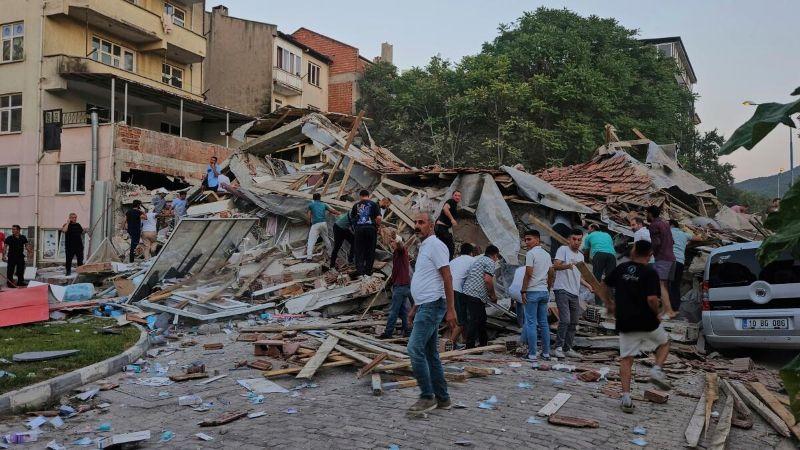
A powerful 6.1-magnitude earthquake struck the Sindirgi district of Balikesir province in western Turkey on Sunday, leaving one person dead and dozens injured. The Turkish disaster management agency, AFAD, confirmed the quake occurred at 7:53 pm local time (1653 GMT) and was followed by around 20 aftershocks, with magnitudes ranging from 3.5 to 4.6. The tremor was felt across several cities, including Istanbul and the popular tourist city of Izmir, causing widespread alarm among residents.
Authorities reported that 16 buildings collapsed in Sindirgi and its surrounding areas, four of which were inhabited. Among the damaged structures was a three-storey building in the city center, where six residents were trapped when the quake hit. While several people were rescued alive, an 81-year-old victim died shortly after being pulled from the rubble. Interior Minister Ali Yerlikaya confirmed that 29 others sustained injuries, though none were in critical condition.
AFAD deployed 319 first responders to the quake-hit areas to aid in search and rescue efforts. Local mayor Serkan Sak told Turkish media that four individuals had been successfully rescued, while efforts continued to free others trapped beneath the debris. Emergency services worked through the night to ensure all survivors were accounted for.
Turkey’s location on multiple geological fault lines makes it highly susceptible to devastating earthquakes. The country has faced multiple catastrophic quakes in the past, including the February 2023 disaster that killed at least 53,000 people and destroyed large parts of Antakya. In early July this year, another tremor measuring 5.8 magnitude struck the same region, resulting in one death and dozens injured. The latest Sindirgi earthquake serves as a stark reminder of the ongoing seismic risks faced by communities across Turkey. This latest tragedy has once again raised concerns about building safety and preparedness in earthquake-prone regions, with authorities urging residents to follow safety protocols and remain alert for potential aftershocks.