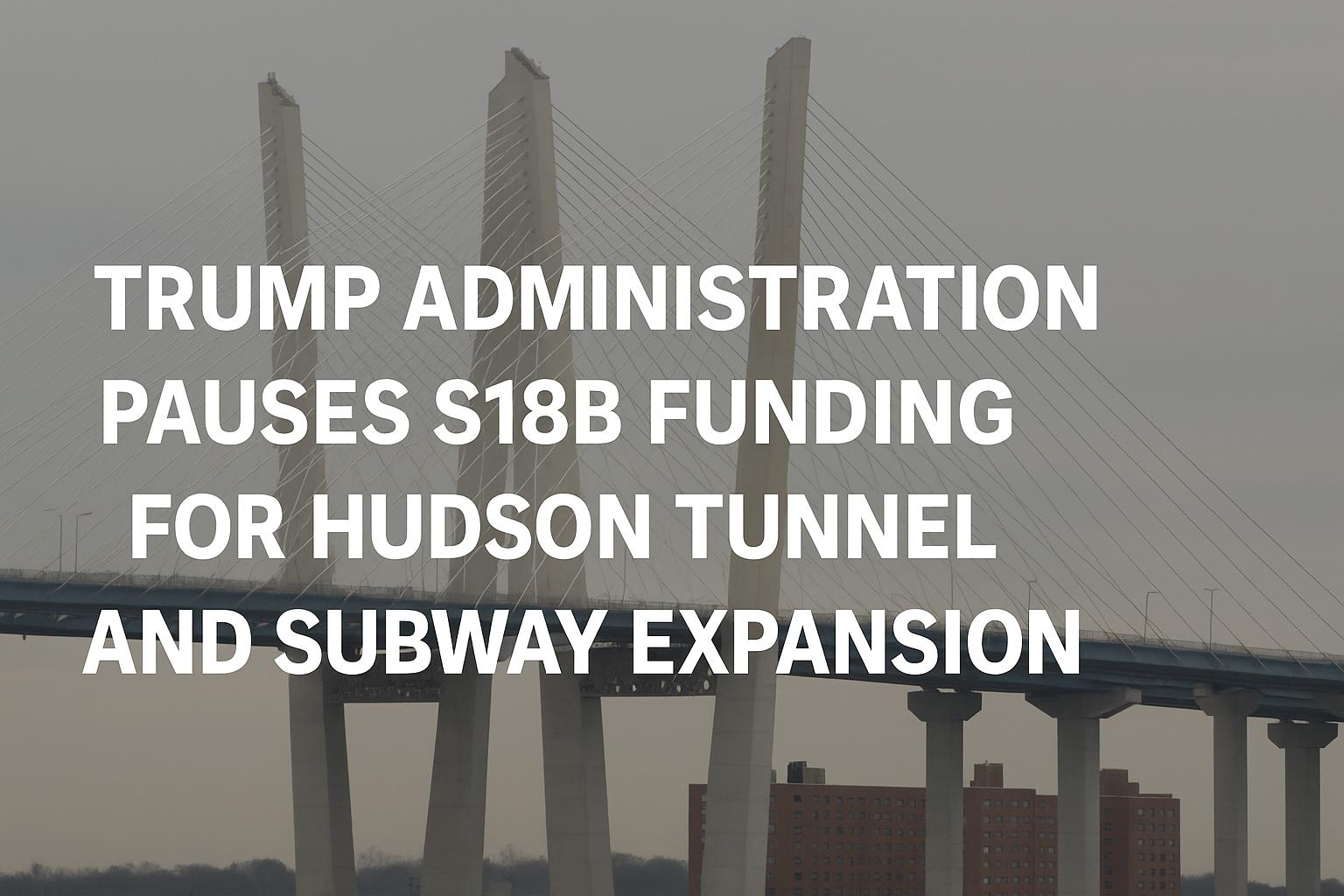
The Trump administration announced that it is withholding approximately $18 billion in federal funds meant to support two of New York’s most ambitious infrastructure projects: a new rail tunnel beneath the Hudson River and the expansion of the Second Avenue subway. The decision, revealed on Wednesday, comes against the backdrop of the federal government shutdown and adds another layer of political tension to already strained negotiations in Washington.
According to the administration, the suspension of funds was justified on the grounds that previous approvals and funding allocations were tied to diversity, equity, and inclusion principles, which officials have criticized as unconstitutional. A statement from the budget director described the freeze as part of a broader reevaluation of how public funds are being distributed. However, other administration sources, speaking under anonymity, indicated that the more immediate reason was the shutdown itself, which has resulted in the furlough of key Transportation Department employees. These furloughed workers are responsible for reimbursing contractors and staff engaged in the projects, effectively cutting off the flow of funds until normal government operations resume.
The political undercurrents surrounding the move have become increasingly evident. The White House has directed blame for the shutdown toward Senate Democratic leader Chuck Schumer, a staunch supporter of both the Hudson tunnel and the Second Avenue subway projects. In past public remarks, Schumer expressed great pride and optimism about the tunnel, even recalling private moments with President Biden when they spoke enthusiastically about its potential to transform transit across the Northeast corridor. For the Trump administration, the decision to target funding has been viewed as a pointed response toward Democratic leadership in New York.
New York Governor Kathy Hochul responded swiftly during a news conference addressing the shutdown, describing the federal action as deeply frustrating and harmful to New Yorkers. She argued that the decision to freeze funds reflects a prioritization of political and cultural agendas over essential national infrastructure needs. Hochul stated that the state had already fulfilled its commitments and was fully prepared to advance construction, stressing that the projects are vital not only for the city and state but also for the nation as a whole. In her words, the move places “culture wars ahead of our needs, the needs of a nation.”
The Hudson River rail tunnel has been plagued by decades of political disputes and funding battles. The project is seen as essential to modernizing rail infrastructure between New York and New Jersey, replacing an aging 110-year-old tunnel that currently carries both Amtrak and commuter trains. On any given day, hundreds of thousands of passengers depend on the tunnel, and disruptions have the potential to ripple across the entire Northeast corridor stretching from Boston to Washington, D.C. Engineers and planners have long warned that continued reliance on the deteriorating structure could lead to serious disruptions in service, making the project one of the highest-priority infrastructure needs in the country.
Similarly, the Second Avenue subway represents one of the most ambitious undertakings in New York City’s transit history. First envisioned in the 1920s, it became a decades-long symbol of unfulfilled promises as funding and political will ebbed and flowed over generations. The first section of the line finally opened to riders in January 2017, offering long-awaited relief to commuters on Manhattan’s east side. Current plans focus on extending the line further into East Harlem, a phase that would provide improved transit access to historically underserved neighborhoods and reduce congestion on other lines. The Metropolitan Transportation Authority has been preparing to move forward with construction, but the federal funding freeze threatens to derail progress once again.
The freeze comes at a moment when transit advocates argue that large-scale infrastructure projects are crucial for economic growth and long-term competitiveness. Delays not only affect commuters and local economies but also send a message that federal support for vital transit networks can be jeopardized by political disputes. The halt of funds has raised alarms among business leaders, urban planners, and riders alike, who fear that prolonged disruption will increase costs, erode public trust, and push completion timelines further into the future.
For now, uncertainty surrounds both projects as state officials wait to see how the government shutdown and political battles in Washington play out. While state leaders have vowed to continue pressing forward, the loss of federal support, even temporarily, raises serious questions about whether timelines and budgets can be maintained. For commuters who rely daily on the existing Hudson tunnel and for residents awaiting the Second Avenue subway extension, the stakes are significant. The political clash underscores the fragile balance between federal funding commitments and the practical needs of millions who depend on reliable transportation infrastructure.