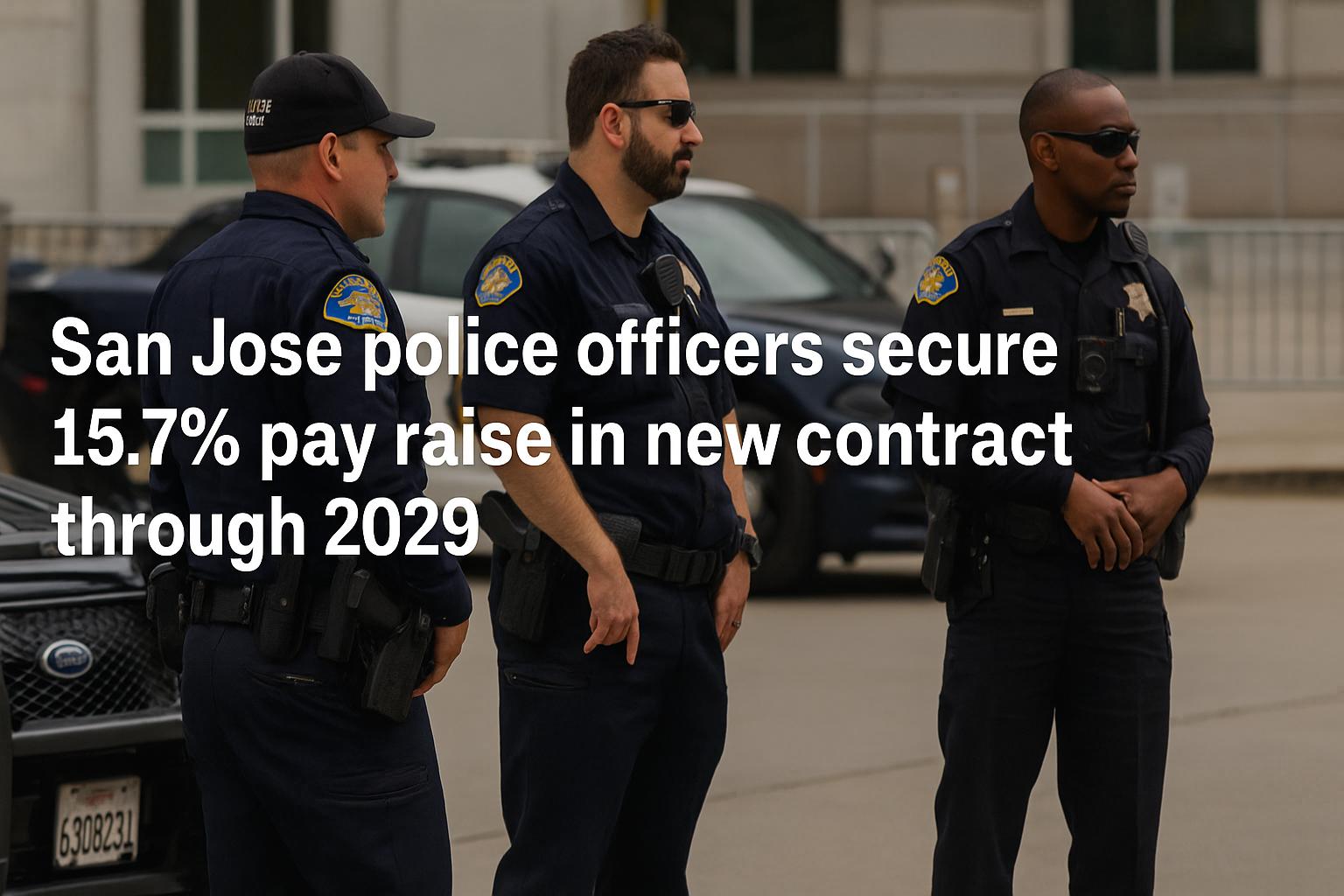
San Jose officials have approved a landmark labor agreement that will provide city police officers with a 15.7 percent pay raise spread out through 2029, a move aimed at strengthening recruitment and addressing ongoing staffing shortages. The unanimous decision by the city council ensures that officers under the new contract will receive significant wage increases over the next three years, with the financial impact to taxpayers estimated at about $46 million in raises alone, not including long-term pension liabilities.
Under the terms of the agreement, officers will receive a 7 percent raise this year, followed by a 5 percent increase next year and a 3 percent increase in 2027-28. The raises, compounded over a 39-month period, extend into the 2029-30 fiscal year. To manage the costs, officials plan to use the city’s salaries and benefits reserve during the upcoming midyear budget review. City leaders described the decision as both an investment in public safety and a recognition of the commitment and sacrifices made by officers serving the community.
Union representatives praised the agreement as a vital step toward ensuring San Jose remains competitive in retaining and recruiting police officers. For years, the department has struggled with vacancies and staffing shortages, placing strain on existing officers and limiting the city’s ability to meet public safety demands. Leaders argued that without competitive salaries, San Jose risked losing experienced officers to nearby jurisdictions offering higher pay and stronger incentives.
Councilmembers expressed support for the agreement, noting that it could help alleviate staffing shortages that have impacted service levels across the city. They emphasized that the raises are not just about wages but about ensuring that residents receive consistent law enforcement presence, faster response times, and stronger community policing initiatives.
At the same time, concerns were raised about the realities faced in certain neighborhoods. District 5 Councilmember Peter Ortiz highlighted that while San Jose often promotes its standing as one of the safest large cities in the country, that experience does not reflect what some residents live through daily. He pointed out that communities in East San Jose, particularly small businesses, have faced repeated burglaries and underreported crimes. Ortiz stressed that while increased pay may support recruitment, the disparities in safety between neighborhoods remain an ongoing challenge that must be addressed with targeted strategies.
This perspective underscores the complexity of San Jose’s public safety landscape. While the city seeks to maintain its reputation for safety through investment in its police force, not all communities share equally in those benefits. Leaders acknowledge that beyond officer pay, broader strategies are needed to ensure safety across every neighborhood, including crime prevention initiatives, community partnerships, and additional resources for underserved areas.
The financial implications of the contract are significant. While the $46 million cost covers initial wage increases, the long-term fiscal impact will be far greater when pension obligations are included. Some critics have questioned whether the city can sustain these commitments without diverting funds from other critical services or seeking new revenue sources. City officials counter that failing to address the staffing shortage could result in far greater costs, both financially and in terms of diminished safety for residents.
The agreement marks one of the most significant commitments to police compensation in recent years. For officers, it provides financial stability and recognition at a time when law enforcement agencies nationwide face challenges in hiring and retention. For residents, it represents an attempt to strengthen public safety infrastructure, though questions remain about how evenly these improvements will be felt across the city.
As the contract moves forward, attention will turn to whether the increased investment translates into improved recruitment, stronger retention of experienced officers, and more effective policing outcomes. The decision reflects the ongoing balancing act for city leaders: ensuring fiscal responsibility while prioritizing the safety and security of the community.
Under the terms of the agreement, officers will receive a 7 percent raise this year, followed by a 5 percent increase next year and a 3 percent increase in 2027-28. The raises, compounded over a 39-month period, extend into the 2029-30 fiscal year. To manage the costs, officials plan to use the city’s salaries and benefits reserve during the upcoming midyear budget review. City leaders described the decision as both an investment in public safety and a recognition of the commitment and sacrifices made by officers serving the community.
Union representatives praised the agreement as a vital step toward ensuring San Jose remains competitive in retaining and recruiting police officers. For years, the department has struggled with vacancies and staffing shortages, placing strain on existing officers and limiting the city’s ability to meet public safety demands. Leaders argued that without competitive salaries, San Jose risked losing experienced officers to nearby jurisdictions offering higher pay and stronger incentives.
Councilmembers expressed support for the agreement, noting that it could help alleviate staffing shortages that have impacted service levels across the city. They emphasized that the raises are not just about wages but about ensuring that residents receive consistent law enforcement presence, faster response times, and stronger community policing initiatives.
At the same time, concerns were raised about the realities faced in certain neighborhoods. District 5 Councilmember Peter Ortiz highlighted that while San Jose often promotes its standing as one of the safest large cities in the country, that experience does not reflect what some residents live through daily. He pointed out that communities in East San Jose, particularly small businesses, have faced repeated burglaries and underreported crimes. Ortiz stressed that while increased pay may support recruitment, the disparities in safety between neighborhoods remain an ongoing challenge that must be addressed with targeted strategies.
This perspective underscores the complexity of San Jose’s public safety landscape. While the city seeks to maintain its reputation for safety through investment in its police force, not all communities share equally in those benefits. Leaders acknowledge that beyond officer pay, broader strategies are needed to ensure safety across every neighborhood, including crime prevention initiatives, community partnerships, and additional resources for underserved areas.
The financial implications of the contract are significant. While the $46 million cost covers initial wage increases, the long-term fiscal impact will be far greater when pension obligations are included. Some critics have questioned whether the city can sustain these commitments without diverting funds from other critical services or seeking new revenue sources. City officials counter that failing to address the staffing shortage could result in far greater costs, both financially and in terms of diminished safety for residents.
The agreement marks one of the most significant commitments to police compensation in recent years. For officers, it provides financial stability and recognition at a time when law enforcement agencies nationwide face challenges in hiring and retention. For residents, it represents an attempt to strengthen public safety infrastructure, though questions remain about how evenly these improvements will be felt across the city.
As the contract moves forward, attention will turn to whether the increased investment translates into improved recruitment, stronger retention of experienced officers, and more effective policing outcomes. The decision reflects the ongoing balancing act for city leaders: ensuring fiscal responsibility while prioritizing the safety and security of the community.