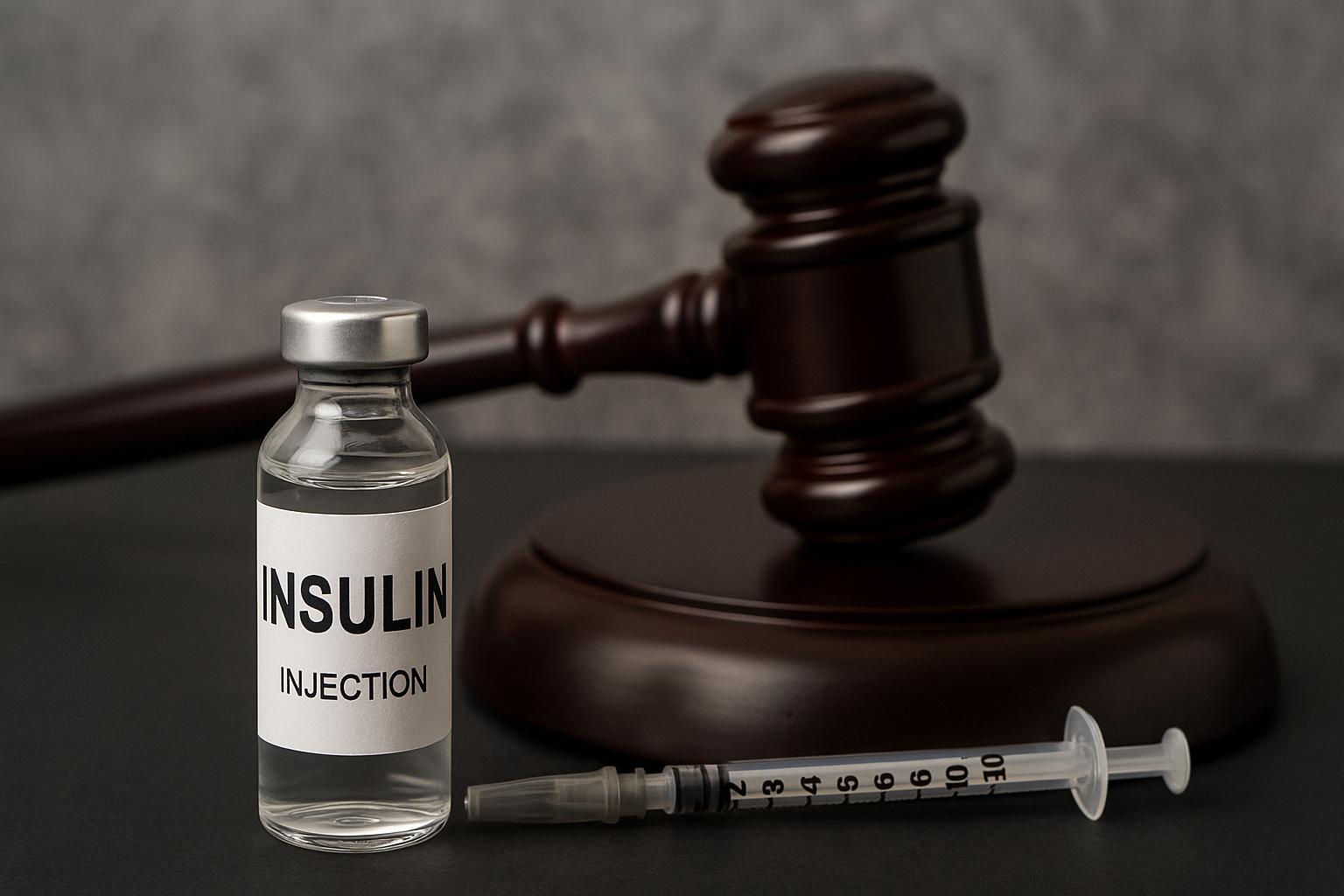
Less than a week after being convicted of murdering her fifth husband with insulin, Texas resident and former military veteran Sarah Hartsfield has filed an appeal to overturn her conviction and requested a new trial. The 50-year-old Chambers County woman was sentenced to life in prison, with the possibility of parole after 30 years, following swift jury deliberations that concluded her fate. Her case has drawn widespread attention due to the unusual nature of the crime, her multiple marriages, and the chilling evidence presented during the proceedings.
Authorities confirmed that Sarah Hartsfield was transferred from the Chambers County Jail to the custody of the Texas Department of Criminal Justice. She was moved to the women’s intake facility in Gatesville, Texas, which processes female state inmates. The transfer marks the beginning of her life sentence while her legal team works to challenge the court’s decision through the appellate process.
The nine-day trial concluded on October 9 after intense testimony and presentation of evidence. The prosecution called thirty-four witnesses, while the defense chose not to present any witnesses or testimony in Hartsfield’s favor. After less than an hour of deliberation, the jury returned with a guilty verdict and recommended the maximum punishment permitted by law. The prosecution argued that Hartsfield deliberately caused the death of her husband, Joseph Hartsfield, by administering a fatal dose of insulin and subsequently ignoring multiple alerts about his dangerously low blood sugar levels.
Evidence presented during the trial revealed that while Joseph’s health was rapidly declining, Sarah Hartsfield failed to take immediate action or seek medical assistance. Instead, prosecutors said she engaged in unrelated activities, including online banking, messaging on social media, and setting herself as the Apple Legacy contact on her husband’s iPhone. This digital access would have allowed her to retrieve his data and manage his accounts after his death by providing a death certificate to Apple. Investigators highlighted this as a calculated move that demonstrated premeditation and motive.
The prosecution further detailed how Sarah Hartsfield claimed she was heavily sedated on prescribed narcotics during the time of Joseph’s medical emergency. However, cell phone data contradicted her statement, showing she was awake and active online. Prosecutors emphasized that she waited nearly nine hours before contacting emergency services, despite her husband’s life-threatening condition. By the time authorities arrived, Joseph was already unresponsive and could not be revived.
During sentencing, jurors expressed that the evidence overwhelmingly pointed to guilt and a deliberate act rather than an accident. The District Attorney’s office described the case as one of cold calculation and manipulation, pointing out Hartsfield’s digital footprint as a crucial component that led to her conviction. The state’s case relied heavily on digital evidence, medical testimony, and her own contradictory statements, which painted a picture of intent and disregard for human life.
Following her conviction, Hartsfield’s legal representatives promptly filed a motion for a new trial, citing alleged procedural errors and disputing the handling of specific pieces of evidence. The appeal seeks to challenge both the verdict and the sentencing, although no specific hearing date has been set. Legal analysts in Texas note that such appeals can take several months or even years to process, depending on the court’s docket and the scope of the review.
Hartsfield’s past has also drawn scrutiny as reports revealed a complex personal history involving multiple marriages, including other husbands who allegedly faced health or legal troubles during their relationships with her. However, the recent conviction centers solely on the death of Joseph Hartsfield, whose tragic end brought renewed focus on the misuse of insulin as a weapon and the challenges of proving such cases in court.
As Sarah Hartsfield begins her life sentence at the Texas Department of Criminal Justice facility in Gatesville, her appeal represents the next phase in a legal battle that has captivated attention across Texas. The case serves as a reminder of how digital evidence can play a decisive role in modern criminal trials and how swiftly justice can be delivered when juries are confronted with compelling proof of guilt. While her defense team works to secure another chance in court, Sarah Hartsfield’s conviction stands as a stark warning about betrayal, greed, and the lengths some may go to conceal a crime behind the guise of a domestic tragedy.
Authorities confirmed that Sarah Hartsfield was transferred from the Chambers County Jail to the custody of the Texas Department of Criminal Justice. She was moved to the women’s intake facility in Gatesville, Texas, which processes female state inmates. The transfer marks the beginning of her life sentence while her legal team works to challenge the court’s decision through the appellate process.
The nine-day trial concluded on October 9 after intense testimony and presentation of evidence. The prosecution called thirty-four witnesses, while the defense chose not to present any witnesses or testimony in Hartsfield’s favor. After less than an hour of deliberation, the jury returned with a guilty verdict and recommended the maximum punishment permitted by law. The prosecution argued that Hartsfield deliberately caused the death of her husband, Joseph Hartsfield, by administering a fatal dose of insulin and subsequently ignoring multiple alerts about his dangerously low blood sugar levels.
Evidence presented during the trial revealed that while Joseph’s health was rapidly declining, Sarah Hartsfield failed to take immediate action or seek medical assistance. Instead, prosecutors said she engaged in unrelated activities, including online banking, messaging on social media, and setting herself as the Apple Legacy contact on her husband’s iPhone. This digital access would have allowed her to retrieve his data and manage his accounts after his death by providing a death certificate to Apple. Investigators highlighted this as a calculated move that demonstrated premeditation and motive.
The prosecution further detailed how Sarah Hartsfield claimed she was heavily sedated on prescribed narcotics during the time of Joseph’s medical emergency. However, cell phone data contradicted her statement, showing she was awake and active online. Prosecutors emphasized that she waited nearly nine hours before contacting emergency services, despite her husband’s life-threatening condition. By the time authorities arrived, Joseph was already unresponsive and could not be revived.
During sentencing, jurors expressed that the evidence overwhelmingly pointed to guilt and a deliberate act rather than an accident. The District Attorney’s office described the case as one of cold calculation and manipulation, pointing out Hartsfield’s digital footprint as a crucial component that led to her conviction. The state’s case relied heavily on digital evidence, medical testimony, and her own contradictory statements, which painted a picture of intent and disregard for human life.
Following her conviction, Hartsfield’s legal representatives promptly filed a motion for a new trial, citing alleged procedural errors and disputing the handling of specific pieces of evidence. The appeal seeks to challenge both the verdict and the sentencing, although no specific hearing date has been set. Legal analysts in Texas note that such appeals can take several months or even years to process, depending on the court’s docket and the scope of the review.
Hartsfield’s past has also drawn scrutiny as reports revealed a complex personal history involving multiple marriages, including other husbands who allegedly faced health or legal troubles during their relationships with her. However, the recent conviction centers solely on the death of Joseph Hartsfield, whose tragic end brought renewed focus on the misuse of insulin as a weapon and the challenges of proving such cases in court.
As Sarah Hartsfield begins her life sentence at the Texas Department of Criminal Justice facility in Gatesville, her appeal represents the next phase in a legal battle that has captivated attention across Texas. The case serves as a reminder of how digital evidence can play a decisive role in modern criminal trials and how swiftly justice can be delivered when juries are confronted with compelling proof of guilt. While her defense team works to secure another chance in court, Sarah Hartsfield’s conviction stands as a stark warning about betrayal, greed, and the lengths some may go to conceal a crime behind the guise of a domestic tragedy.