A prominent youth leader from Bangladesh, Sharif Osman Hadi, has died in Singapore after succumbing to severe injuries sustained during an assassination attempt in Dhaka earlier this month, officials confirmed on Thursday. His death has sent shockwaves through political circles in Bangladesh and has raised renewed concerns over political violence targeting emerging leaders.
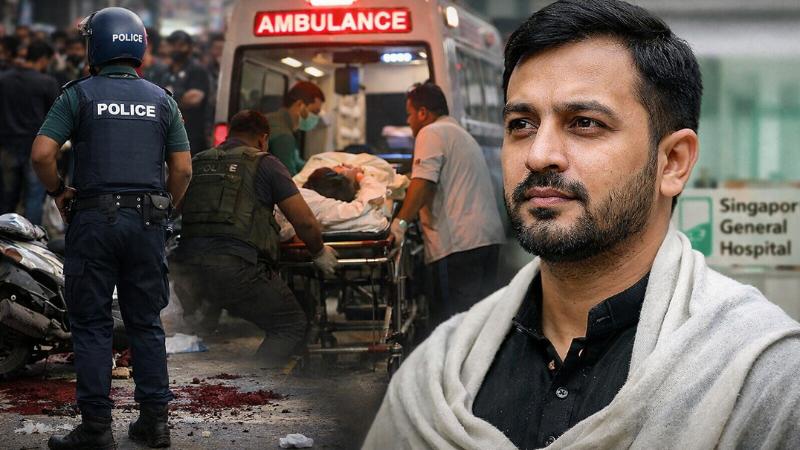
Sharif Osman Hadi served as the spokesperson of Inqilab Mancho, a youth-oriented political platform that has gained visibility in recent years for its activism and mobilization efforts. He was critically injured on December 12 when unidentified assailants opened fire on him in the capital city of Dhaka. The attack occurred in a public setting, underscoring growing anxieties about security conditions and targeted attacks in the country.
Following the shooting, Hadi was rushed to Dhaka Medical College Hospital, where emergency measures were taken to stabilize him. As his condition worsened, he was transferred to Evercare Hospital for advanced treatment. Despite intensive medical care, doctors in Dhaka assessed that his injuries were life-threatening, prompting arrangements for him to be moved abroad for specialized neurological treatment.
Last week, Hadi was airlifted to Singapore and admitted to the Neurosurgical Intensive Care Unit at Singapore General Hospital. Medical teams worked extensively to address the damage caused by the gunshot wounds, but his condition remained critical throughout his stay. Singapore’s Ministry of Foreign Affairs later confirmed that Hadi died despite sustained efforts by the treating physicians.
In a formal statement, the ministry said that all possible medical interventions had been exhausted and confirmed that Hadi ultimately succumbed to his injuries. It also stated that Singaporean authorities are coordinating closely with the Bangladesh High Commission to facilitate the repatriation of his body to Bangladesh, where funeral arrangements are expected to take place in the coming days.
Inqilab Mancho announced Hadi’s death through its official communication channels, describing his final days as a determined fight for survival following the attack. The group expressed deep sorrow over the loss of a leader it described as committed to youth engagement and political reform. Supporters and associates have begun gathering to mourn his death, while calls for accountability and justice have intensified.
Hadi’s killing has once again drawn attention to the persistent issue of political violence in Bangladesh, particularly against youth leaders and activists. Authorities have not yet disclosed details about the perpetrators or possible motives behind the attack, and investigations are ongoing. Security agencies are expected to face increased pressure to identify those responsible and prevent similar incidents in the future.
As Bangladesh continues to navigate a tense political environment, the death of Sharif Osman Hadi stands as a stark reminder of the risks faced by emerging political voices. His passing has left a noticeable void within his organization and has reignited debate over the safety of political participation in the country.