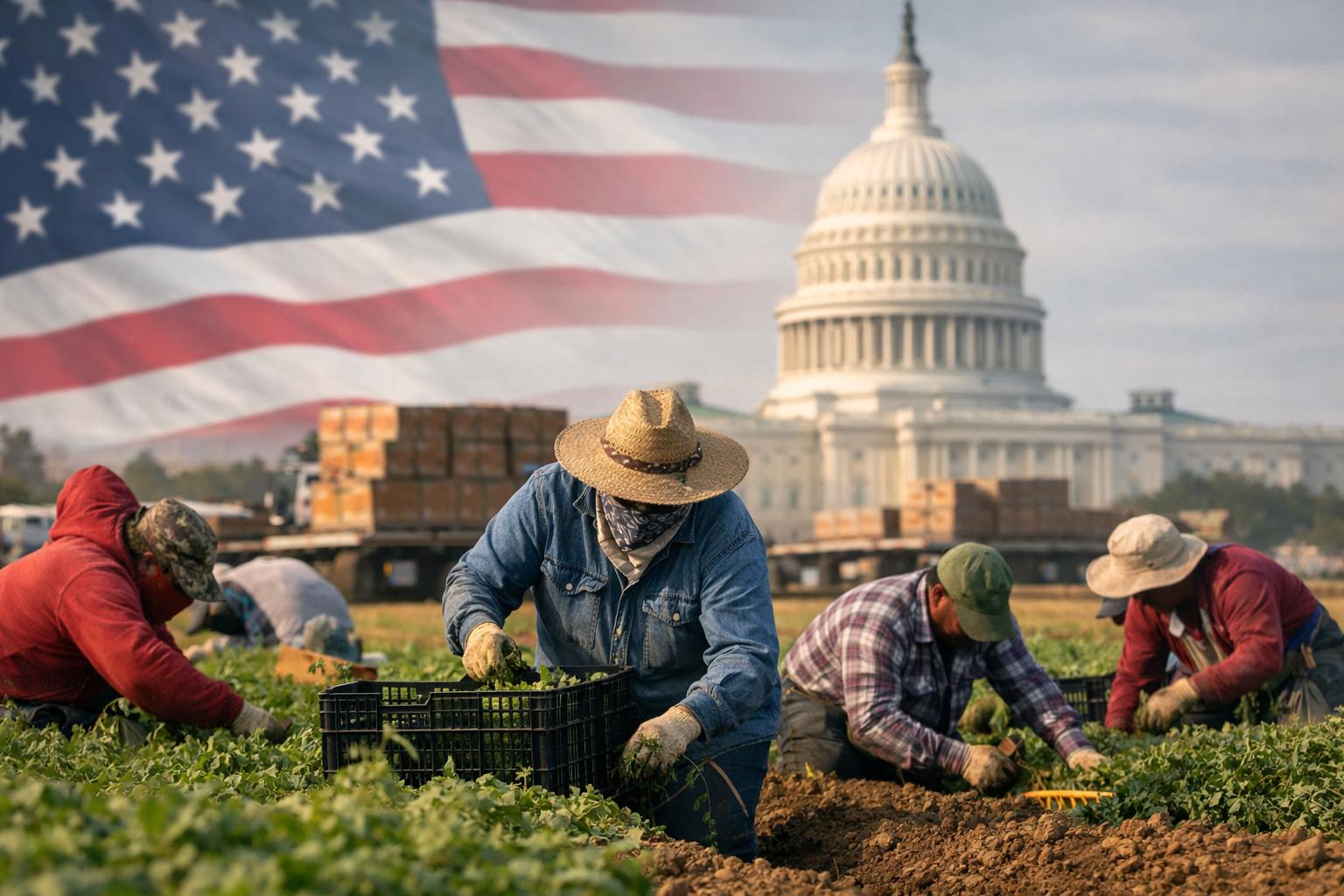
A California lawmaker is seeking federal action to reverse recent labor policy changes that could significantly reduce wages for seasonal agricultural workers across the United States. On Wednesday, March 26, 2026, Representative Zoe Lofgren introduced a resolution aimed at blocking new wage rules implemented by the U.S. Department of Labor.
The policy changes, first introduced in October 2025, alter how wages are calculated under the H-2A visa program, which allows agricultural employers to hire temporary foreign workers. According to farmworker advocacy groups, the revisions could reduce hourly wages by as much as $7 depending on the state, while also permitting certain employer deductions that further lower take-home pay.
Advocates argue the changes will negatively affect both domestic and foreign workers. The United Farm Workers Foundation said the policy risks shifting billions of dollars away from workers and toward employers, raising concerns about fairness and long-term workforce stability in agriculture.
Use of the H-2A visa program has expanded rapidly in recent years. Data from the University of California, Davis shows certifications in California have surged dramatically over the past decade, while nationwide approvals approached 400,000 in 2025. Nearly half of those certifications were concentrated in major agricultural states including California, Washington, Georgia, Florida, and North Carolina.
Under previous rules, employers in California were required to pay H-2A workers approximately $19.97 per hour. With the revised methodology, wages could drop closer to the state minimum wage of $16.90 per hour. Supporters of the changes, including some lawmakers and agricultural producers, argue the adjustments could save employers billions annually and help offset rising operational costs.
However, critics warn that structural vulnerabilities within the H-2A system—such as workers being tied to a single employer—already expose laborers to risks including wage theft and poor working conditions. They contend that reducing wages could intensify these challenges and discourage workforce participation.
Lofgren has also continued to advocate for broader immigration and labor reforms through the Farm Workforce Modernization Act, legislation she has introduced multiple times since 2019. The proposal seeks to create a pathway to legal status for certain agricultural workers while stabilizing the labor supply. While the bill has passed the House with bipartisan support, it has not advanced in the Senate.
Local officials and labor advocates emphasize the urgency of addressing wage protections, arguing that agricultural workers remain essential to the nation’s food supply and economic stability.
The policy changes, first introduced in October 2025, alter how wages are calculated under the H-2A visa program, which allows agricultural employers to hire temporary foreign workers. According to farmworker advocacy groups, the revisions could reduce hourly wages by as much as $7 depending on the state, while also permitting certain employer deductions that further lower take-home pay.
Advocates argue the changes will negatively affect both domestic and foreign workers. The United Farm Workers Foundation said the policy risks shifting billions of dollars away from workers and toward employers, raising concerns about fairness and long-term workforce stability in agriculture.
Use of the H-2A visa program has expanded rapidly in recent years. Data from the University of California, Davis shows certifications in California have surged dramatically over the past decade, while nationwide approvals approached 400,000 in 2025. Nearly half of those certifications were concentrated in major agricultural states including California, Washington, Georgia, Florida, and North Carolina.
Under previous rules, employers in California were required to pay H-2A workers approximately $19.97 per hour. With the revised methodology, wages could drop closer to the state minimum wage of $16.90 per hour. Supporters of the changes, including some lawmakers and agricultural producers, argue the adjustments could save employers billions annually and help offset rising operational costs.
However, critics warn that structural vulnerabilities within the H-2A system—such as workers being tied to a single employer—already expose laborers to risks including wage theft and poor working conditions. They contend that reducing wages could intensify these challenges and discourage workforce participation.
Lofgren has also continued to advocate for broader immigration and labor reforms through the Farm Workforce Modernization Act, legislation she has introduced multiple times since 2019. The proposal seeks to create a pathway to legal status for certain agricultural workers while stabilizing the labor supply. While the bill has passed the House with bipartisan support, it has not advanced in the Senate.
Local officials and labor advocates emphasize the urgency of addressing wage protections, arguing that agricultural workers remain essential to the nation’s food supply and economic stability.