Long-term infrastructure upgrades drive rising utility costs
San Francisco officials have approved a series of water and sewer rate increases set to begin in the summer of 2026, with additional adjustments planned through 2036. The increases are tied to a long-term capital improvement strategy led by the San Francisco Public Utilities Commission, aimed at modernizing aging infrastructure and maintaining system reliability. City data shows that portions of the water and wastewater system are more than a century old, requiring extensive upgrades to meet current safety and environmental standards.
Household bills expected to climb steadily over two years
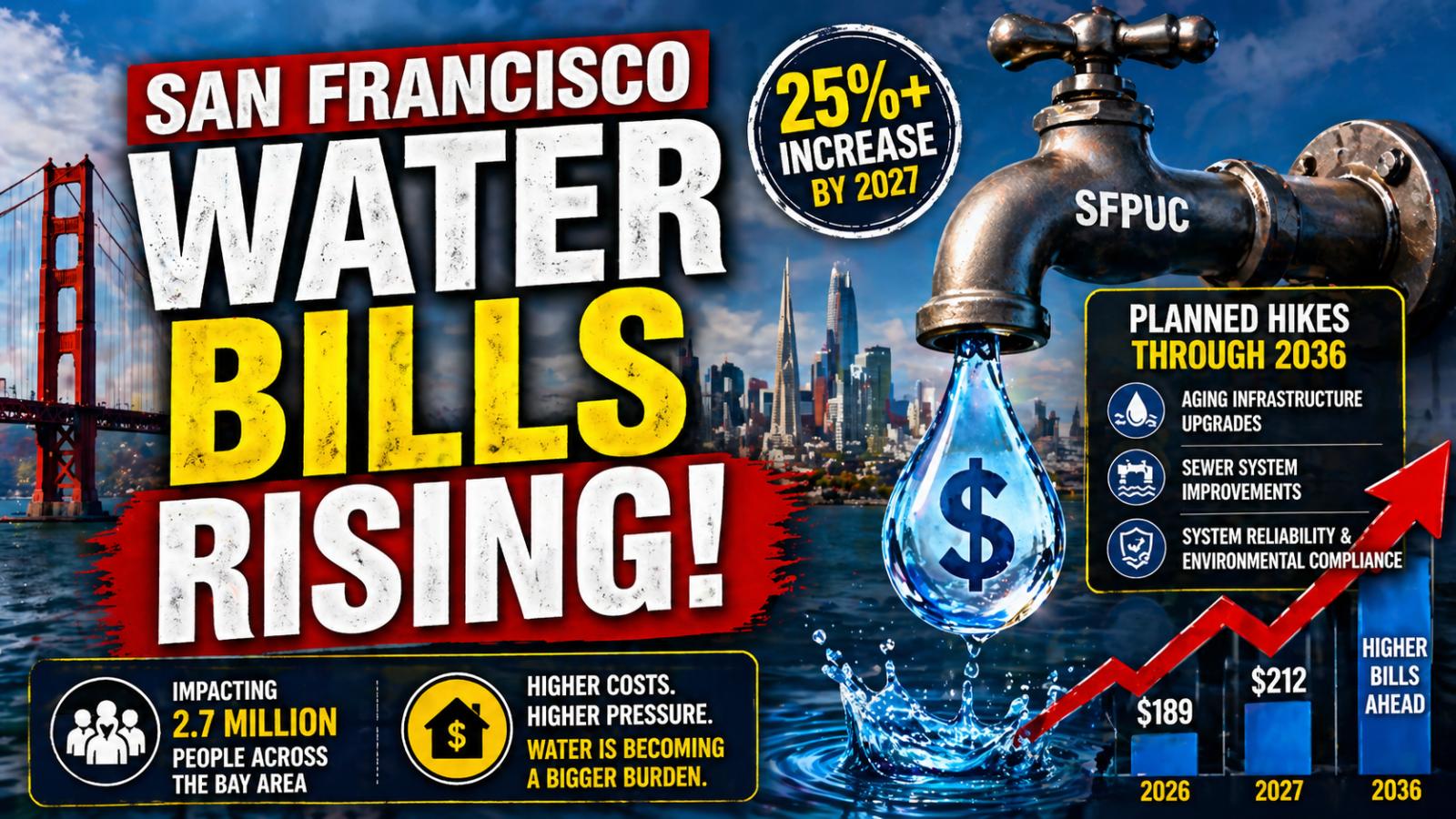
Average monthly water and sewer bills, currently around $171, are projected to rise to approximately $189 by July 2026 and about $212 by July 2027. The increases reflect a combination of higher water rates and more substantial sewer rate adjustments. Officials estimate that overall household costs could rise by roughly 25 percent over this period, adding noticeable pressure to monthly expenses in a region already known for high living costs.
Regional impact extends across the Bay Area
The impact of these changes will not be limited to San Francisco residents. The city supplies wholesale water to nearly two dozen surrounding municipalities, serving roughly 2.7 million people across the Bay Area. As wholesale rates increase, local governments in those areas are expected to adjust their own pricing structures, potentially leading to higher utility bills for households throughout the region.
Environmental compliance and rising construction costs add pressure
Officials cite stricter environmental regulations and rising construction costs as key factors behind the rate increases. Investments are being directed toward wastewater treatment improvements, seismic upgrades, and system resilience projects designed to withstand climate-related challenges such as drought and extreme weather events. Reduced federal funding support has also shifted more of the financial burden to local ratepayers.
Affordability concerns grow amid broader cost-of-living pressures
The planned increases come at a time when California continues to face some of the highest living expenses in the United States. While assistance programs offering discounted rates are available for qualifying households, concerns remain about affordability, particularly for lower-income residents. As utility costs rise alongside housing and energy expenses, water is becoming an increasingly significant component of household budgets across the region.