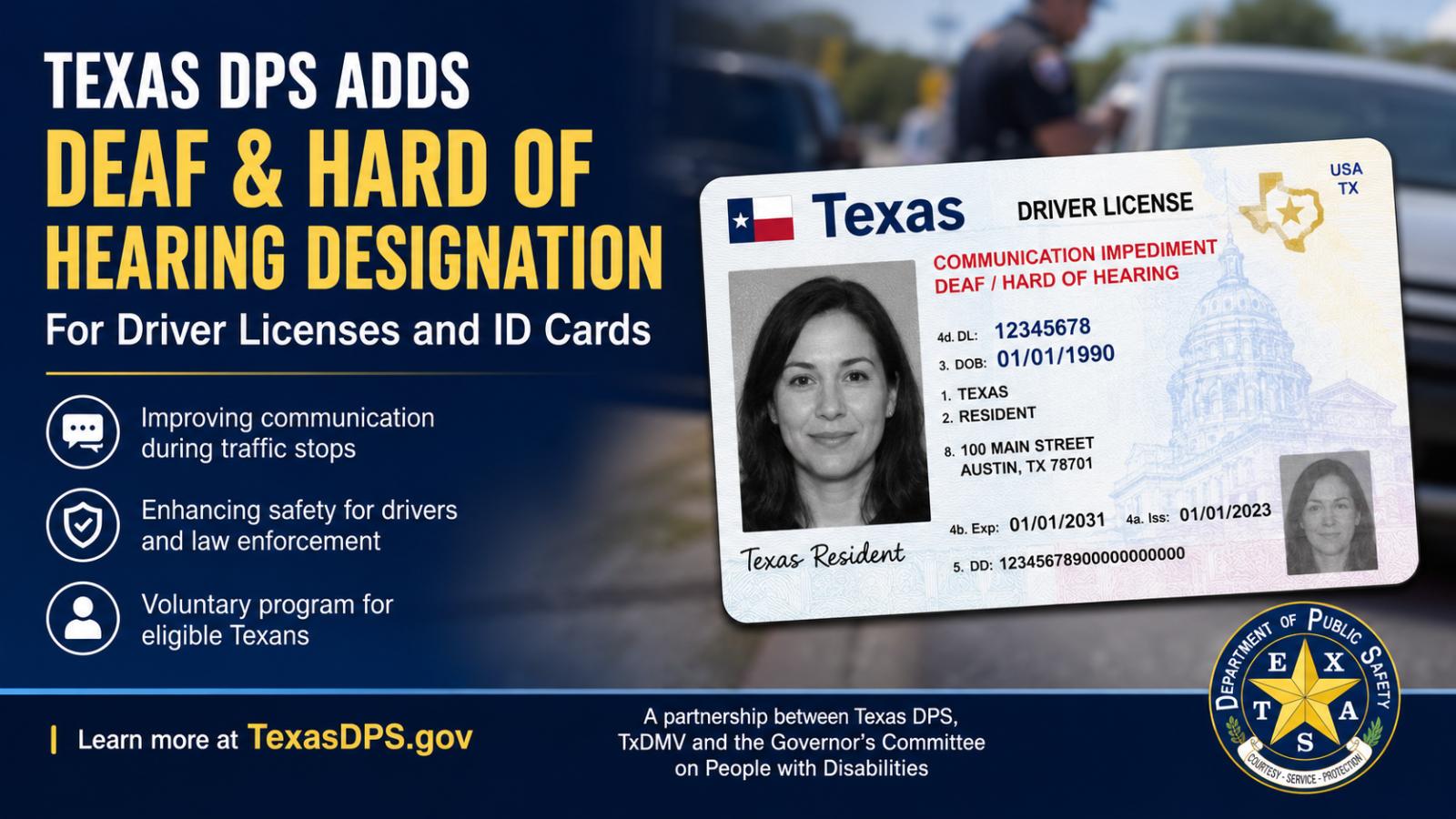
Texas DPS is expanding license options for deaf and hard of hearing drivers through a new front-facing designation on Texas driver licenses and ID cards. The update is part of the Texas Driving with Disability Program, which aims to improve communication during traffic stops and roadside interactions.
The Texas Department of Public Safety, along with the Governor’s Committee on People with Disabilities and the Texas Department of Motor Vehicles, outlined the update as part of a statewide program focused on safer communication between law enforcement and drivers with disabilities. The official program allows Texans to voluntarily display “Communication Impediment” or “Deaf/Hard of Hearing” on the front of a driver license or state ID.
What Changed for Deaf and Hard of Hearing Texas Drivers?
The expanded option gives eligible Texans a more specific way to alert officers that they may need communication support. Previously, the program centered mainly on the broader “Communication Impediment” indicator.
The new “Deaf/Hard of Hearing” designation is designed to help officers recognize communication needs more quickly during traffic stops, vehicle checks, or other roadside interactions.
How to Add a Disability Indicator to a Texas License
Texans who want the indicator must complete the required medical statement process and visit a Texas DPS driver license office in person. The Governor’s Committee on People with Disabilities says applicants should ask a doctor to complete Form DL-101 and present it at the driver license office. Once approved, “Communication Impediment” or “Deaf/Hard of Hearing” can appear on the front of the card.
Vehicle Registration Option Also Available
The program also includes a vehicle registration disclosure option through TxDMV. That information can help alert authorized law enforcement through the Texas Law Enforcement Telecommunication System before an officer approaches a vehicle.
Why the Texas DPS License Update Matters
The update matters because traffic stops can become confusing or stressful when a driver cannot hear, speak clearly, or respond in a typical way. A visible license designation gives officers an early signal that the driver may need more time, written communication, or another accommodation.
Texas agencies said the program is voluntary and intended to reduce misunderstandings while improving safety for drivers and law enforcement.