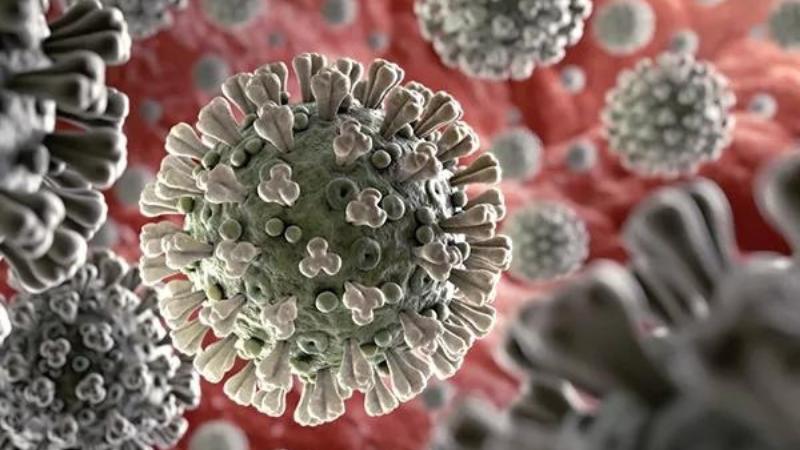
A new COVID-19 variant, NB.1.8.1, originally identified in China, has now reached the United States, prompting concern among health officials due to its rapid spread and high transmissibility. Detected first in travelers arriving between March and April in states including California, New York, Washington, Virginia, and Hawaii, the variant has since appeared in Ohio and Rhode Island, according to the Centers for Disease Control and Prevention (CDC).
The variant has become dominant in regions of China and Hong Kong, where it triggered a noticeable spike in hospitalisations, especially among the elderly. In just four weeks, Hong Kong reported over 80 severe cases and 30 deaths attributed to NB.1.8.1. On the mainland, emergency room positivity rates have more than doubled, leading to an uptick in COVID-related admissions. Despite these numbers, Chinese authorities maintain the strain is not more dangerous than previous variants.
US health experts, however, remain on alert. Dr. Amy Edwards from Case Western Reserve University noted that while the symptoms—such as cough, fatigue, and sore throat—are similar to previous strains, NB.1.8.1 spreads faster. This rapid spread, paired with the variant’s ability to potentially evade vaccine-induced immunity, has caused concern. Dr. Subhash Verma from the University of Nevada stated that the variant seems to have a "growth advantage" that allows it to infect more people in a shorter time frame.
Airport surveillance has linked the strain to travelers from not only China but also countries like Japan, South Korea, Vietnam, Thailand, France, and Spain, indicating wider global circulation. In response to the evolving situation, the CDC has revised its vaccine guidelines. It will no longer recommend routine COVID-19 vaccination for healthy children and pregnant women. Booster doses are now limited to high-risk groups, such as the elderly or immunocompromised individuals.
In Hong Kong, health officials including Dr. Edwin Tsui emphasized the importance of monitoring the strain’s development closely. Although there’s no definitive proof of increased severity, the speed and scale of its transmission suggest the need for caution. As cases remain low in the US, health agencies urge early testing and careful observation to prevent wider outbreaks. With the world still adapting to post-pandemic realities, NB.1.8.1 serves as a reminder that COVID-19 continues to evolve.