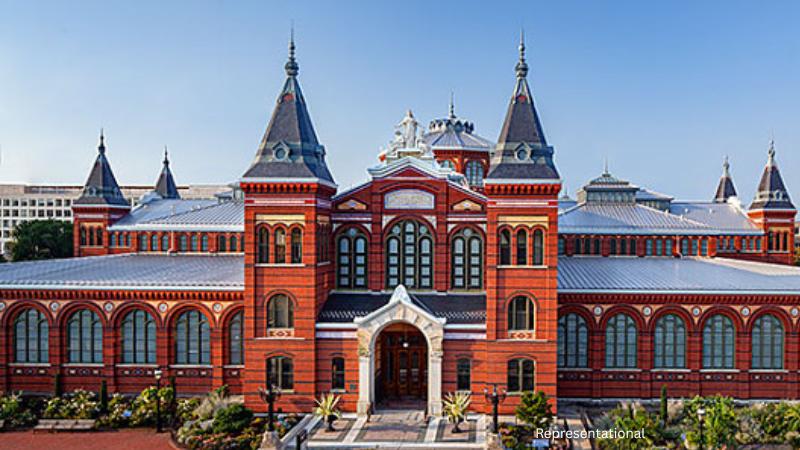
The White House has directed a comprehensive review of Smithsonian museums and exhibitions in preparation for the nation’s upcoming 250th anniversary, with the stated aim of ensuring that the institution’s content reflects the president’s interpretation of American history. The review will encompass all public-facing materials, including exhibition texts, social media content, and educational resources, with an emphasis on what officials describe as aligning tone, historical framing, and presentation with American ideals. According to a formal letter sent to Smithsonian Secretary Lonnie Bunch III, the initiative seeks to celebrate American exceptionalism, remove narratives considered divisive or partisan, and restore public confidence in the country’s cultural institutions.
The Smithsonian responded by reaffirming its dedication to scholarly integrity, rigorous research, and historically accurate representation. A spokesperson noted that the institution would review the White House’s request while maintaining its commitment to factual and balanced storytelling. Officials added that they plan to work constructively with the administration, Congress, and the institution’s Board of Regents throughout the process.
The new review marks another step in the president’s broader cultural agenda. Earlier this year, an executive order was issued under the title “Restoring Truth and Sanity to American History,” alleging that the Smithsonian had been influenced by race-centered ideological perspectives. The order called for the removal of what it deemed improper ideology from museum spaces. Previous actions have included replacing the Kennedy Center’s Board of Trustees with appointees supportive of the administration’s vision, along with implementing program changes such as banning performances involving drag artists.
For the Smithsonian, the review will begin with eight flagship museums: the National Museum of American History, the National Museum of Natural History, the National Museum of African American History and Culture, the National Museum of the American Indian, the National Air and Space Museum, the Smithsonian American Art Museum, the National Portrait Gallery, and the Hirshhorn Museum and Sculpture Garden. According to the White House letter, additional museums will be included in later phases of the review.
The administration’s attention to certain institutions, particularly the National Museum of African American History and Culture, has drawn criticism from civil rights leaders, who view the effort as an attempt to downplay the contributions and historical struggles of Black Americans. Critics argue that framing historical narratives solely through the lens of American exceptionalism risks omitting essential truths about the nation’s past.
The Smithsonian has consistently denied that it alters exhibits due to political pressure. However, questions were raised after the removal of references to the president’s two impeachments from an American presidency exhibit. Museum officials stated that these references, added in 2021, were always intended to be temporary and that a future exhibit would address all presidential impeachments in a broader historical context.
Under the review directive, the museums must submit existing exhibit materials and drafts for upcoming events within 30 days. Within 120 days, they are expected to implement changes to replace what the administration describes as divisive or ideologically driven language with descriptions that are historically accurate, unifying, and constructive. The process is expected to involve significant curatorial oversight, with curators, historians, and administrators working to adjust exhibits while balancing political directives with scholarly standards.
Supporters of the review argue that it represents an opportunity to create a shared national narrative that unites rather than divides. They believe emphasizing achievements and common values can foster pride and cohesion, particularly during the country’s 250th anniversary celebrations. Critics, however, view it as political interference that risks eroding the academic independence of one of the nation’s most respected cultural institutions.
As the review unfolds, the Smithsonian’s challenge will be to navigate between political expectations and its mission to present history with honesty and accuracy. The outcome could reshape not only how history is presented within its walls but also how Americans across generations engage with and interpret their shared heritage. The next few months will likely determine whether the changes are embraced as constructive or challenged as an overreach into the nation’s cultural legacy.