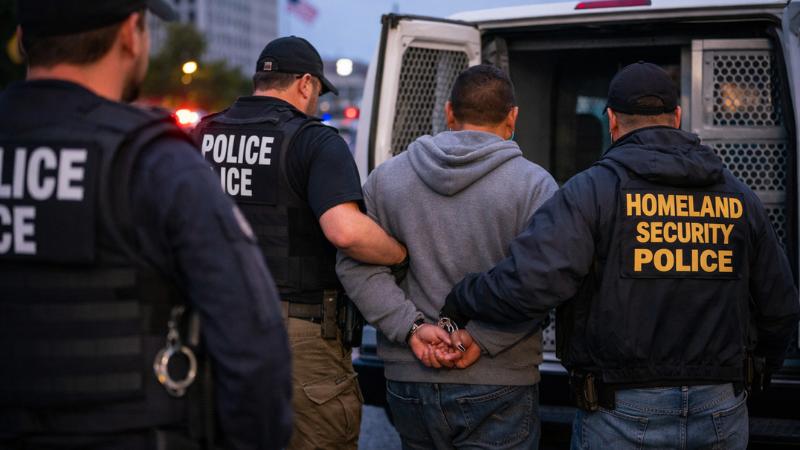
Federal immigration authorities arrested more than 280 immigrants across Ohio during a multi-day enforcement operation conducted in mid-December, according to officials from the U.S. Department of Homeland Security. The arrests took place between Dec. 16 and Dec. 21 as part of what officials described as a targeted effort known as Operation Buckeye, which focused on Columbus and other parts of the state.
The announcement of the arrests came amid growing public attention and protests related to federal immigration enforcement activity in central Ohio. One day before the arrests were publicly confirmed, Columbus residents participated in a march from the Ohio Statehouse to City Hall to protest Immigration and Customs Enforcement operations in the region. Organizers said the demonstration reflected mounting concern and fear within immigrant communities following a visible ICE presence in the city earlier in the month.
The protests also coincided with a separate and highly scrutinized fatal shooting involving an ICE agent in Minnesota. A candlelight vigil was held in Columbus to honor 37-year-old Renee Good, who was shot and killed during an encounter with federal agents. Video of the incident has circulated widely and has prompted conflicting interpretations from officials. ICE and the White House have stated the shooting was an act of self-defense, alleging Good drove a vehicle toward an officer. Minnesota state and city leaders have disputed that account, asserting that the available footage does not clearly show an imminent threat and raising questions about whether the use of deadly force was justified.
As demonstrations continued in central Ohio, federal officials sought to provide additional context regarding the scope and intent of Operation Buckeye. Tricia McLaughlin, an assistant secretary with the Department of Homeland Security and an Ohio native, said the enforcement effort resulted in the arrest of individuals identified by ICE as posing public safety concerns. According to McLaughlin, those arrested included people with prior convictions for offenses such as assault on law enforcement officers, illegal firearm possession, and drug trafficking. She said the operation was designed to remove individuals considered dangerous and emphasized that federal authorities believe the arrests have improved safety in Ohio communities.
Local officials in Columbus said they were not informed in advance about the operation and had limited information regarding its duration or scope. A spokesperson for the mayor’s office said city officials were not in direct communication with ICE regarding enforcement actions, noting that federal immigration activity operates independently of local law enforcement. Columbus Police Chief Elaine Bryant echoed that assessment, stating that the police department does not coordinate with ICE beyond the presence of a permanent federal office in Westerville. Bryant said her department typically becomes aware of federal activity through public channels rather than direct notification.
In its announcement, the Department of Homeland Security highlighted several arrests, characterizing those taken into custody as serious offenders. However, advocates and researchers have challenged that portrayal, citing available jail records that suggest many detainees do not have documented criminal histories. A review of records from Butler County, where a large number of those arrested during Operation Buckeye are being held, shows that some detainees do not appear to have prior charges listed. Officials acknowledged that tracking comprehensive criminal histories can be difficult due to variations in recordkeeping across jurisdictions.
The Ohio Immigrant Alliance conducted its own review of available data and said it identified 214 individuals arrested during the operation. According to the organization, a majority of those individuals had no known criminal background. Researcher John Drury said approximately 80 percent of the identified detainees were Latino and that men accounted for about 93 percent of those arrested. Advocacy groups argue that these figures raise concerns about the scope and impact of the operation on immigrant communities.
As federal enforcement efforts continue to draw public scrutiny, the arrests made during Operation Buckeye have intensified debate over immigration policy, transparency, and the role of federal agencies in local communities. Protesters and advocates have called for greater accountability and clearer communication, while federal officials maintain that targeted enforcement remains a necessary tool for public safety.