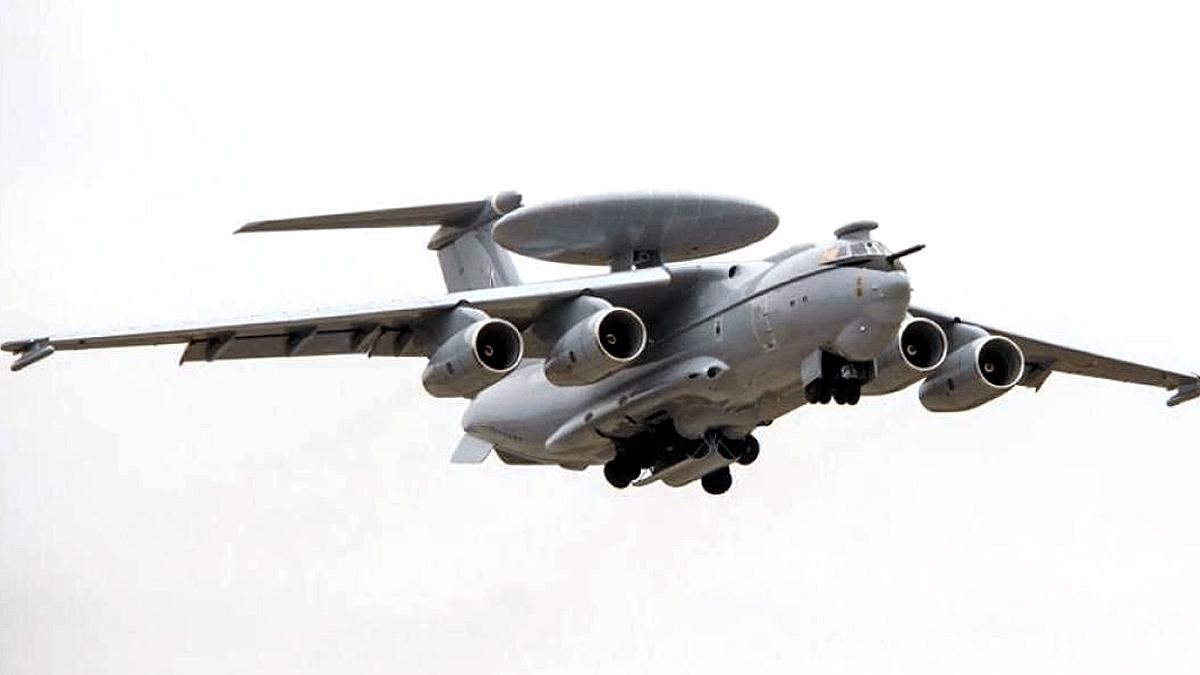
According to government sources, the AWACS was shot down inside Pakistan's Punjab province. The aircraft was performing surveillance operations likely to guide drone and missile strikes towards Indian military stations and civilian areas. Along with the AWACS, India also brought down an F-16 and two JF-17 fighter jets, severely crippling Pakistan’s air mission coordination capabilities.
Pakistan’s Attack and India’s Decisive Retaliation
The sequence of events began late Thursday evening when Pakistan launched a barrage of drones and missiles targeting Indian border states such as Jammu and Kashmir, Rajasthan, and Punjab. These attacks, according to Indian defence officials, were unprovoked and intended to hit both civilian and military installations. Fortunately, the Indian Army reported that all incoming aerial threats were successfully neutralised, with no civilian or military casualties.
In response, Indian air defence systems activated within minutes, engaging and intercepting the aerial threats. The retaliation extended beyond just drones and missiles. The Indian Air Force targeted high-value assets, including the AWACS jet an aircraft that serves as a critical airborne command center. Its destruction marks a considerable blow to Pakistan’s ability to conduct coordinated air operations.
Simultaneously, in separate air engagements, three Pakistani fighter jets one F-16 and two JF-17s were engaged and neutralised by Indian fighter jets. These jets reportedly attempted evasive manoeuvres after entering threatening proximity near Indian airspace but were shot down before they could carry out any offensive action. This strong retaliatory action aligns with India’s defence doctrine, which authorises swift and decisive response to cross-border aggression to maintain national sovereignty and deterrence credibility.
Understanding the Strategic Importance of AWACS
The AWACS (Airborne Warning and Control System) plays a critical role in modern military operations. These aircraft are equipped with powerful radar systems mounted on a rotating dome, allowing them to monitor enemy aircraft, drones, and missiles over a large radius. By staying airborne for extended periods, AWACS aircraft serve as command hubs, coordinating air force movements and issuing early alerts for incoming threats.
They are essential for gaining air superiority, especially in contested zones, and offer real-time situational awareness. The ability of an AWACS to relay information to ground units, naval fleets, and other aircraft gives a strategic edge in fast-moving combat situations. Pakistan’s loss of an AWACS aircraft not only impacts its surveillance capabilities but also hampers its broader ability to manage and direct air campaigns, especially during periods of heightened military engagement. Given the relatively small number of such high-value systems in its arsenal, this setback could limit Pakistan’s operational options in the near term.
The incident is part of an escalating series of military confrontations between India and Pakistan in recent days. Following India’s successful interception of numerous Pakistani missiles and drones across its northwestern regions, retaliatory measures including cross-border air and naval operations have intensified. The Indian Navy is also reportedly engaged in ongoing tactical operations in the Arabian Sea, aimed at neutralising maritime threats.
The United States has called for restraint. Vice President JD Vance recently commented that the US would not involve itself in a conflict that falls outside its strategic scope. However, global observers are increasingly wary of the situation, with rising fears that continued escalation might disrupt regional stability.
As of now, no formal statement has been issued by the Pakistani government confirming the loss of the AWACS or its fighter jets. However, defence analysts believe that the silence may stem from the sensitivity of the assets lost and the implications of admitting such operational vulnerabilities. Meanwhile, in India, security remains on high alert, with 24 airports closed, several border districts enforcing blackouts, and educational institutions shut in sensitive regions. The cancelled IPL match between Punjab Kings and Delhi Capitals also underscored the broader impact on public life. The coming hours and days are critical. While India has clearly demonstrated its military readiness and ability to counter aerial threats, diplomatic and backchannel negotiations will play a vital role in determining whether the situation escalates into a larger military conflict or paves the way for de-escalation.