For Mindy Uhrlaub, the app represents more than just technology—it represents a new chapter. Uhrlaub, a former tech executive herself, carries the gene for ALS and watched both her mother and husband succumb to it. Though she currently shows no symptoms, she uses the EverythingALS app weekly, reading a few lines aloud into its interface. The software, trained using artificial intelligence, listens for faint indicators in speech patterns—slurring, pauses, subtle changes that even a trained professional might overlook. The goal is early detection, something Uhrlaub believes could make a profound difference in the future.
The app came from a place of urgency and grief. When Navar’s husband began experiencing unexplained symptoms, it took two years before he was formally diagnosed with ALS. By that time, most of his motor neurons were gone, leaving little room for meaningful intervention. That painful delay in diagnosis is a common issue in ALS care. In the United States, someone is diagnosed with ALS every 90 minutes, but the disease can take months or even years to be accurately identified. The gap between the onset of symptoms and diagnosis often results in lost time—time that could have been spent exploring clinical trials or making life decisions while faculties were still intact.
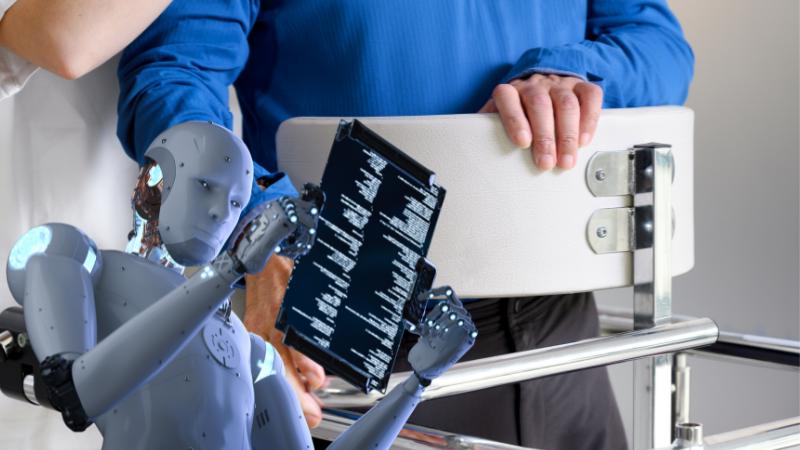
EverythingALS was designed with the goal of closing that diagnostic gap. Using AI, the app monitors speech, gait, and motor function with such precision that it can identify trends and shifts before they become clinically noticeable. According to Navar, AI allows the platform to catch small, often imperceptible variations in movement or vocal tone that could indicate the onset of ALS. The app's remote nature makes it especially valuable in opening up access to ALS research and clinical trials. People from across geographies and backgrounds can now participate without needing to travel to major research hospitals. This could significantly diversify and broaden the scope of ALS research, which has historically been limited in terms of participant demographics.
Although the app is still awaiting FDA approval, early results suggest it could be a groundbreaking tool. It has already been used in studies and trials, showing promising outcomes in terms of early recognition of ALS indicators. For users like Uhrlaub, it has become part of a proactive routine, a way to take back a measure of control in the face of a disease known for its relentless progression. She views the tool not only as a monitor but as a reminder to live fully and intentionally.
Beyond her weekly use of the app, Uhrlaub has also written a memoir titled Last Nerve, set to release in May. The book delves into her personal experience with ALS, loss, and resilience. Writing became another outlet through which she could reclaim her narrative and share her journey with others facing similar uncertainties. Despite carrying a genetic link to ALS, Uhrlaub tries not to live in fear. She says she finds joy in the simplest of moments—sipping coffee with her dog nearby, or playing the piano on a quiet afternoon. While she knows what might lie ahead, she chooses not to let that possibility rule her life. Instead, she focuses on what she can do now—taking care of herself, staying engaged, and supporting technology that could one day change countless lives.
The story of EverythingALS is not just one of technological advancement but of human resilience and the pursuit of hope in the face of one of the most devastating neurodegenerative diseases. As the app continues its journey toward broader adoption and regulatory approval, it represents a merging of science, innovation, and deeply personal stories that could one day redefine how ALS is detected and managed.