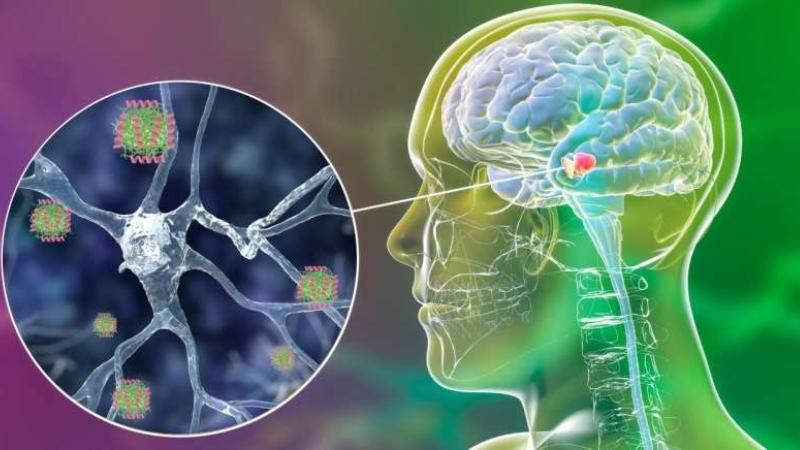
A groundbreaking discovery by scientists in Australia could mark a major turning point in the fight against debilitating brain disorders such as Parkinson's and Alzheimer's. Researchers at the Walter and Eliza Hall Institute of Medical Research (WEHI) in Melbourne have identified a small molecule that can block the death of brain cells a breakthrough that may pave the way for future treatments for neurodegenerative diseases.
The research, published in the journal Science Advances, reveals that the molecule works by targeting a key protein known as BAX often referred to as a "killer protein." BAX plays a crucial role in the process of apoptosis, or programmed cell death, by attacking mitochondria, the energy-producing centers of cells. When BAX becomes overactive in neurons, it leads to unnecessary and harmful cell death, a hallmark of conditions like Parkinson's and Alzheimer’s.
Using high-throughput screening, the research team sifted through over 100,000 chemical compounds in search of one that could inhibit BAX. Their efforts paid off with the identification of a molecule capable of preventing BAX from binding to mitochondria effectively stopping the cell death process in its tracks. According to lead scientist Professor Guillaume Lessene, this finding represents a "thrilling" advancement in the field of neurodegeneration research.
Traditionally, most pharmacological efforts in degenerative disease research have focused on managing symptoms rather than preventing the actual progression of the disease. With this discovery, the WEHI team has brought a fresh approach to the table. Instead of targeting secondary effects of cell loss, the molecule acts directly at the source halting cell death before it begins.
Professor Lessene noted that although BAX is present in many types of cells, its role in neuron death is especially significant. In neurons, BAX's activity can be the deciding factor between survival and degeneration. Blocking this protein might offer a method to preserve brain function and delay the onset of disease symptoms. “While not the case in most cells, in neurons turning off BAX alone may be sufficient to limit cell death,” said Lessene.
Co-author and Dewson Lab researcher Kaiming Li further emphasized the potential applications. “For the first time, we could keep BAX away from mitochondria and keep cells alive using this molecule,” Li explained. “This could pave the way for next-generation cell death inhibitors to combat degenerative conditions.”
This development arrives at a crucial time. As global populations age, cases of Parkinson’s and Alzheimer’s are steadily rising, creating both public health challenges and emotional burdens for families. Existing therapies mainly aim to slow the decline or ease symptoms, but none have successfully stopped the loss of neurons that drives these diseases.
Interestingly, while drugs that induce cell death have revolutionized cancer treatments, designing medications that prevent cell death has remained elusive. The balance between allowing the body to eliminate damaged cells and protecting healthy ones has been difficult to strike. That’s why the specificity of this newly discovered molecule is particularly promising it can block BAX in neurons without interfering with the natural cell turnover needed in other tissues.
While still in early stages, the success of this molecule in lab models is encouraging. Further studies and clinical trials will be necessary before it becomes a viable treatment option. However, the findings give hope that with continued research, truly disease-modifying therapies for Alzheimer’s and Parkinson’s may soon be on the horizon.
This discovery not only highlights the potential of molecular-level interventions but also underscores the importance of sustained investment in basic medical research. If successful, such innovations could dramatically alter how neurodegenerative diseases are treated, shifting from reactive care to proactive preservation of brain health.