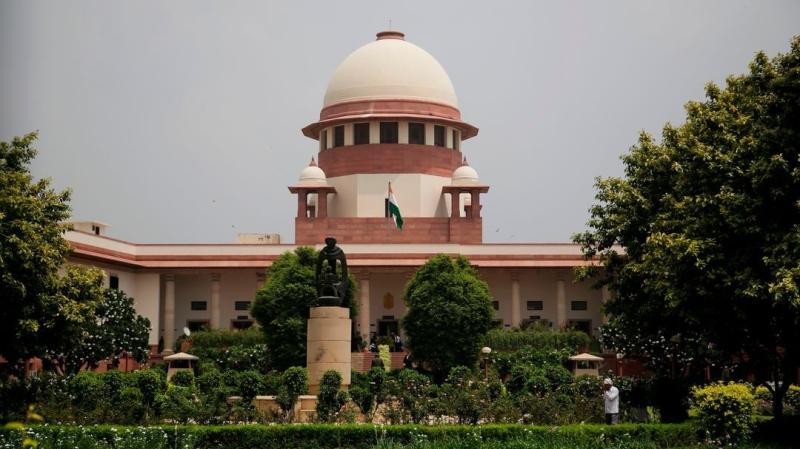
The Supreme Court of India is currently hearing a significant challenge to the Waqf Amendment Act, a controversial law passed earlier this year that alters the composition and functioning of Waqf bodies across the country. The hearing, led by a bench headed by Chief Justice BR Gavai, features strong opposition from prominent legal figures who argue that the amendments infringe on religious rights and question the very definition of secularism in India.
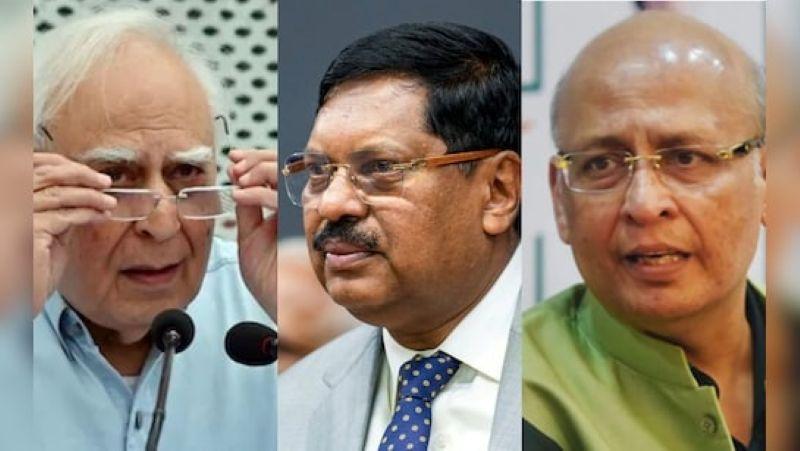
Senior Advocates Kapil Sibal, Abhishek Manu Singhvi, Rajeev Dhawan, and Huzefa Ahmadi appeared for multiple petitioners, raising constitutional and religious concerns over the amended law. At the core of the legal dispute is the issue of who has control over Waqf properties, which are traditionally Muslim endowments dedicated to religious, charitable, or educational causes.
Kapil Sibal stated that the Waqf system, by nature, is not secular. “The creation of Waqf is a religious act, a Muslim dedicates property to God. How can the control of such a religious endowment include non-Muslims, making Muslims a minority in their own council?” he asked. Under the new law, the 22-member Central Waqf Council includes just 10 Muslim members, while others are drawn from various backgrounds, including jurists and bureaucrats, raising fears of political or non-religious influence.
The inclusion of non-Muslims, according to Sibal, dilutes the religious autonomy of Waqf institutions. He contrasted this with Hindu and Sikh religious bodies, where control remains exclusively within the respective communities. “Every religious endowment—none is controlled by outsiders,” he emphasized.
Abhishek Manu Singhvi raised sharp concerns about the requirement to prove one’s religion and religious practices as part of the Waqf registration process. He described the process as a bureaucratic trap designed to dissuade Muslims from making endowments. “This is just to infuse terror. Which religious body demands proof that you’ve practiced the faith for five years?” he asked the court.
Rajeev Dhawan went further to say that for the first time, the concept of religion is being redefined by legislation. He highlighted the issue of inclusivity by citing the case of a Sikh client who wishes to contribute to Waqf but now faces legal uncertainty due to the new restrictions. “The law goes to the root of secularism,” he said, stressing that individual choice and belief should be respected.
Senior Advocate Huzefa Ahmadi questioned the practicality and legality of defining someone as a “practising Muslim” under this law. “Do we now have to prove how often we pray, or whether we drink, to qualify?” he asked, cautioning against intrusive assessments of personal faith. The central government, meanwhile, has defended the amendments, stating that the law aims to make Waqf Boards more efficient, inclusive, and transparent. Officials argue that oversight is necessary to prevent land misuse and ensure accountability. But Muslim organizations across the country have taken to the streets, viewing the law as a veiled attempt to gain control of Waqf lands and marginalize the community's religious autonomy.
During the hearing, Chief Justice Gavai acknowledged the gravity of the matter but emphasized that laws passed by Parliament carry a presumption of constitutionality unless proven otherwise with strong evidence. “The court cannot interfere unless a glaring case is made out,” he noted. The court will continue hearing arguments tomorrow, and the outcome could have far-reaching implications for religious rights, minority protections, and the relationship between religion and state in India.