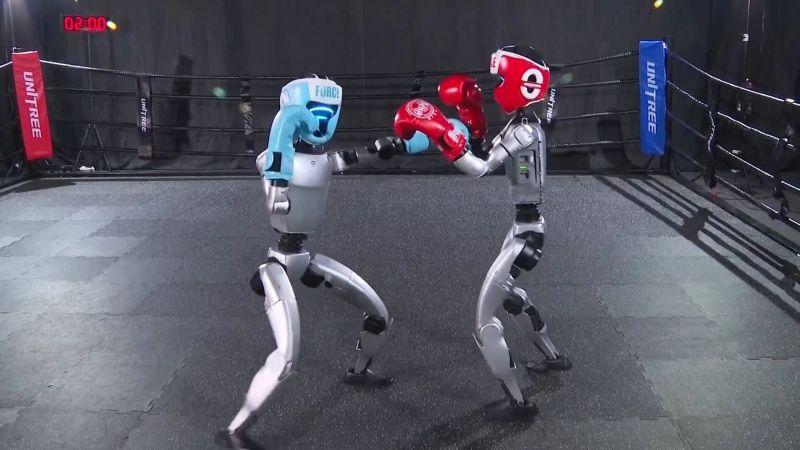
In a world-first that blurs the lines between science fiction and reality, humanoid robots took center stage at the World Robot Competition in China, engaging in a high-tech kickboxing match that left audiences stunned. Developed by Unitree Robotics, the bots traded precise punches and agile kicks in both exhibition and competitive rounds an electrifying showcase of the cutting-edge advancements in artificial intelligence and robotics.
The event, held in Hangzhou as part of a global push to promote robotics innovation, drew wide attention after videos of the match went viral. Spectators watched in amazement as the humanoid machines demonstrated advanced movement, balance, and combat techniques more commonly seen in human martial artists than robots.
Social media exploded with reactions ranging from awe to existential concern. “We laughed when robot boxing showed up in movies. Now it’s here not CGI, not props just real metal throwing punches,” one user commented. Another wrote, “This is the birth of a new species. The first punches of a future that won’t need us to throw them.”
While many celebrated the match as a leap toward futuristic tech, others were more skeptical. One user wrote, “It’s the same robots fighting each other there’s nothing different to observe. It’s clearly remote-controlled, not autonomous.” Critics argue that the fights may be more choreographed than intelligent, suggesting the spectacle masks limited real-time decision-making by the machines.
Still, Unitree Robotics, known for pushing boundaries in humanoid development, has placed itself at the center of both innovation and controversy. In recent months, videos have surfaced showing Unitree robots lashing out at human handlers during lab testing. One such incident sparked global concern when a robot at the Spring Festival Gala in Tianjin unexpectedly rushed a crowd. Though no injuries were reported, the footage went viral, prompting discussions about AI safety protocols and autonomy limits.
Adding to the concern, a similar event occurred in the U.S., when a robot allegedly attacked an engineer at Tesla’s Texas facility, reportedly due to a software malfunction. As AI and robotics move closer to autonomous capability, such incidents are igniting fresh debates around ethics, control, and the future of human-machine interaction.
Despite criticism, the Hangzhou robot match marks a symbolic moment for the global AI community. Experts say while today’s matches may be remote-controlled or pre-scripted, the foundation for future robot combat sports and even AI-enhanced robotics training is being built. With public fascination growing and tech firms racing to lead the AI frontier, it seems humanoid robot combat is no longer just movie fantasy. The arena has been built, the punches have landed and the future is watching.