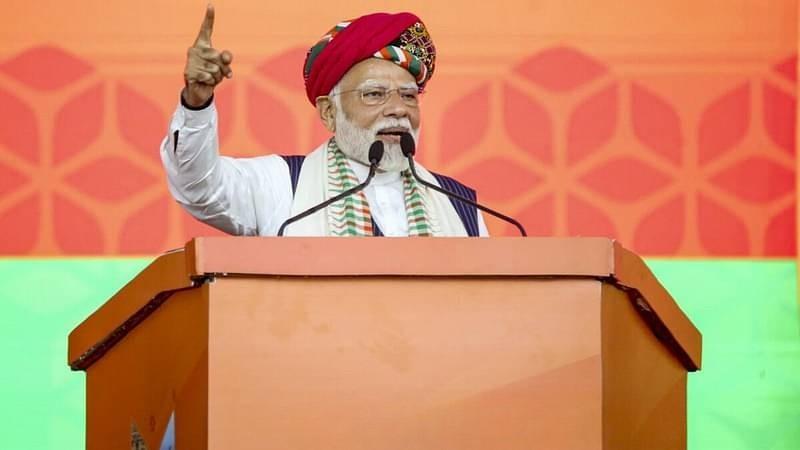
In a bold and direct message during his speech in Bhuj, Gujarat, Prime Minister Narendra Modi delivered a powerful warning to Pakistan, urging its people to reject terrorism or face dire consequences. His comments, laced with strong nationalistic sentiment, emphasized India’s firm stance against terrorism and highlighted the contrasting trajectories of India and Pakistan in terms of development and global standing.
“Live a peaceful life, eat your roti... or else, my bullet is ready,” said PM Modi, addressing the people of Pakistan. Drawing attention to the economic disparity between the two nations, he said, “India is now the fourth-largest economy in the world. Where is Pakistan?” The statement was part of a larger address that reflected both frustration and resolve. PM Modi appealed directly to the youth of Pakistan to rise against the entrenched system of terrorism that has marred their nation's international image and socio-economic progress. He reiterated, “Only the people of Pakistan can cure the disease of terrorism. Their youth must come forward. Stop being misled by those in power who thrive on chaos.”
Earlier in the day, speaking at another rally in Dahod, Gujarat, PM Modi referenced Operation Sindoor, a recent military operation targeting terror bases in Pakistan and Pakistan-occupied Kashmir. This operation was launched following the deadly April 22 terrorist attack in Pahalgam that claimed multiple lives, including Indian security personnel.
“If anyone dares to wipe off the sindoor from the foreheads of our sisters, their end is guaranteed,” Modi declared, alluding to both the symbolic and emotional significance of the attack and India’s retaliation. “Operation Sindoor is not just a military response. It embodies our Indian values and the emotions of every Indian heart. It is a statement that India will not stay silent when our people are attacked,” he added.
India’s strong stance was further supported by Foreign Minister S. Jaishankar, who highlighted the systemic nature of terrorism in Pakistan. Speaking earlier, Jaishankar stated, “Terrorism in Pakistan is not hidden. It is a full-blown business – financed, organized, and operated with state and military backing.” He pointed to the numerous references to Pakistan in the UN Security Council’s terror list, underscoring that many of the named individuals and organizations operate openly from within Pakistani cities. “Anyone who is not blind can see this. These aren’t clandestine operations. These are visible to the world,” Jaishankar noted.
The series of statements comes amid rising political momentum as India gears up for upcoming state and national elections. PM Modi’s aggressive tone aligns with his government’s recurring theme of national security and strong foreign policy. His reference to India's economic ascent is part of a broader narrative highlighting India’s transformation under his leadership, contrasting it sharply with what he describes as Pakistan's stagnation under the shadow of terrorism.
PM Modi’s message to Pakistan is unequivocal: abandon terrorism or face the consequences. Through Operation Sindoor and continued diplomatic pressure, India has signaled its unwillingness to tolerate cross-border terrorism. As the global community watches closely, India’s leadership has once again reaffirmed its zero-tolerance approach to terror be it through military precision, diplomatic clarity, or powerful rhetoric aimed at the root causes beyond its borders.