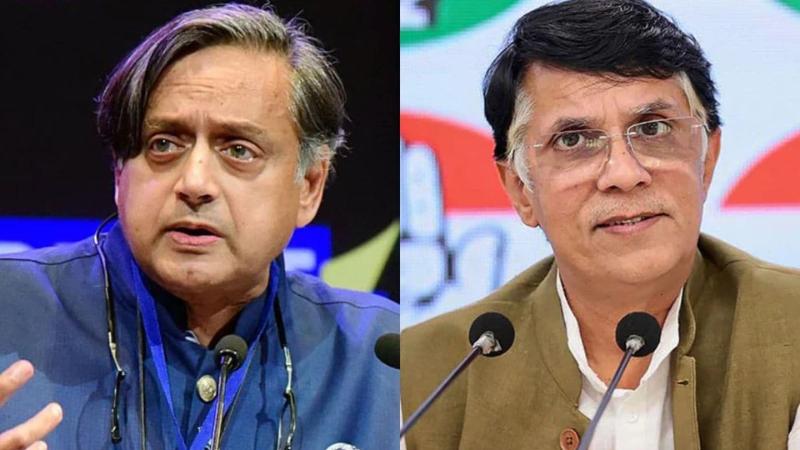
A fresh controversy is brewing within the Congress party as senior leader Pawan Khera took a subtle but pointed dig at fellow party MP Shashi Tharoor. This came after Tharoor, while addressing an event in Panama City, praised India’s recent cross-border operations, including the 2016 surgical strikes and the 2019 Balakot airstrikes, crediting them as unprecedented and forceful responses to terrorism.
Pawan Khera posted a photo of a passage from Tharoor’s 2018 book The Paradoxical Prime Minister, where the author had criticized the Modi government for politicizing military operations. Khera captioned the post, “I agree with that Dr @ShashiTharoor who wrote about surgical strikes in his book in 2018.” The highlighted excerpt condemned the use of national security events for political gain, claiming the Congress never resorted to such tactics during its rule.
This social media post was widely seen as an indirect rebuke, hinting at discontent within the party over Tharoor’s recent comments, which seemed to endorse the Modi-led BJP government's actions. The Congress leadership, including communications chief Jairam Ramesh, also weighed in, with Ramesh posting a poetic jibe: “Oh what a tangled web we weave, When first we practice to deceive...”
Tharoor, currently leading an Indian delegation abroad for diplomatic outreach after the Pahalgam terror attack, responded by clarifying his remarks. He said he referred only to retaliatory strikes for recent terror attacks and not historical wars. Emphasizing that his speech was made in a personal capacity, he dismissed the online criticism, stating he had better things to do than argue with trolls and misinterpreters.
The incident has reignited talk of Tharoor’s often strained relationship with the Congress high command. Once removed from the party’s spokesperson role for praising Modi, Tharoor was also part of the 2022 G-23 group that demanded internal reforms and later ran against Mallikarjun Kharge for Congress president, garnering notable support despite losing. Meanwhile, other Congress leaders like Udit Raj accused Tharoor of acting as a de facto BJP spokesperson. The leadership, according to sources, sent a clear internal message that individual opinions must not contradict party positions, particularly on sensitive national security matters.
Despite the criticism, the government chose Tharoor to lead one of seven global outreach delegations. Congress clarified it did not recommend his name. Tharoor, a UN diplomat, accepted the responsibility, maintaining that he would represent India with dignity, regardless of political noise. As the Congress navigates a sensitive phase ahead of national elections, this internal discord underscores the ongoing tension between individual expression and party discipline particularly when national security and public narratives collide.