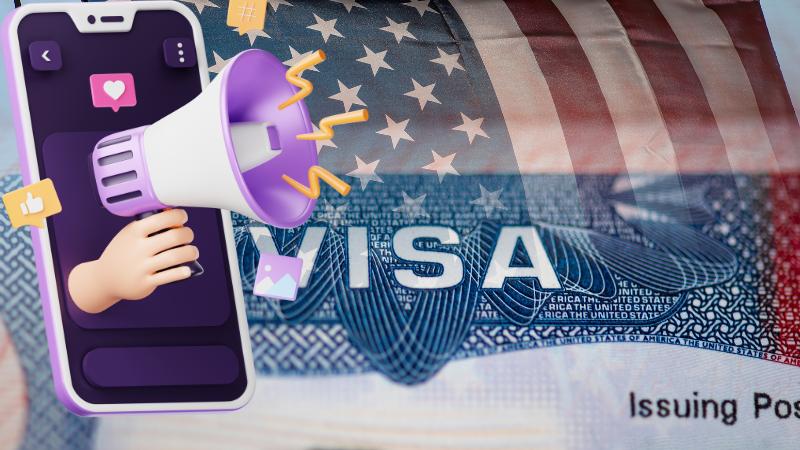
The United States has officially resumed its student visa application process for international students, but with a set of significantly tightened regulations. In a new move by the Trump-led administration, all student visa applicants must now make their social media accounts publicly accessible for government scrutiny. This announcement, made by the US State Department on Wednesday, June 18, has stirred global attention, especially among students preparing to attend American universities in the upcoming academic cycle.
According to the revised guidelines, consular officers will now conduct comprehensive social media vetting for each applicant. The department's directive clearly states that officers will assess applicants for any signs of hostility toward the American people, government, institutions, culture, or founding principles. Applicants have been instructed to set all privacy settings on their social media profiles to “public” before attending their visa interviews. The State Department emphasized that any reluctance or failure to comply with this instruction may be interpreted as an effort to conceal potentially problematic online behavior, which could result in the denial of the visa.
Officials reiterated that this enhanced vetting aims to ensure each individual attempting to enter the country is appropriately screened in the interest of national security. While this move has received support from some corners of the administration as a necessary step to counter threats, it has also triggered anxiety among students, particularly those from India and other major student-sending nations. Many have voiced concerns about privacy and the risk of having personal content misinterpreted during the visa review process.
The decision also arrives at a time when US universities, including prominent Ivy League institutions, have witnessed widespread pro-Palestine demonstrations involving international students. Observers believe this recent unrest has influenced the new vetting measures, as the administration seeks to tighten its oversight over incoming students' political and ideological leanings. The inclusion of social media as a core part of the application review process marks a significant departure from previous procedures and highlights how digital behavior is now being treated as a central aspect of one’s identity in immigration decisions.
The Trump administration had earlier paused all new visa interview appointments for foreign students in May 2025, a move that caused uncertainty among thousands of applicants globally. This halt included restrictions on visa processing for some students at Harvard University. With the June announcement lifting that freeze, students now have a small window to complete the visa process in time for the fall semester, though the new conditions may further delay application processing.
In addition to the social media requirement, the US administration has also reiterated four key behavioral rules for international students. Violating any of these could lead to immediate revocation of the visa or deportation. These include skipping academic classes, dropping out of college, overstaying the visa duration, and taking up unauthorized employment. Posting content on platforms such as X or TikTok that may be labeled a threat to national security is also grounds for serious consequences. Furthermore, even minor offenses such as traffic violations or alcohol-related incidents may now be considered sufficient cause for revoking a visa, underscoring the administration's zero-tolerance policy.
In an even more dramatic shift, the US government has expanded its travel ban to include 12 countries, whose nationals are now fully restricted from entering the United States. The banned countries include Afghanistan, Burma, Chad, Republic of the Congo, Equatorial Guinea, Eritrea, Haiti, Iran, Libya, Somalia, Sudan, and Yemen. Additionally, the administration has issued a warning to 36 other countries, urging them to improve their traveler vetting systems or risk facing similar bans.
The changes have added another layer of complexity for students already facing financial, logistical, and academic challenges. International students contribute significantly to the American education system and economy, and while these new policies aim to enhance national security, critics argue that they may also discourage qualified applicants who fear excessive intrusion into their personal lives.
Despite these concerns, the State Department maintains that the measures are necessary and are part of an evolving immigration policy framework designed to address modern security threats. Applicants are encouraged to prepare thoroughly, review their social media content, and consult educational counselors for guidance to avoid inadvertent issues during the screening process.
The resumption of student visa processing comes as a relief to many, but it also marks the beginning of a more scrutinized and demanding visa application era. With academic calendars already underway and tight processing timelines, students must now navigate not just paperwork and interviews but also the digital footprint they leave behind, which will now play a direct role in shaping their future in the United States.