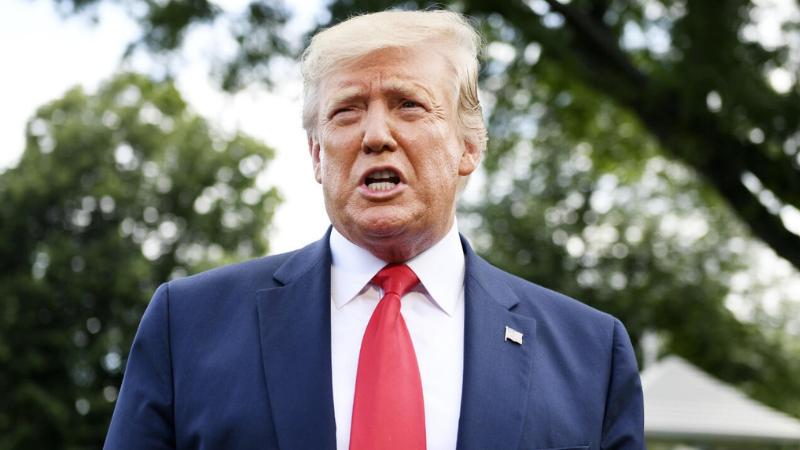
President Donald Trump praised Director of National Intelligence Tulsi Gabbard during a recent public event, drawing attention not only for his personal remarks about her but also for reviving a thoroughly debunked conspiracy theory involving former President Barack Obama and the 2016 election. His comments, delivered to a crowd of supporters and officials, blended flattery with false accusations that have long been dismissed by investigators and government agencies.
Pointing toward Gabbard during his speech, Trump said, “Oh, where’s Tulsi? She’s, like, hotter than everybody. She has all the documents.” The comment, both informal and personal, quickly circulated online and sparked criticism from those who viewed it as inappropriate, particularly in a professional setting. Trump continued by claiming that Gabbard had uncovered proof of a conspiracy led by Obama, stating, “She found out that Barack Hussein Obama led a group of people and they cheated in the elections. They cheated without question. It’s not even a quote.”
The accusation directly revives a conspiracy theory that alleges Obama orchestrated a scheme to interfere in the 2016 election, an allegation that has been discredited by multiple official investigations. Findings from intelligence and law enforcement agencies have consistently concluded that foreign interference, particularly from Russian actors, posed the main threat to that election—not a domestic plot led by former U.S. officials. No evidence has ever emerged to support claims that Obama or his administration attempted to rig the outcome.
As of now, there is no official report authored or released by Gabbard supporting Trump’s assertion. The intelligence community has not confirmed any findings that link Obama to election misconduct in 2016. Trump’s comments appear to rely on rhetorical exaggeration rather than factual information.
Tulsi Gabbard, a former congresswoman and past presidential candidate, has maintained a public presence for her independent political positions and criticisms of both major parties. Her appointment as Director of National Intelligence marked a shift from her previous electoral roles into a key executive position, one traditionally expected to maintain objectivity and remain above partisan narratives.
Trump’s remarks about Gabbard and the election have reignited broader debates over the use of misinformation in political discourse. While some supporters view his blunt approach as refreshingly direct, others argue that the continued repetition of discredited claims about election fraud damages public trust in democratic institutions and normalizes falsehoods in official communication.
The president's description of Gabbard as “hotter than everybody” also drew backlash, with critics saying the comment was inappropriate and disrespectful given the context and the professional capacity in which Gabbard was mentioned. Supporters brushed off the remark as typical of Trump’s unfiltered speaking style, but others viewed it as undermining the seriousness of her role in national intelligence.
These developments reflect ongoing challenges in political communication, especially as the nation prepares for the next election cycle. The reemergence of old conspiracy narratives, especially when delivered from the highest office in the country, continues to fuel partisan divisions and confuse public understanding of established facts. Analysts warn that such rhetoric, while politically effective for energizing certain voter bases, risks long-term harm to institutional credibility and civic unity.
As President Trump continues to shape public discourse through high-profile events and statements, the intersection of personal commentary, political storytelling, and factually unsupported claims remains a defining feature of the current political climate. Whether such approaches will influence future policy or electoral outcomes remains to be seen, but the immediate effect is clear: controversy, division, and renewed debate over the line between political performance and presidential responsibility.
Pointing toward Gabbard during his speech, Trump said, “Oh, where’s Tulsi? She’s, like, hotter than everybody. She has all the documents.” The comment, both informal and personal, quickly circulated online and sparked criticism from those who viewed it as inappropriate, particularly in a professional setting. Trump continued by claiming that Gabbard had uncovered proof of a conspiracy led by Obama, stating, “She found out that Barack Hussein Obama led a group of people and they cheated in the elections. They cheated without question. It’s not even a quote.”
The accusation directly revives a conspiracy theory that alleges Obama orchestrated a scheme to interfere in the 2016 election, an allegation that has been discredited by multiple official investigations. Findings from intelligence and law enforcement agencies have consistently concluded that foreign interference, particularly from Russian actors, posed the main threat to that election—not a domestic plot led by former U.S. officials. No evidence has ever emerged to support claims that Obama or his administration attempted to rig the outcome.
As of now, there is no official report authored or released by Gabbard supporting Trump’s assertion. The intelligence community has not confirmed any findings that link Obama to election misconduct in 2016. Trump’s comments appear to rely on rhetorical exaggeration rather than factual information.
Tulsi Gabbard, a former congresswoman and past presidential candidate, has maintained a public presence for her independent political positions and criticisms of both major parties. Her appointment as Director of National Intelligence marked a shift from her previous electoral roles into a key executive position, one traditionally expected to maintain objectivity and remain above partisan narratives.
Trump’s remarks about Gabbard and the election have reignited broader debates over the use of misinformation in political discourse. While some supporters view his blunt approach as refreshingly direct, others argue that the continued repetition of discredited claims about election fraud damages public trust in democratic institutions and normalizes falsehoods in official communication.
The president's description of Gabbard as “hotter than everybody” also drew backlash, with critics saying the comment was inappropriate and disrespectful given the context and the professional capacity in which Gabbard was mentioned. Supporters brushed off the remark as typical of Trump’s unfiltered speaking style, but others viewed it as undermining the seriousness of her role in national intelligence.
These developments reflect ongoing challenges in political communication, especially as the nation prepares for the next election cycle. The reemergence of old conspiracy narratives, especially when delivered from the highest office in the country, continues to fuel partisan divisions and confuse public understanding of established facts. Analysts warn that such rhetoric, while politically effective for energizing certain voter bases, risks long-term harm to institutional credibility and civic unity.
As President Trump continues to shape public discourse through high-profile events and statements, the intersection of personal commentary, political storytelling, and factually unsupported claims remains a defining feature of the current political climate. Whether such approaches will influence future policy or electoral outcomes remains to be seen, but the immediate effect is clear: controversy, division, and renewed debate over the line between political performance and presidential responsibility.