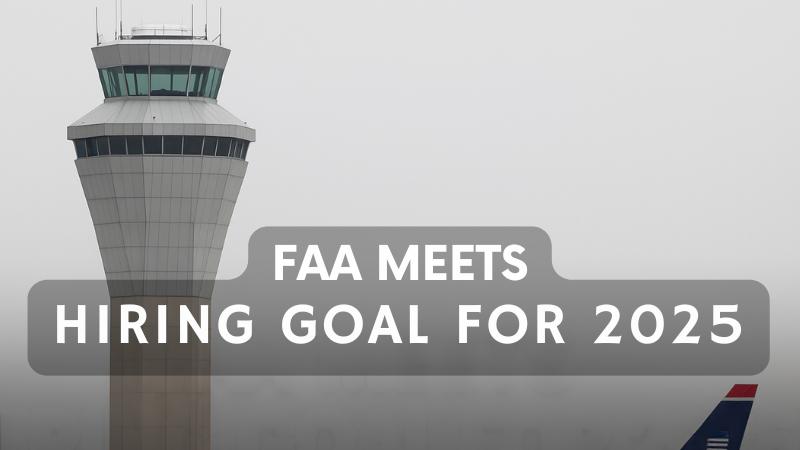
The Federal Aviation Administration has successfully reached its air traffic controller hiring goals for 2025, according to U.S. Transportation Secretary Sean Duffy. The announcement comes at a time when airports around the country, including Newark Liberty International Airport, have faced multiple operational challenges linked to staffing shortages.
Since April, Newark has experienced several ground stops due to a lack of available air traffic controllers, raising questions about whether the national hiring progress is translating into immediate relief for busy hubs. While the FAA’s ability to meet its recruitment targets marks an important step forward, the situation highlights the complex challenge of distributing new staff efficiently across airports with high demand.
Secretary Duffy emphasized that meeting the hiring goal is an achievement that underscores the government’s commitment to strengthening the aviation workforce. He explained that safety and efficiency in the skies depend on having a robust team of trained controllers, and the agency has been working to ensure that new hires are processed, trained, and deployed as quickly as possible. However, training new controllers is a lengthy and specialized process that can take years before recruits are fully certified to manage live traffic.
The FAA’s hiring achievement also reflects a broader push by the Department of Transportation to address long-standing concerns about aviation staffing. In recent years, air traffic controller shortages have been a contributing factor to delays, cancellations, and ground stops at major airports, particularly during peak travel times. Newark Liberty International Airport has become a key example of these challenges, with repeated disruptions caused by insufficient personnel in the control towers.
Despite these issues, officials stress that the overall trajectory is positive. By meeting the hiring goals, the FAA is signaling that it is on track to rebuild its workforce to levels that can better support growing passenger numbers and air traffic volumes in the coming years. The goal is not only to meet immediate staffing demands but also to create a sustainable pipeline of controllers who can replace retiring staff and adapt to the increasing complexity of modern air travel.
Aviation analysts point out that hiring goals alone will not resolve delays in the short term. The training pipeline means that airports like Newark may continue to face shortages even as national numbers improve. This has created frustration among travelers and airlines, who experience the practical effects of shortages despite hearing about progress in recruitment. Experts argue that creative solutions, such as temporary staffing adjustments, scheduling reforms, and improved use of technology, may help bridge the gap while new hires complete their training.
The FAA’s progress on recruitment nevertheless represents an important milestone for the aviation industry. It shows that despite challenges, there is an ongoing commitment to ensure long-term stability and safety in air traffic management. For passengers, this may eventually mean fewer delays and a smoother travel experience, though patience will be required as staffing imbalances are gradually corrected.
Secretary Duffy concluded by reiterating the administration’s focus on both short-term fixes and long-term strategies. While Newark and other major airports may still experience occasional disruptions due to staffing shortages, the long-term solution lies in consistent hiring, proper training, and stronger retention of skilled professionals. With the 2025 goals met, the FAA is now positioned to focus on accelerating training and improving deployment strategies to reduce the impact of shortages on travelers.