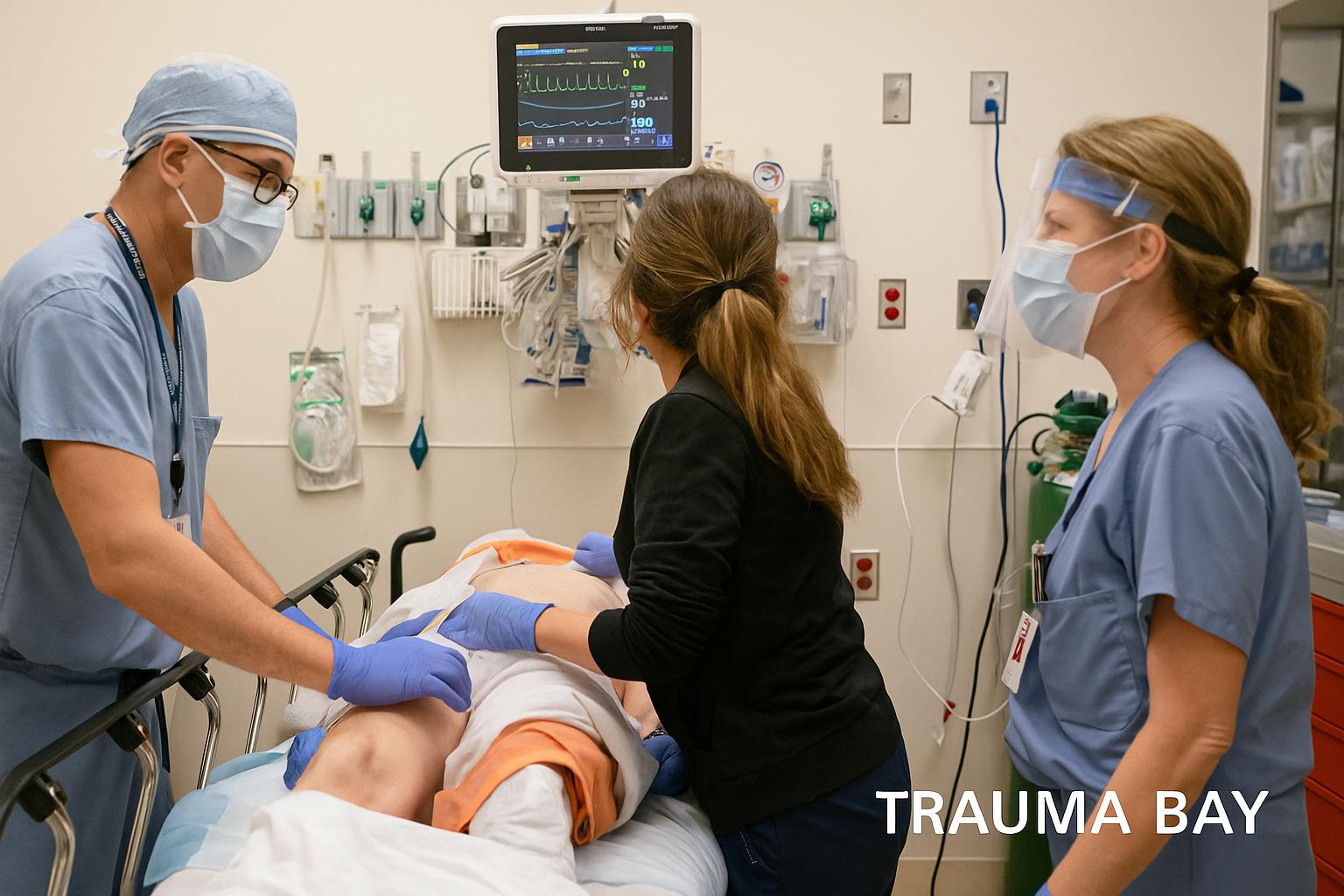
In East San Jose, the trauma unit at Regional Medical Center is once again alive with activity. Doctors and nurses are back to doing the work they were trained for: cutting crash victims out of their clothes, replacing blood loss from torn arteries, and holding shattered bones together while shouting urgent instructions through the chaos of an emergency room. The noise and intensity may sound alarming to an outsider, but to those who work there, it represents a vital return to function after years of decline.
Regional Medical Center, now under Santa Clara County ownership, looks very different from its state only a year ago. Under its previous private ownership, the hospital had steadily cut or scaled back trauma, stroke, cardiac, and maternity services until they were either closed or struggling to stay afloat. These reductions not only forced patients to seek care at other hospitals but also placed enormous strain on facilities such as Valley Medical Center, which ended up handling record volumes of trauma patients in 2024. Staff recall long periods when the hospital felt eerily quiet, with fewer than 70 patients admitted at any given time. Today, with services restored, the hospital’s census has nearly tripled to close to 200 patients daily, signaling a revival of both staff morale and patient trust.
Physician executive Yvonne Karanas explained that the decision by the county to purchase Regional Medical Center was a necessary one. After trauma services were downgraded, Valley Medical Center, the county’s primary Level 1 trauma facility, recorded the highest case volume of any such center in the state, a situation that quickly became unsustainable. Staff capacity, physical space, and equipment were all pushed beyond their limits. The county eventually stepped in, purchasing the facility for $150 million, even as it faced its own budget constraints. The aim was simple but critical: to prevent East San Jose’s working-class neighborhoods from losing access to lifesaving care. The acquisition made Regional the fourth hospital in the county system.
Since the transition, Santa Clara County has worked to rebuild critical services. Regional’s Level 2 trauma center has been fully reinstated, heart attack and stroke care units are operating again, and plans are in place to reopen the maternity ward, which was controversially closed in 2020. The trauma center now has access to a broader range of sub-specialists than it did under private ownership, including orthopedic and nerve surgeons who can be called to the emergency department as needed. Translators also form an essential part of the team, given the diverse community the hospital serves, which includes large Vietnamese and Latino populations.
Regional Medical Center’s trauma center is classified as Level 2, which means it can initiate care for all injured patients, though it lacks some of the comprehensive services of a Level 1 trauma center like Valley Medical Center. Still, the restoration of Level 2 status is a significant improvement over the downgrade it suffered under private ownership, when it was reduced to Level 3, a designation typically reserved for small or rural hospitals. The upgrade ensures that more patients in East San Jose can be treated quickly rather than transferred long distances, where precious time is lost.
Trauma care depends heavily on what professionals call the “golden hour,” the period immediately following a traumatic injury when fast treatment is most likely to prevent death. Under its prior condition, many patients arriving at Regional had to be transferred elsewhere, sometimes waiting up to six hours before receiving definitive care. These delays often meant worse outcomes for patients who could have been stabilized more quickly. Now, with services restored, the hospital is once again able to treat these cases directly, saving lives and easing the burden on other facilities.
Regional Medical Center’s location at the crossroads of major highways makes it a critical hub for trauma care. The majority of its cases stem from car accidents and blunt force trauma, which often require orthopedic or surgical interventions. Its revival is therefore not only a healthcare achievement but also a public safety necessity. The surrounding community, composed of multigenerational families, relies on the hospital not just for emergencies but for comprehensive care ranging from maternity to stroke recovery.
Staff such as registered nurse Luis Maciel, who coordinates trauma programs, describe the renewed pace and purpose at the hospital as invigorating compared to the slower, uncertain days under private ownership. He recalls the frustration of turning patients away or arranging transfers while knowing the urgency of their conditions. Now, he says, the staff are back to focusing on what matters most: saving lives during that golden hour.
The county’s decision to acquire Regional Medical Center was not without financial and political challenges, but the results are already visible. The hospital is once again serving its community with the range of services residents expect from a modern healthcare facility. With trauma, stroke, heart attack, and soon maternity services back in place, Regional is reclaiming its role as an essential lifeline for East San Jose.