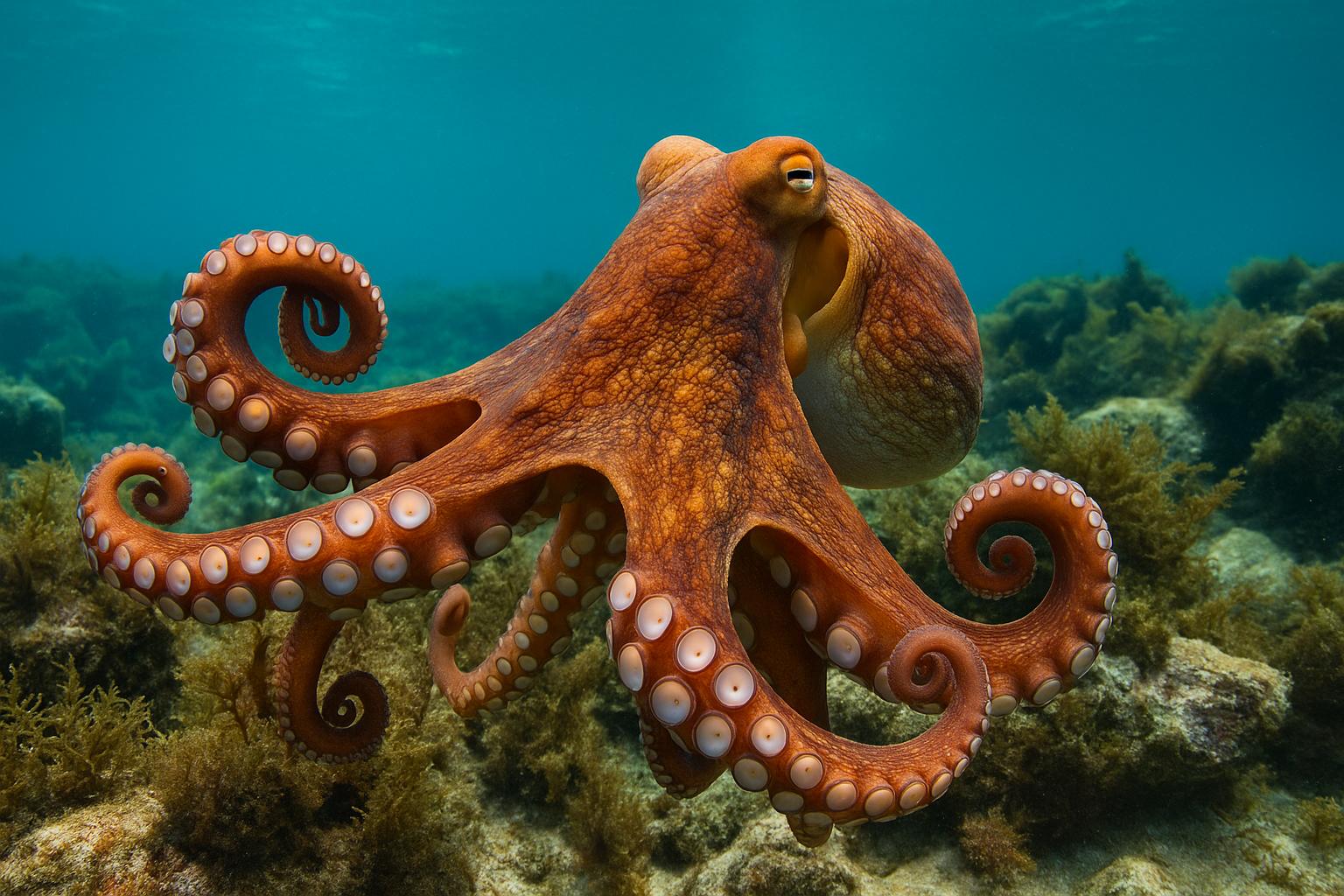
Every year on October 8, marine enthusiasts, conservationists, and nature lovers around the globe come together to celebrate World Octopus Day — a day dedicated to one of the ocean’s most fascinating and intelligent creatures. First observed in 2014, this annual event highlights the extraordinary abilities of octopuses while calling attention to the growing environmental and ethical challenges they face in the modern world.
The octopus, with its eight flexible arms, keen intelligence, and remarkable camouflage abilities, is often regarded as the most mysterious inhabitant of the deep sea. There are around 300 known species of octopus, and they inhabit every ocean on Earth, from shallow coastal waters to the darkest depths of the abyss. Their adaptability and intelligence make them a unique subject of study for scientists and animal behavior experts alike.
One of the most remarkable species, the giant Pacific octopus, can grow up to 5.4 meters in length, with an arm span stretching nearly nine meters. Despite their size, octopuses are known for their agility and complex problem-solving skills. They can open jars, mimic other marine animals, and use tools to defend themselves. Their ability to change the color and texture of their skin in seconds — for camouflage, communication, or intimidation — is controlled by specialized skin cells known as chromatophores, iridophores, and leucophores.
World Octopus Day serves a dual purpose: to celebrate the brilliance of these creatures and to raise awareness about the serious threats they face. Octopuses are not currently classified as endangered, but they are increasingly vulnerable to environmental stressors and human exploitation. The major concerns include habitat destruction, marine pollution, overfishing, and the controversial rise of octopus farming.
Pollution poses a particularly grave threat. Industrial waste, plastic debris, and agricultural runoff degrade the water quality in coastal regions, directly affecting octopus habitats. These pollutants can harm their immune systems, disrupt reproduction, and alter natural behaviors. The growing contamination of the oceans has made survival increasingly difficult for sensitive marine organisms, including cephalopods like octopuses and squids.
Overfishing represents another major challenge. Octopuses are hunted extensively across the globe for their meat, which is considered a delicacy in several countries, and for the aquarium trade. As demand rises, unsustainable fishing practices — such as trawling and destructive gear — are depleting wild populations faster than they can recover. Conservationists warn that without stricter regulations, overexploitation could destabilize marine ecosystems where octopuses play a vital role as both predator and prey.
Perhaps the most controversial issue is the growing interest in octopus farming. In Spain’s Canary Islands, plans are underway to establish the world’s first large-scale octopus farm, where nearly one million octopuses could be raised for food each year. Animal welfare advocates argue that farming such intelligent and solitary creatures in confined, artificial environments is ethically indefensible. Studies show that octopuses are sentient beings capable of experiencing pain, stress, and even emotional distress when kept in captivity. Their complex cognitive abilities and natural curiosity make them poorly suited for life in tanks or commercial enclosures.
Beyond industrial threats, octopuses also face risks from the exotic pet trade. Although their intelligence makes them fascinating to observe, octopuses do not thrive in domestic aquariums. They require large tanks, live prey, and constant environmental enrichment to remain healthy. In captivity, they often become bored, anxious, and short-lived, further supporting calls from marine experts to discourage keeping them as pets.
World Octopus Day is more than just a celebration — it is a reminder of humanity’s responsibility to protect marine life. Conservation organizations around the world use this day to promote sustainable ocean practices, oppose octopus farming, and advocate for stricter measures against pollution and overfishing. Public education plays a vital role in changing attitudes and inspiring a deeper appreciation for marine biodiversity.
Octopuses are a testament to nature’s creativity and intelligence. Their behavior challenges traditional ideas about consciousness in animals and continues to inspire new research into neurobiology and artificial intelligence. By observing and protecting them, humans not only preserve a crucial part of the ocean’s ecosystem but also gain insights into the evolution of intelligence itself.
As the world marks World Octopus Day, the message is clear: safeguarding the oceans ensures the survival of one of the planet’s most extraordinary species. The celebration is a call to action — to recognize that the octopus is not merely a creature of curiosity but a vital symbol of the delicate balance that sustains all marine life.