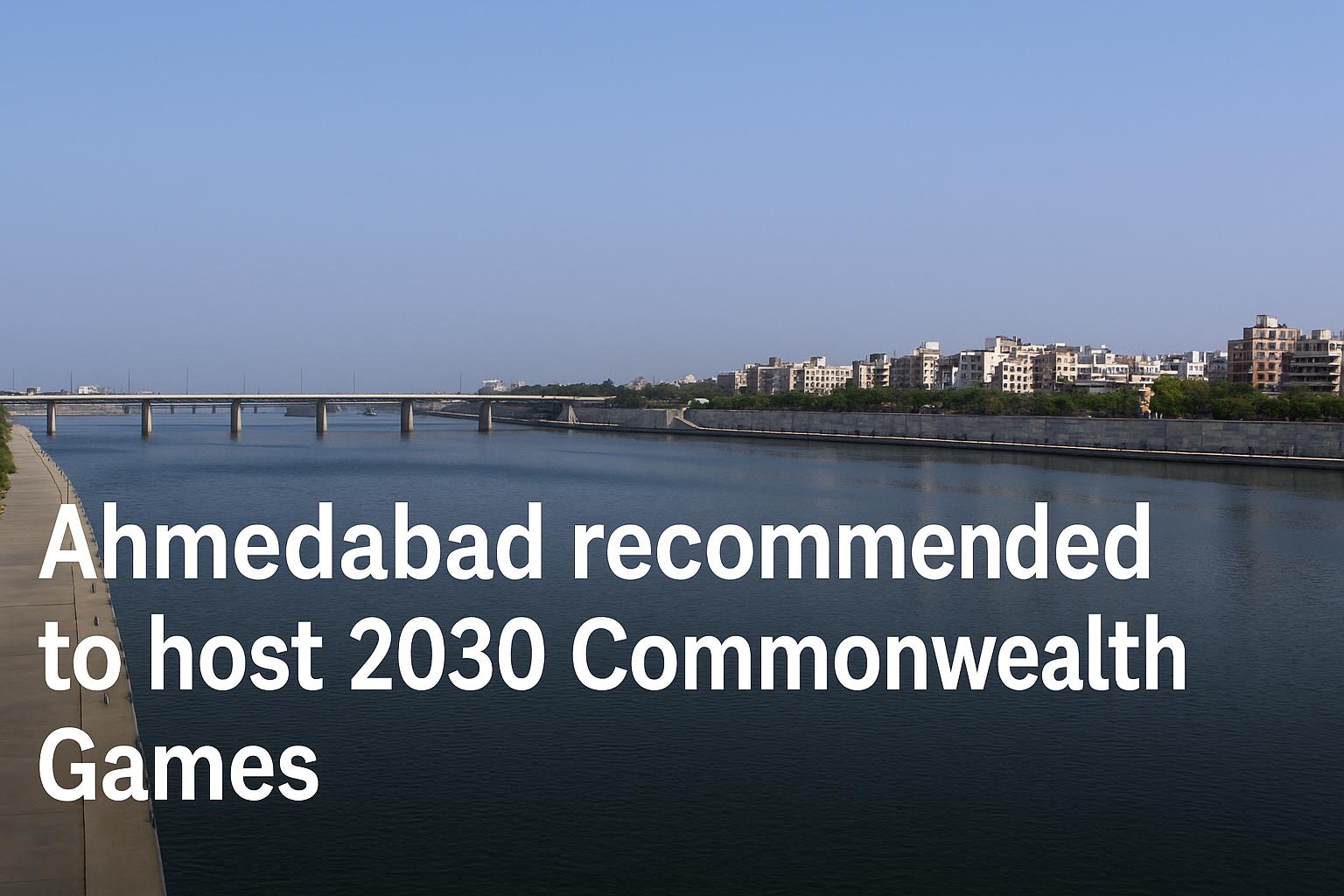
India is on the verge of achieving another milestone in its growing sports journey, as the Executive Board of Commonwealth Sport has recommended Ahmedabad to host the 2030 Commonwealth Games, marking the centenary edition of the event. This recommendation is not a coincidence but the result of India’s steady and strategic efforts over the past decade to become a global sporting hub.
Under the leadership of Prime Minister Narendra Modi, India has significantly strengthened its position as a capable host for large-scale international tournaments. The government’s vision extends beyond the Commonwealth Games, with an eye on the 2036 Summer Olympics — a long-term national goal. As part of this roadmap, India has been consistently investing in world-class sports infrastructure and demonstrating its ability to successfully organize high-profile global events.
Earlier this year, Bhubaneswar’s Kalinga Stadium hosted the World Athletics Continental Tour for the first time, an event that was widely seen as a stepping stone in India’s quest for hosting major multidisciplinary tournaments. The event’s success added to a growing list of global competitions that have taken place in India since 2014, underscoring its credibility as a reliable and resourceful organizer.
The Ministry of Sports and the Indian Olympic Association (IOA) have been working in tandem to address challenges related to governance, transparency, and doping — areas often scrutinized by global sports bodies. In July, the IOA reaffirmed its commitment to improving administrative standards as part of its long-term plan to strengthen India’s Olympic candidacy.
India’s IOC member Nita Ambani described the recommendation as “a proud milestone in India’s journey as a global sporting powerhouse.” She added, “This moment marks another step forward towards our shared dream of bringing the Olympic Games to India.” Ambani, founder of the Reliance Foundation, has played an influential role in promoting sports at both grassroots and international levels.
India’s record of hosting major sporting events speaks for itself. Over the last decade, the country has organized tournaments across diverse disciplines, ranging from hockey and football to athletics and motorsport. These include the 2014 Men’s Hockey Champions Trophy, the 2017 FIFA U-17 World Cup, the 2019 Shooting World Cup, and the 2023 Hockey World Cup, among many others. More upcoming global competitions, including the 2025 Para Athletics World Championships and the Women’s ODI World Cup, are expected to further enhance India’s credentials.
The proposed 2030 Commonwealth Games in Ahmedabad would mark the second time India hosts the prestigious event, following its 2010 edition in New Delhi. Officials have pledged to deliver a Games that reflects both the diversity and scale of the Commonwealth, while also showcasing India’s modernization and inclusivity. The event is expected to boost tourism, create thousands of jobs, and leave behind a lasting legacy of improved sports facilities.
The decision arrives at a crucial time for the Commonwealth Games Federation, which has faced uncertainty about the future of the event. The 2022 Games had to be relocated to Birmingham after Durban withdrew for financial reasons, while the 2026 edition in Glasgow is expected to be scaled down following Victoria’s withdrawal. Against this backdrop, India’s bid has injected new optimism and stability into the Commonwealth sporting movement.
Commonwealth Sport Chief Executive Officer Katie Sadleir remarked that the recommendation to award India the 2030 Games is “strategically important for the future of the Commonwealth Sport Movement.” She emphasized that the move builds upon the foundation laid by Glasgow 2026 and sets a clear direction for the organization in the years ahead.
As the global sporting world watches, India stands ready to rise to the occasion once again. The potential hosting of the 2030 Commonwealth Games in Ahmedabad represents more than just an event — it symbolizes India’s growing influence in international sport, its dedication to developing young athletes, and its determination to host the world’s biggest sporting spectacle — the Olympics — in the near future.
In doing so, India continues to weave sports into its broader narrative of national progress, global engagement, and youth empowerment. The 2030 Games could well become the defining chapter in that story — a moment when India’s sporting ambitions and organizational excellence converge on the world stage.