- globetrotter
- 12 Nov 2025
- #Finance & Economics #WaterRatesColumbus #InfrastructureInvestmentColumbus #UtilityRateIncreaseColumbus #LeadPipeReplacementColumbus #DroughtResilienceColumbus #SanitarySewerUpgradeColumbus #StormwaterManagementColumbus #ElectricRateHikeColumbus #BondPackageColumbus #CapitalProgramColumbus
According to municipal sources, inflation and population expansion are key drivers behind the decision to raise utility rates. While the city says it has kept annual increases at or below five percent for the past decade, officials say that rate has been insufficient to support the scale of necessary upgrades. With the city’s population projected to reach up to three million by 2050, city planners say the time has come to accelerate investment in essential systems.
For residential customers within the city’s limits who consume roughly 165 gallons of water per day, annual utility bills are expected to increase by more than $100 under the proposed 11.7 percent composite rate hike. For residents living outside the city limits, the annual increase could top approximately $149. The proposed increase covers water, sanitary sewers and stormwater services and is the largest single rate change in recent years. The increase would take effect on January 1, 2026, pending approval by the Columbus City Council.
Electric utility customers served directly by the city (not by the regional utility AEP) are also facing the city’s first power-rate increase in 18 years. For about 19,000 customers, a roughly 13 percent increase is proposed. The additional revenue is intended not only to offset rising energy costs, but also to support a city-wide transition to LED street lighting and to extend improved lighting into neighborhoods that have been underserved.
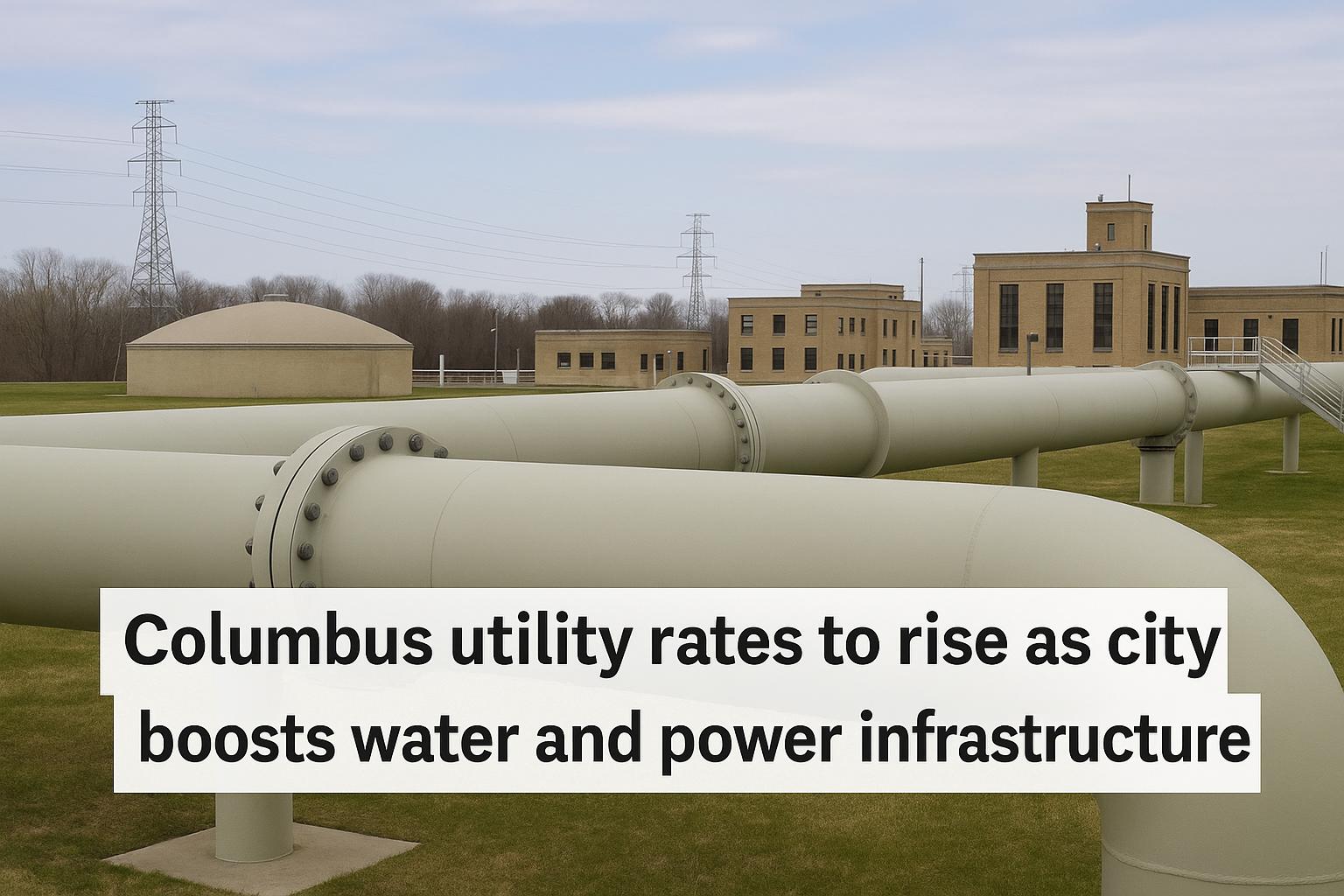
The infrastructure initiatives underpinning the rate-increase request include the removal of lead service lines, construction of two new large above-ground reservoirs, expansion of water treatment capacity, and enhancements to stormwater systems through additional rain-garden installations and rehabilitation of the most repair-prone water lines. These efforts reflect a growing trend among municipalities nationwide to pass on the costs of safety, quality and futureproofing to residential and commercial utility customers.
Voters in Columbus recently approved a $1.9 billion bond package that will fund portions of the sewer and water-line work. However, city officials emphasise that bond approval does not provide immediate funding for all planned projects; rather, it authorises borrowing to finance projects not eligible for low-interest loan funding. As explained by Columbus Water & Power Deputy Director Jon Lee, the bond authority allows the city to issue debt when loans are unavailable, and the debt service is then recovered through ratepayer revenue. He noted that over 85 percent of the current capital plan is eligible for loan funding, with bond funding reserved for facility projects that do not directly affect water quality.
The breakdown of the proposed increases shows that for water services the composite rate hike is 11.72 percent, with sector-specific increases of approximately 18 percent for water, 8 percent for sanitary sewer, and 2 percent for stormwater (for city residents). Under this proposal, a household using 20 ccf of water per quarter — equivalent to about 165 gallons per day — would pay an additional $10.48 per month (approximately $125.80 annually) if inside city limits, and about $12.48 per month (approximately $149.74 annually) if outside city limits. Low-income customers inside the city would see an increase of $8.57 per month (approximately $102.79 annually). On the electric side, the average residential increase runs between $7 and $11 per month (roughly $81 to $126 per year) depending on customer class; small commercial customers would see around a 5 percent increase while large commercial customers may face 16 percent.
The scale of the required capital work is significant. Planned major projects include the Home Road Water Plant, estimated at $2.3 billion, and its accompanying transmission mains; two new above-ground reservoirs estimated at $300 million; the Lead Service Line Replacement project estimated at $1 billion; water reuse and redevelopment improvements around $280 million; capacity upgrades and treatment enhancements at the city’s three water plants including the Dublin Road facility, which necessitates a headquarters relocation; and continued implementation of the “Replacement & Rehabilitation” water-line program (estimated at $190 million) and the “Blueprint Columbus” initiative (estimated at $374 million).
City authorities say that while the timing of the rate adjustment may be difficult for residents, the move is necessary to preserve water quality, build resilience against drought, manage stormwater overflow, remove aging infrastructure and accommodate anticipated population growth and urban service demands. They emphasize that these investments are critical for the city to ensure its utility systems remain sustainable, reliable and safe for all customers well into the future.