Silicon Valley’s commercial real estate sector is experiencing a period of striking contrasts, according to the latest quarterly analysis from Joint Venture Silicon Valley. The region continues to see both strong demand for leased space and a notable slowdown in new development, creating a complex environment for investors, developers, and employers.
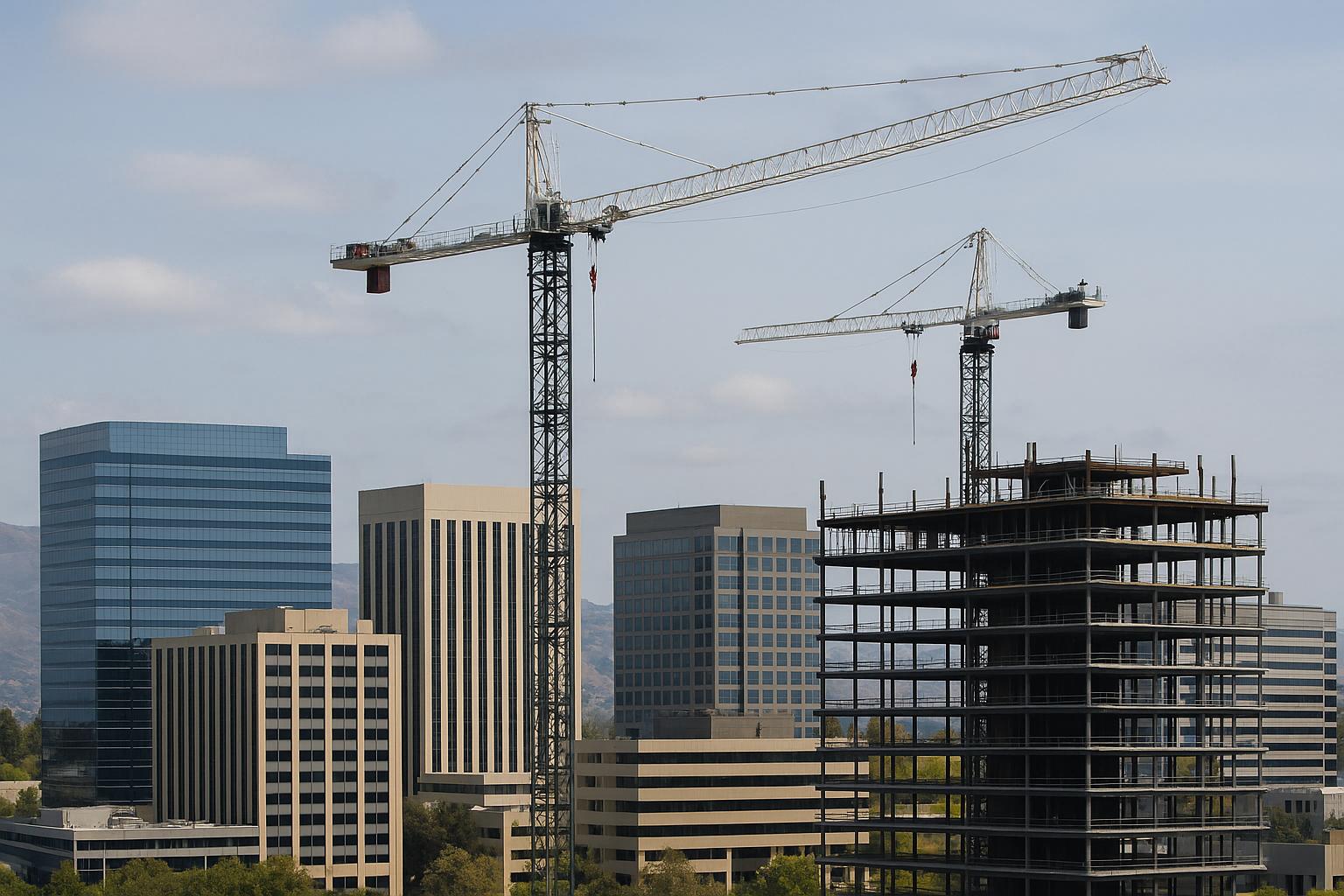
Between January and September 2025, developers added approximately 5.6 million square feet of new office and industrial space across the region. This represents the highest construction output since 2021 and highlights the ongoing appetite for high-quality facilities, particularly in sectors tied to industrial expansion. Yet despite this surge in completions, the amount of commercial footage currently under development has declined sharply. The report shows the construction pipeline falling to 4.5 million square feet, a 45 percent drop from the end of 2024 and a 79 percent decline from its 2021 peak. This marks the lowest level of active development since 2013, reflecting the hesitancy of investors facing a climate shaped by high vacancy rates and economic uncertainty.
Leasing activity, however, tells a different story. Commercial leasing across the first three quarters reached 20.4 million square feet, positioning the region for its strongest annual performance since 2018. This momentum underscores the ongoing need for functional workspace, even as companies navigate hybrid work dynamics and evolving space requirements. Despite the robust leasing figures, overall vacancy remains elevated. Regional vacancy rates stood at 22 percent during the third quarter, down slightly from 23 percent in the previous quarter but still more than double the levels seen before the pandemic. These rates also exceed those recorded during the downturn in the early 2000s.
Experts note that the market’s mixed signals stem from a combination of shifting workplace norms and broader economic pressures. Land use consultant Bob Staedler said the data mirrors what industry professionals are witnessing throughout the region. He emphasized that the commercial sector is not in distress and that property values have remained stable. However, he acknowledged that high vacancy rates have contributed to a slowdown in new development as builders and investors wait for clearer market direction.
Russell Hancock, president and CEO of Joint Venture Silicon Valley, attributed much of the current caution to uncertainty surrounding national economic policy and the lingering effects of inflation. He said businesses are reluctant to commit to major investments without knowing how future policy changes might influence borrowing costs or market conditions.
Despite the near-term challenges, analysts expect the commercial property landscape to gradually regain momentum. Growth in artificial intelligence, life sciences, and advanced manufacturing continues to generate demand for specialized facilities, particularly industrial and laboratory space. Some older office properties are also expected to be repurposed into multifamily housing, which may help rebalance supply and meet residential needs.
Alexander Quinn, senior director of Northern California research at JLL, observed that signs of recovery appeared as early as the first quarter of 2024. He noted that while office construction accounted for just 22 percent of new commercial development last year, compared with 55 percent across the previous four years, investment in lab and industrial facilities now represents more than two-thirds of new projects. The rise of robotics, drone technology, and related engineering disciplines has created new opportunities for Silicon Valley to leverage its combined strengths in hardware, software, and artificial intelligence.
Although challenges persist, industry leaders believe Silicon Valley’s innovation-driven ecosystem will continue to attract investment and shape future development patterns. The region’s ability to adapt to emerging technologies is expected to play a central role in stabilizing the market and eventually restoring a more balanced pace of construction.