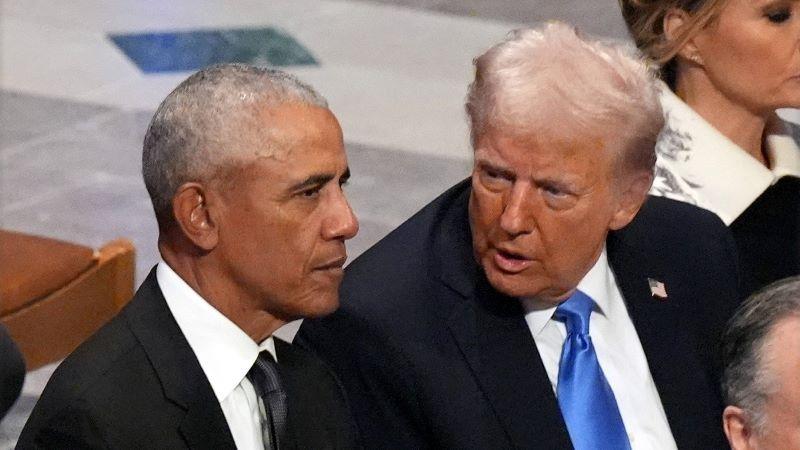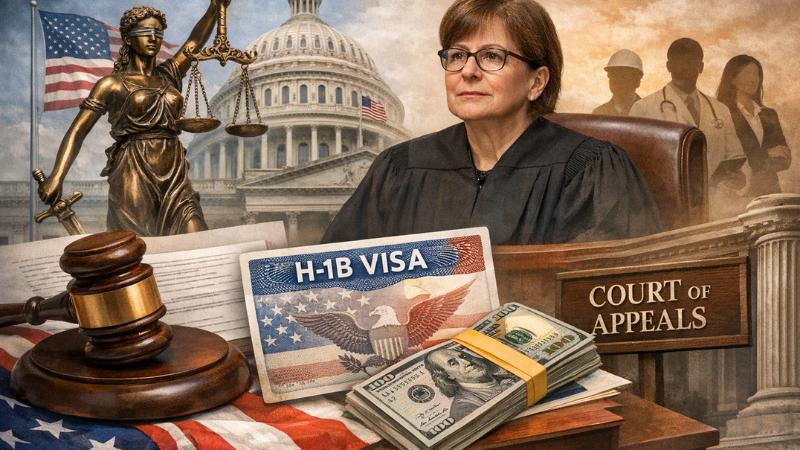
The decision was issued by US District Judge Beryl Howell, an appointee of former President Barack Obama, who rejected claims that the executive branch exceeded its authority by imposing the sharply increased fee on new H-1B visa applications. In her ruling dated December 23, the judge concluded that the president acted under an express statutory grant of authority provided by Congress, finding no violation of federal immigration law. As a result, the court declined to block the measure, allowing the higher fee to remain in effect while further legal proceedings continue.
Following the ruling, the legal battle has now moved to the US Court of Appeals after the US Chamber of Commerce filed a notice of appeal challenging the district court’s decision. The Chamber, which represents a wide range of American businesses, argues that the $100,000 H-1B visa fee introduced through a presidential proclamation in September is excessive and places an unreasonable burden on employers who depend on skilled foreign professionals. According to the group, the cost increase undermines the fundamental purpose of the H-1B programme by making lawful employment-based immigration financially unviable for many organisations.
The fee was introduced by President Donald Trump as part of a broader effort to curb what his administration described as misuse of the H-1B visa programme. The programme enables US employers to hire college-educated foreign workers for specialised roles in sectors such as technology, engineering, healthcare, education, and scientific research. While supporters of the fee hike argue it discourages abuse and low-quality applications, critics contend that it penalises legitimate employers and worsens existing labour shortages in key industries.
In its original lawsuit, the Chamber of Commerce argued that the dramatic fee increase violated federal immigration statutes and exceeded the authority granted to the executive branch. The petition claimed that the proclamation unlawfully bypassed existing laws governing visa fees. Judge Howell dismissed these arguments, ruling that Congress had explicitly authorised the president to set such fees, leaving little scope for judicial intervention at the district court level.
Legal observers say the ruling presents a serious challenge for opponents of the fee as the case advances through the appeals process. Analysts note that Judge Howell has previously ruled against Trump administration policies in other cases, making her decision particularly noteworthy. Many believe that if the district court found no legal flaws in the proclamation, higher courts may be reluctant to overturn the ruling, though the appeals process could still take months or longer to conclude.
The decision comes amid a broader crisis affecting the H-1B visa programme. New rules involving expanded social media screening and restrictions on visa stamping outside a visa holder’s country of origin have led to widespread delays at US consulates worldwide. As a result, thousands of professionals have been stranded outside the United States, unable to return to their jobs or reunite with their families. Immigration lawyers and employers have repeatedly warned visa holders to avoid international travel due to the risk of prolonged processing delays.
The Chamber’s lawsuit is one of several legal challenges targeting the fee increase. More than a dozen states, largely led by Democratic administrations, have filed a separate case in Massachusetts. In addition, a global nurse staffing firm and multiple labour unions have launched a lawsuit in California, arguing that the fee threatens workforce stability in sectors already facing severe staffing shortages. Legal experts widely expect that the issue could ultimately be reviewed by the US Supreme Court due to its national significance.
Opponents of the fee argue that the unusually high cost could negatively impact essential public services across the country. Schools, hospitals, and other public institutions rely heavily on skilled foreign professionals hired through the H-1B programme. In states such as California, education authorities have increasingly turned to H-1B hires to address acute shortages of qualified teachers, particularly in science, technology, engineering, and mathematics disciplines. Critics warn that limiting access to global talent could further strain these systems and reduce service quality.
As the appeals process moves forward, employers, foreign workers, and policymakers are closely monitoring the case, which could reshape the future of employment-based immigration in the United States. With multiple lawsuits progressing in different courts and ongoing disruptions within the visa system, the outcome is expected to have long-term implications for the US labour market and the country’s ability to attract and retain skilled professionals from around the world.