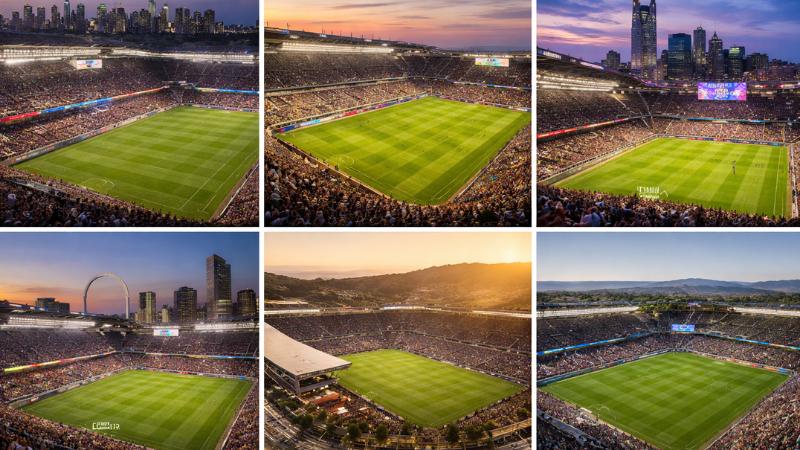
Organizers of the 2028 Summer Olympics in Los Angeles have confirmed that six cities across the United States will host soccer matches, expanding the tournament’s footprint well beyond Southern California and reinforcing the event’s national reach. The decision distributes group stage games among established soccer markets and utilizes existing Major League Soccer stadiums, a strategy officials say will help streamline logistics while showcasing top-tier facilities.
According to the LA 2028 organizing committee, group stage matches will take place in New York City; Columbus, Ohio; Nashville, Tennessee; St. Louis, Missouri; and the California cities of San Diego and San Jose. Each location features modern venues regularly used for professional soccer, ensuring that teams and spectators benefit from infrastructure already designed for high-level competition.
LA 2028 chief executive Reynold Hoover presented the plan to members of the International Olympic Committee, emphasizing that the Games will rely on “premier existing Major League Soccer stadiums” rather than building new facilities. Organizers view the approach as both cost-effective and sustainable, aligning with broader Olympic goals to reduce construction and environmental impact while maximizing the use of current venues.
While early-round matches will be spread across the country, later stages of the tournament will return to the Los Angeles region. The historic Rose Bowl in Pasadena has already been confirmed as the site for knockout and medal games. The stadium, one of the most recognizable sports venues in the United States, has hosted major international soccer events in the past and is expected to serve as a centerpiece of the Olympic football schedule.
By distributing games among multiple cities, organizers aim to engage fans nationwide and create broader economic benefits for host communities. Local officials in the selected markets anticipate increased tourism, hotel bookings, and related spending during the Games, as well as opportunities to promote youth soccer and grassroots participation.
The expanded venue plan also reflects soccer’s growing popularity in the United States, where MLS stadiums have become key hubs for both domestic and international matches. With the Olympic spotlight set to fall on these cities in 2028, organizers believe the strategy will deliver a high-quality tournament experience while bringing the spirit of the Games to audiences across the country.


 Joyful
0%
Joyful
0%
 Cool
0%
Cool
0%
 Thrilled
0%
Thrilled
0%
 Upset
0%
Upset
0%
 Unhappy
0%
Unhappy
0%