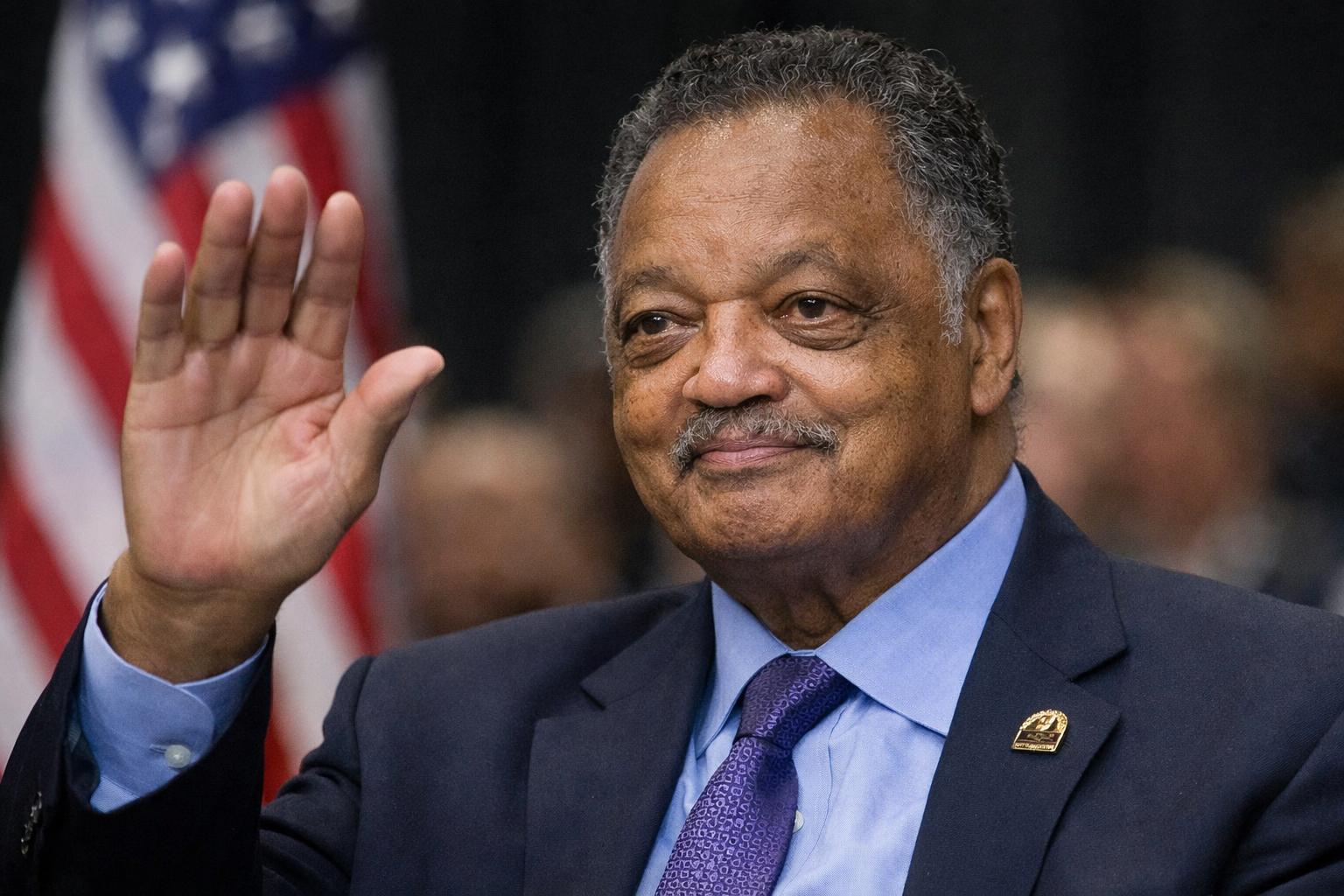
Jackson rose to national prominence in the years following the assassination of Martin Luther King Jr. in 1968, emerging as a leading voice in the struggle for racial equality and economic justice. Over the decades, he built a reputation as one of the most prominent Black leaders in US politics, blending grassroots activism with national political ambitions. His influence extended well beyond the civil rights movement, shaping Democratic Party politics and expanding opportunities for minority political participation.
Born Jesse Louis Burns in 1941 to teenage mother Helen Burns in Greenville, South Carolina, he later adopted the surname of his stepfather, Charles Jackson, while maintaining ties with his biological father, Noah L. Robinson. His early encounters with segregation and racial discrimination deeply influenced his lifelong commitment to social justice and civil rights advocacy.
Jackson’s activism began in earnest in 1960 when he led the “Greenville Eight” in a peaceful protest against segregated public libraries in South Carolina. The demonstration resulted in his first arrest and marked the beginning of a career defined by high-profile civil rights campaigns. After briefly attending the University of Illinois on a football scholarship, he transferred to North Carolina A&T State University, where he earned a sociology degree that further shaped his political outlook.
Following King’s assassination, Jackson moved to Chicago with his wife, Jacqueline Lavinia Brown, and pursued theological studies. He was ordained as a Baptist minister in 1968 and soon became a close associate of King’s Southern Christian Leadership Conference. As head of Operation Breadbasket, Jackson focused on economic empowerment initiatives aimed at improving opportunities for Black communities, though his leadership style occasionally drew criticism, particularly regarding financial management practices.
Jackson later mounted two bids for the Democratic presidential nomination, most notably in 1988, when his campaign drew significant national attention and expanded the political coalition of minority and progressive voters. Former President Barack Obama, the first Black president of the United States, credited Jackson with helping pave the way for his historic victory. Speaking in Chicago, a city closely associated with Jackson’s career, Obama noted that Jackson’s decades of activism opened doors for a new generation of leaders.
Despite occasional political disagreements — including Jackson’s early reservations about Obama’s candidacy — the two figures remained linked in the broader narrative of Black political advancement in America. Jackson’s emotional presence at Chicago’s Grant Park during Obama’s 2008 election night victory became one of the defining images of that historic moment.
In later years, Jackson remained active in civil rights causes, participating in commemorations of the Selma marches and voicing support for Black Lives Matter protests following the killing of George Floyd. His policy positions and advocacy work influenced progressive figures such as Bernie Sanders and Alexandria Ocasio-Cortez, underscoring his enduring impact on American political discourse.
Jackson’s health declined in the final decade of his life. In 2017, he was diagnosed with Parkinson’s disease, which significantly affected his mobility and speech. He was later hospitalized with COVID-19 and spent several weeks in rehabilitation. Despite these challenges, he continued to be regarded as a towering figure in the fight for racial equality.
His legacy, supporters say, lies in his persistent efforts to expand political participation, promote economic justice, and advance civil rights in the United States. As tributes continue to pour in from across the political spectrum, Jesse Jackson is being remembered as a pioneering activist whose work reshaped the landscape of American public life.