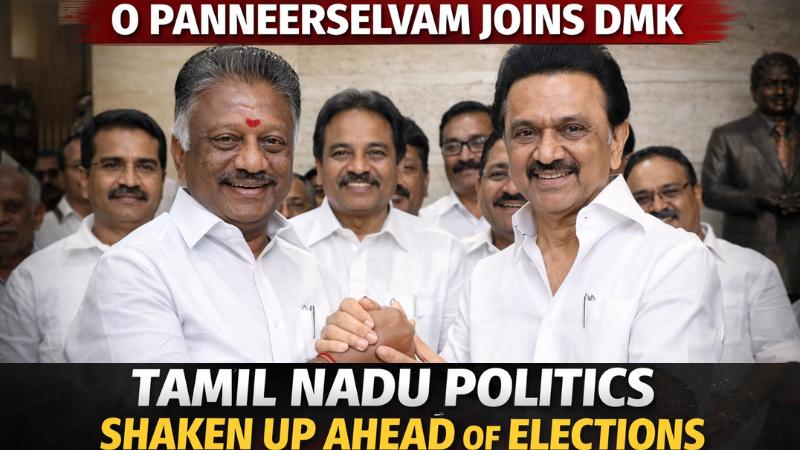
In a significant political development ahead of the 2026 Tamil Nadu Assembly elections, O Panneerselvam, the former Chief Minister of Tamil Nadu and a long-time leader of AIADMK, has joined the Dravida Munnetra Kazhagam (DMK). This move marks the culmination of a bitter rivalry within AIADMK and is set to reshape Tamil Nadu’s political landscape. Panneerselvam’s shift to the ruling DMK could weaken AIADMK’s influence, especially in the southern regions, by splitting the Thevar vote base.
Panneerselvam, who was once a loyalist of AIADMK’s late leader J Jayalalithaa, had been embroiled in a power struggle within his party after her death in 2016. The feud with Edappadi K Palaniswami (EPS) resulted in a split, with Panneerselvam eventually sidelined and expelled from the party. Although he tried to maintain his political standing through independent campaigns, his faction failed to make significant headway. His recent move to DMK comes after failed attempts to reconcile with EPS and dissatisfaction with the BJP’s lack of support.
Joining DMK under the leadership of Chief Minister MK Stalin, Panneerselvam’s induction is viewed as a strategic maneuver to strengthen DMK’s position in southern Tamil Nadu, where he holds considerable influence. In his address, Panneerselvam sharply criticized EPS’s leadership, accusing him of arrogance and running the party in a dictatorial manner. Panneerselvam’s move to DMK could potentially attract disgruntled cadres from AIADMK and further destabilize the party’s support base ahead of the elections.
For DMK, OPS’s entry represents an opportunity to consolidate its support, especially among Thevar voters, and secure a strong foothold in the upcoming elections. Panneerselvam’s loyalty to his late mentor J Jayalalithaa and his established presence in Tamil Nadu politics make his induction a notable political development. However, his decision to switch sides has sparked strong reactions from the BJP, with Tamilisai Soundararajan criticizing him as ungrateful for abandoning his previous allies.
With the Tamil Nadu Assembly elections approaching, Panneerselvam’s decision could play a pivotal role in shaping the political dynamics of the state. As he aligns with the ruling party, this shift could provide him with a platform to rebuild his political image and strengthen DMK’s influence in the state’s political affairs. The upcoming elections will now see the consequences of this political realignment, with the DMK seeking to leverage Panneerselvam’s entry as part of their strategy for a second consecutive term in power.