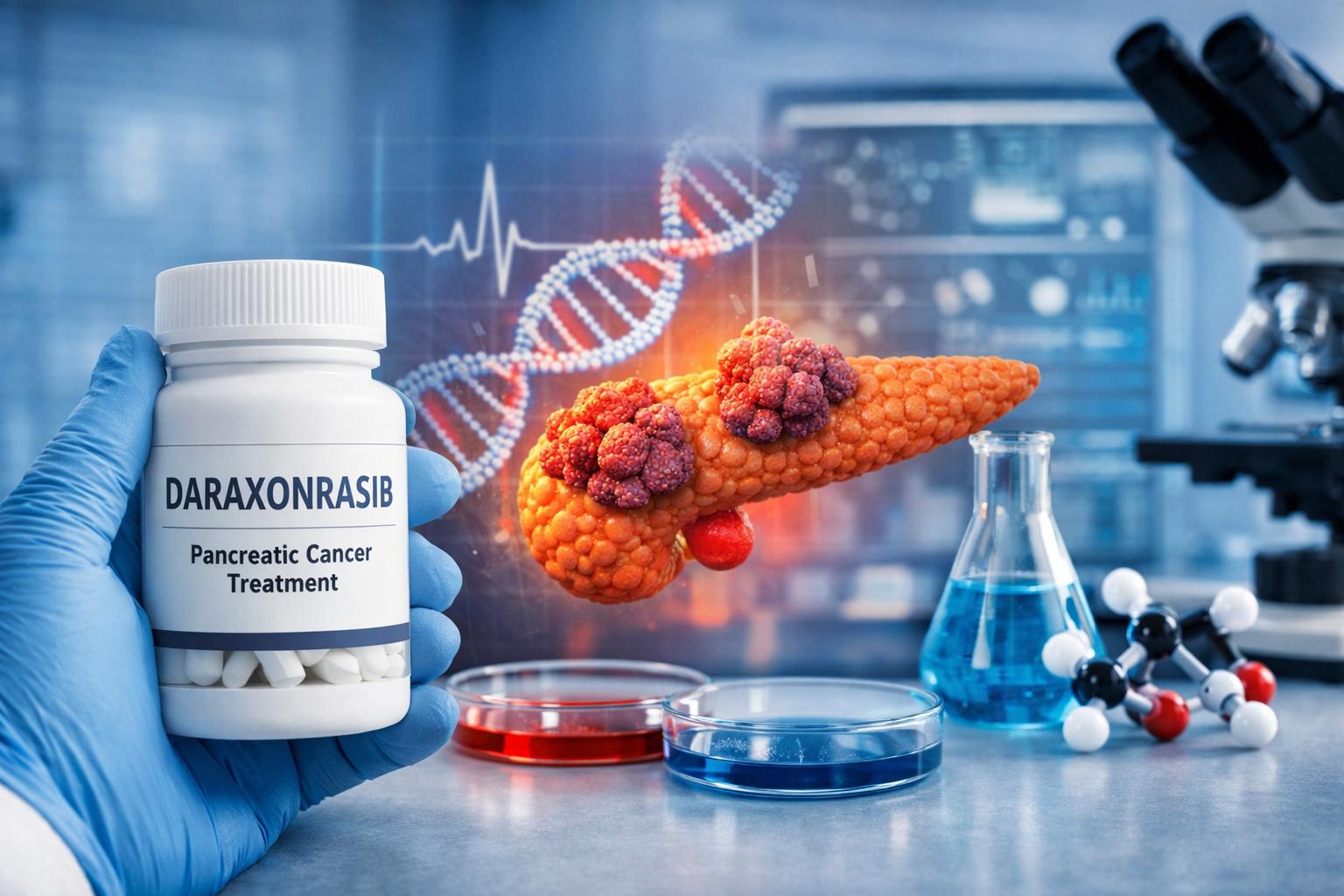
REDWOOD CITY, California — Revolution Medicines announced positive results from a late-stage clinical trial evaluating its experimental drug daraxonrasib, showing a significant survival benefit for patients with advanced pancreatic cancer who had previously undergone treatment.
According to the company, patients receiving the once-daily oral therapy lived a median of 13.2 months, compared with 6.7 months for those treated with standard chemotherapy. The treatment was also reported to be generally well tolerated, with no new safety concerns identified during the Phase 3 trial.
Experts say the findings could mark an important step forward in addressing one of the most aggressive and difficult-to-treat cancers. “For patients with metastatic pancreatic cancer, new treatment options are urgently needed to increase survival time and improve quality of life,” said Brian M. Wolpin, a professor of medicine at Harvard Medical School. He added that the results represent a meaningful advancement for patients whose disease has progressed following prior therapies, typically chemotherapy.
Pancreatic cancer is largely driven by RAS gene mutations, which are present in more than 90% of cases and are associated with rapid disease progression. Daraxonrasib is designed to target a broad spectrum of these mutations, aiming to slow tumor growth and extend survival. The trial included patients with multiple RAS variants, as well as those without identified mutations, allowing researchers to evaluate outcomes across a diverse population.
Revolution Medicines stated that the interim findings are considered final and will be submitted to global regulatory authorities, including the U.S. Food and Drug Administration. The company also plans to present the data at a major oncology conference in 2026, a step that could pave the way for potential regulatory approval and broader clinical use.
If approved, daraxonrasib could become a critical new option for patients with advanced pancreatic cancer, offering improved survival in a disease area where treatment advances have historically been limited.
According to the company, patients receiving the once-daily oral therapy lived a median of 13.2 months, compared with 6.7 months for those treated with standard chemotherapy. The treatment was also reported to be generally well tolerated, with no new safety concerns identified during the Phase 3 trial.
Experts say the findings could mark an important step forward in addressing one of the most aggressive and difficult-to-treat cancers. “For patients with metastatic pancreatic cancer, new treatment options are urgently needed to increase survival time and improve quality of life,” said Brian M. Wolpin, a professor of medicine at Harvard Medical School. He added that the results represent a meaningful advancement for patients whose disease has progressed following prior therapies, typically chemotherapy.
Pancreatic cancer is largely driven by RAS gene mutations, which are present in more than 90% of cases and are associated with rapid disease progression. Daraxonrasib is designed to target a broad spectrum of these mutations, aiming to slow tumor growth and extend survival. The trial included patients with multiple RAS variants, as well as those without identified mutations, allowing researchers to evaluate outcomes across a diverse population.
Revolution Medicines stated that the interim findings are considered final and will be submitted to global regulatory authorities, including the U.S. Food and Drug Administration. The company also plans to present the data at a major oncology conference in 2026, a step that could pave the way for potential regulatory approval and broader clinical use.
If approved, daraxonrasib could become a critical new option for patients with advanced pancreatic cancer, offering improved survival in a disease area where treatment advances have historically been limited.